Unsafe Brick Chimney Warning Signs Every Homeowner Should Know
Signs your brick chimney is becoming unsafe include leaning or tilting, deep cracks in the bricks or mortar, crumbling brick faces, loose flue liner pieces in the firebox, white or rusty staining, and smoke or odors entering your living space. If you notice any of these warning signs, arrange a professional chimney inspection. Stop using the fireplace immediately if you see structural instability, loose bricks, damaged flue liner components, smoke entering the room, or signs of a possible chimney fire.
Why a Brick Chimney Becomes Unsafe Over Time
A brick chimney looks solid, but it takes a beating. Rain soaks into porous brick, cold weather freezes that moisture, and the expansion cracks the masonry from the inside. Add decades of heat cycles, creosote from burning wood, and the occasional settling of your home’s foundation, and even a well built chimney starts to wear down.
In Portland, frequent rainfall and seasonal moisture can accelerate deterioration in brick chimneys. Water can penetrate porous masonry, weaken mortar joints, and contribute to spalling when temperatures fluctuate. Regular chimney inspections help Portland homeowners identify moisture related damage before it develops into more serious structural problems.
The tricky part is that damage often starts out of sight. By the time something is visible from the yard, it has usually been developing for years, which is why the early warning signs matter.
How to Check for Signs Your Brick Chimney Is Becoming Unsafe
You can do a simple visual check on a dry, bright day from the ground. Use binoculars if you have them, and never climb onto the roof yourself. Here is what to look for.
1. A Leaning or Tilting Chimney
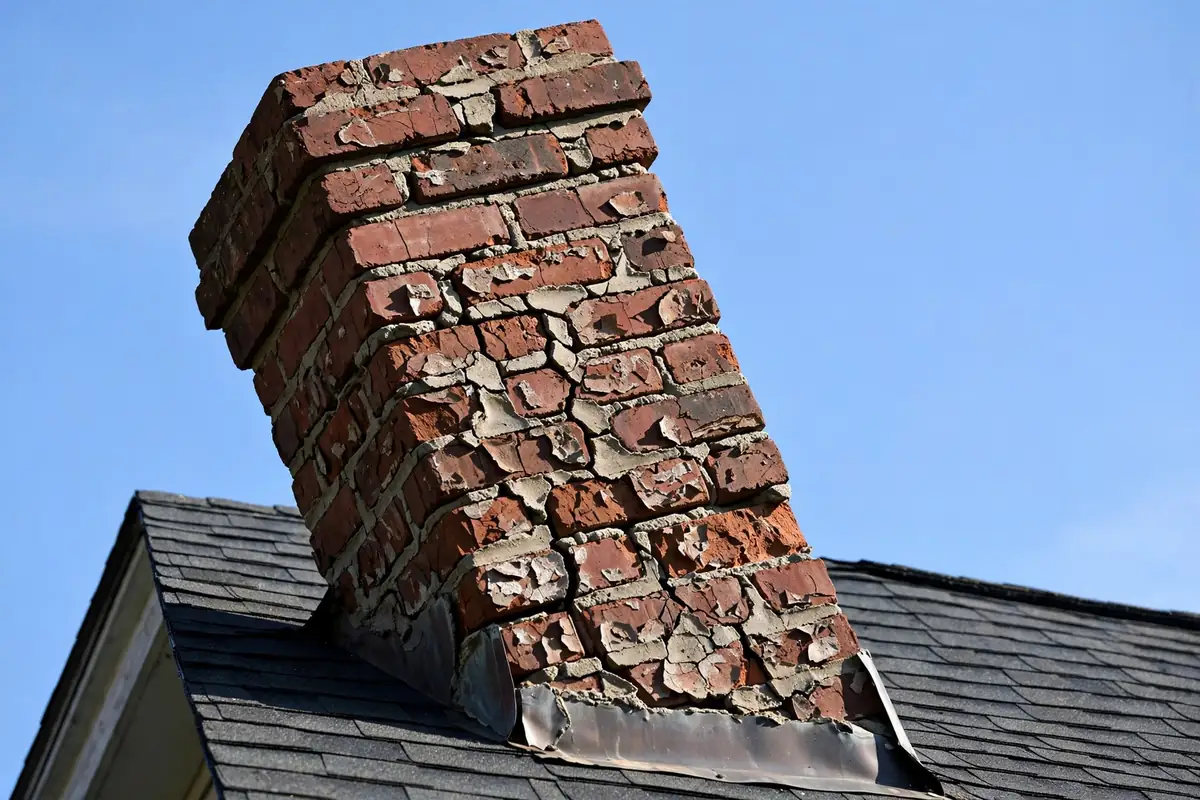
Stand back and look at the chimney against the sky. If it appears to lean away from the house, or you see a gap forming where the chimney meets the siding or roofline, the structure is moving. This can point to foundation settlement, a failing footing, or major masonry deterioration. Brick chimney structural damage of this kind is one of the most serious red flags, because the stack can fall during high winds or an earthquake.
2. Cracked, Crumbling, or Missing Mortar
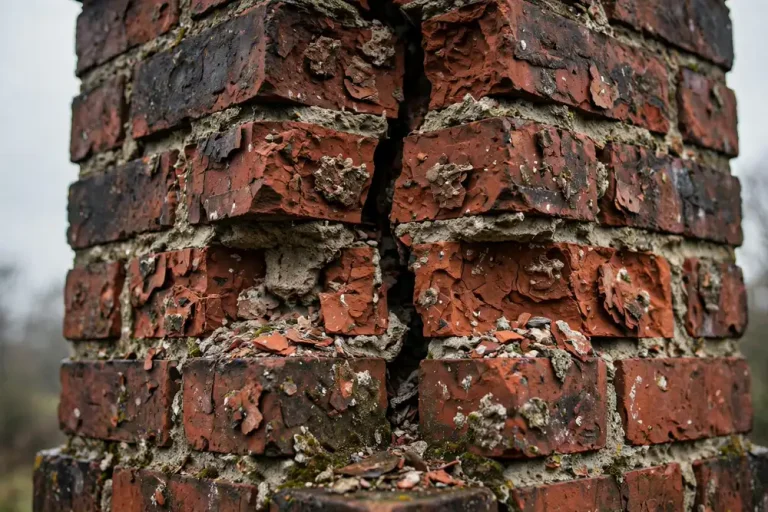
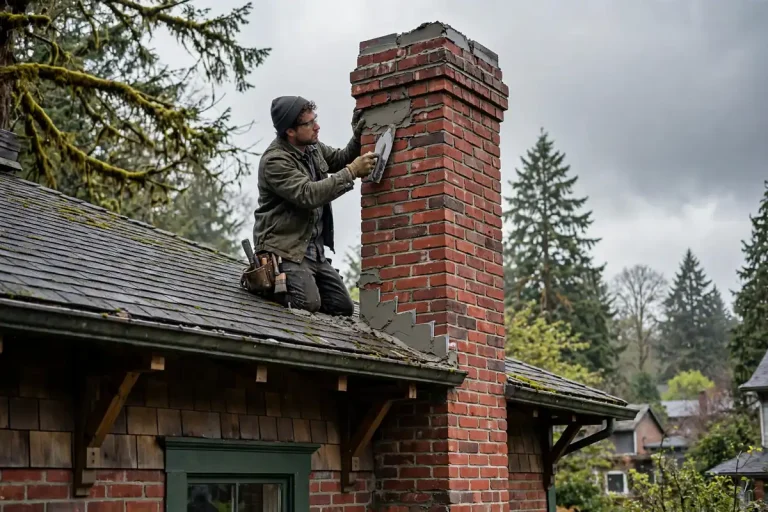
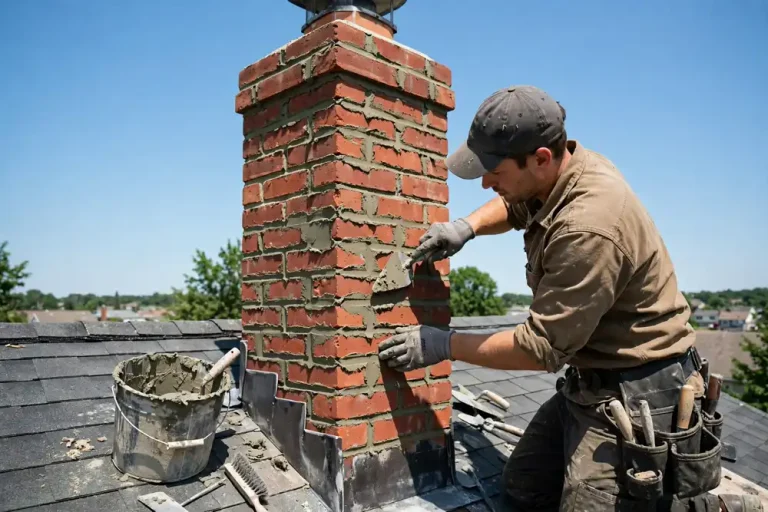
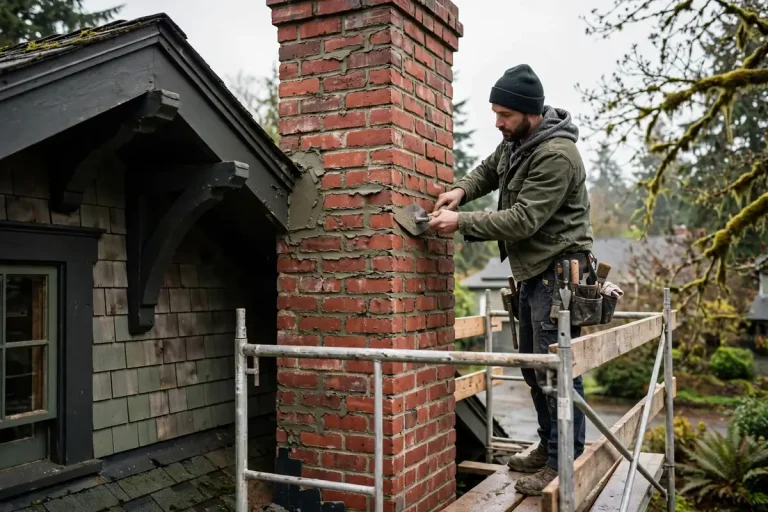
Mortar is the glue between your bricks, and it wears out faster than the brick itself. Look for gaps, sandy powder, or joints that look recessed. Once mortar fails, water gets deep into the stack and weakens everything around it. Repairing it is called brick chimney tuckpointing, and it costs far less when done early.
3. Spalling Bricks
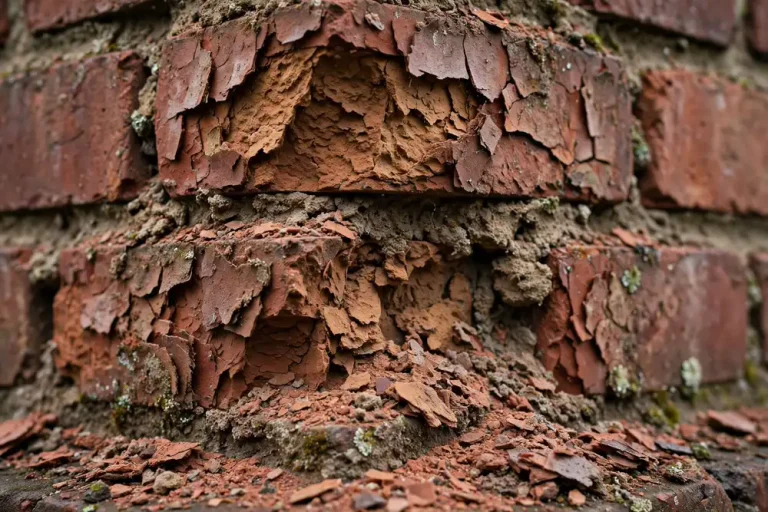
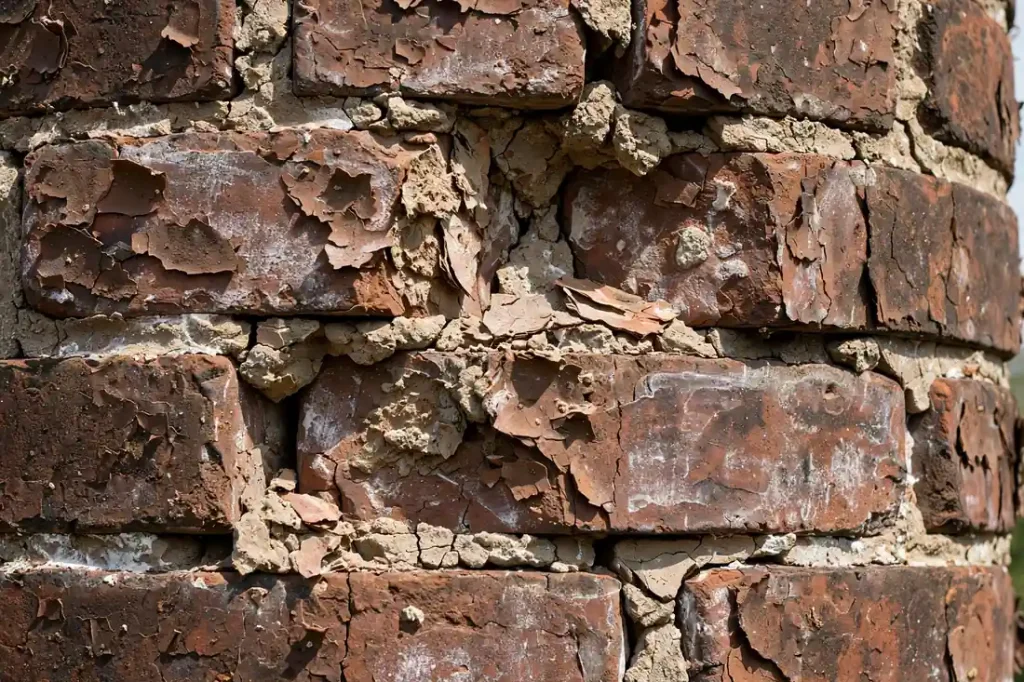
Spalling happens when the face of a brick peels, flakes, or pops off. If you find brick chips on the ground or roof near the base of the chimney, moisture is getting into the masonry and freezing. Widespread chimney brick spalling, especially near the top, means the chimney is losing its strength.
4. White Staining on the Brick
That chalky white film is called efflorescence. It forms when water carries salts out of the masonry and leaves them on the surface. Efflorescence is an early warning that moisture is moving through the masonry. It does not automatically mean the chimney is structurally unsafe, but the underlying moisture source should be investigated.
5. A Damaged Crown or Missing Chimney Cap
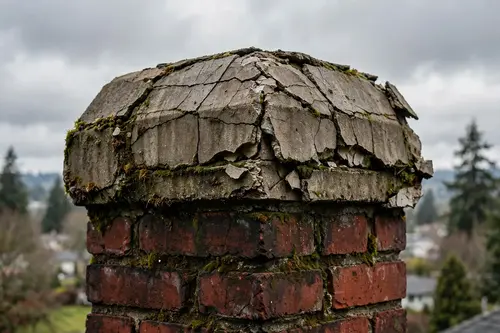
The crown is the concrete or mortar slab on top of the chimney, and the cap sits over the flue opening. Together they keep rain, animals, and debris out. Cracks in the crown or a missing cap let water pour straight into the stack and flue, so a prompt chimney crown repair can prevent much bigger bills.
6. Rusted or Loose Flashing
Flashing is the metal seal where the chimney meets your roof. If it is rusted, bent, or pulling away, water leaks into your attic and walls. Brown stains on the ceiling near the fireplace are a common clue. A chimney flashing repair usually solves the problem when caught early.
7. Flue Liner Damage and Shaling
The flue liner protects the brick and your home’s framing from extreme heat and toxic gases. When tile liners crack or shed thin, flaky pieces, called shaling, you may notice debris in the firebox. A damaged liner can let heat and flue gases reach combustible materials, which raises the risk of a hidden house fire. If you find loose flue tile fragments in the firebox or suspect liner damage, stop using the fireplace until a qualified chimney professional has inspected the system.
8. Heavy Creosote Buildup
Creosote is a sticky byproduct of burning wood. In its final stage it hardens into a shiny, tarry glaze that ignites easily and fuels chimney fires. The Chimney Safety Institute of America (CSIA) recommends an inspection at least once a year, and the NFPA 211 standard supports that practice. If you notice heavy or glazed creosote buildup, have the chimney professionally assessed and cleaned before using the fireplace again.
9. Smoke, Odors, or Carbon Monoxide Symptoms
If smoke drifts back into the room, if you smell a strong campfire odor even when the fireplace is cold, or if anyone in the home has unexplained headaches, dizziness, or nausea, take it seriously. Carbon monoxide is odorless, so a working CO detector near sleeping areas is essential. If your carbon monoxide alarm sounds, everyone should leave the home immediately, move to fresh air, and call emergency services from outside. Do not reenter until emergency responders say it is safe.
Which Warning Signs Are Emergencies?
Not every flaw means disaster, so here is a quick way to sort them out. The difference comes down to immediate danger versus routine maintenance.
Immediate danger. Stop using the fireplace right away if you see:
- A visible lean or separation from the house
- Large cracks running through several bricks
- Loose or falling bricks
- Loose flue tile in the firebox
- Smoke entering the room, or a CO alarm going off
Routine maintenance. Schedule an inspection within a few weeks if you see:
- Spalling bricks or crumbling mortar
- A cracked crown or damaged flashing
- White staining or rust
Knowing the signs your brick chimney is becoming unsafe helps you act at the right speed. Emergencies need a pause on all burning, while maintenance issues usually respond well to prompt, affordable repairs.
What a Professional Chimney Inspection Looks Like
CSIA describes three inspection levels. A Level 1 inspection is a visual check of the accessible parts of the chimney and flue. A Level 2 inspection adds a video scan of the flue interior and is usually recommended after a chimney fire, a property sale, or a change in fuel type. A Level 3 inspection is the most invasive and may involve removing parts of the structure to reach hidden damage.
A trained technician will examine the firebox, smoke chamber, damper, flue liner, crown, cap, and flashing. A professional chimney inspection should end with a clear report, ideally with photos and a list of recommended repairs, so you can decide what to do and in what order. If repairs are needed, ask about brick chimney repair options that fit the damage found.
Simple Habits That Keep Your Chimney Safe
- Book a sweep and inspection every year, ideally before the burning season starts.
- Burn only dry, seasoned firewood to reduce creosote.
- Install a stainless steel chimney cap with a mesh screen.
- Keep working smoke and CO detectors on every level of your home.
- Fix small cracks and loose joints early, before winter freezes make them worse.
Frequently Asked Questions
Do Not Wait for a Small Problem to Become a Big One
Chimneys rarely fail overnight. They send quiet messages through cracks, flakes, stains, and smells. Once you know the signs your brick chimney is becoming unsafe, you can catch trouble while the fix is still simple, protect your family from fire and carbon monoxide, and keep your fireplace ready for cozy evenings.
If you have noticed any of these warning signs, contact a local chimney professional for a thorough inspection today.
Once you know what is wrong, our guide to deciding between repair and rebuild can help you choose the right scope of work.