Signs Your Chimney Needs Repair Immediately
Signs your chimney needs repair immediately include crumbling mortar joints a cracked or damaged crown white staining on the brick rust inside the firebox, visible leaning and pieces of flue tile collecting at the bottom of the chimney. Any one of these signs on its own is worth a call to a professional and if you notice more than one at the same time it’s a strong indication your chimney needs attention before you use it again.
Portland’s wet climate speeds up nearly every one of these problems which is why local homeowners often see chimney damage progress faster than homeowners in drier regions. Here’s what to look for why it happens and when a small issue becomes an emergency.
Quick Answer
In Portland the most urgent chimney repair signs are crumbling mortar a cracked chimney crown white efflorescence staining rust inside the firebox a visibly leaning chimney and broken flue tile pieces in the fireplace. These usually point to moisture intrusion which worsens quickly during the region’s long rainy season if left unaddressed. Want the basics first? Read our guide to what is chimney repair and how it works.
Crumbling or Missing Mortar Joints
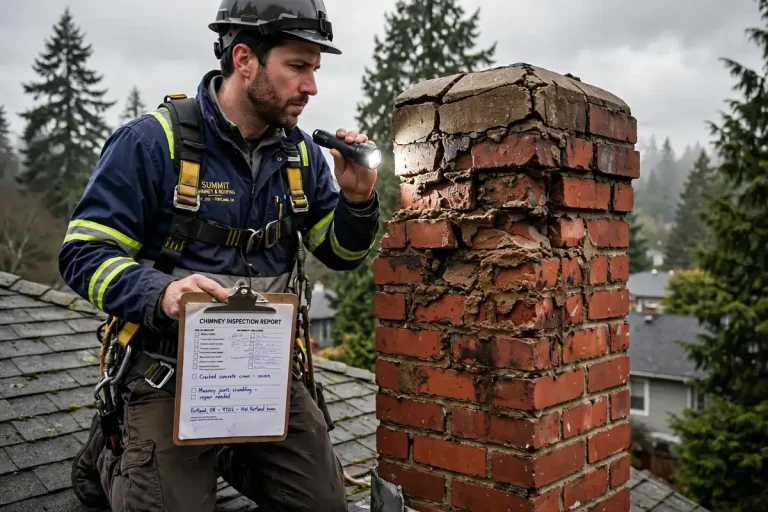
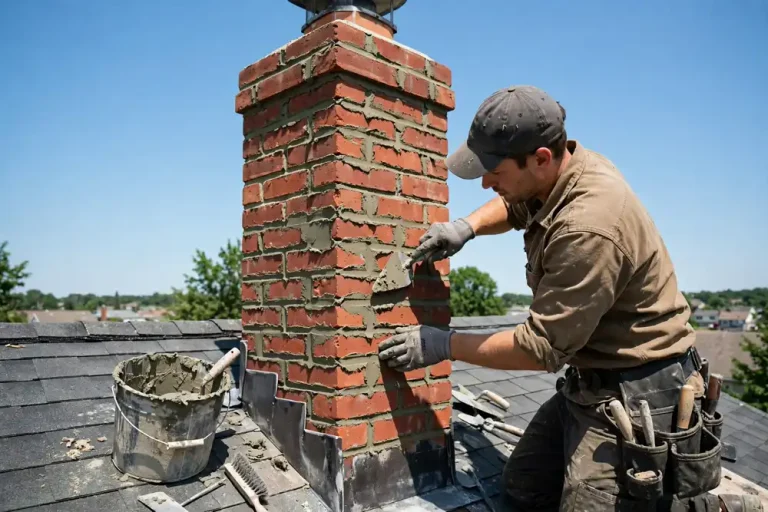
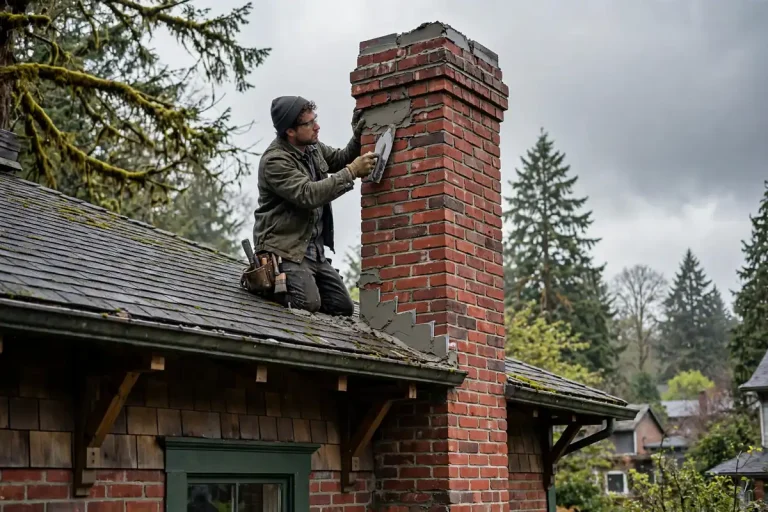
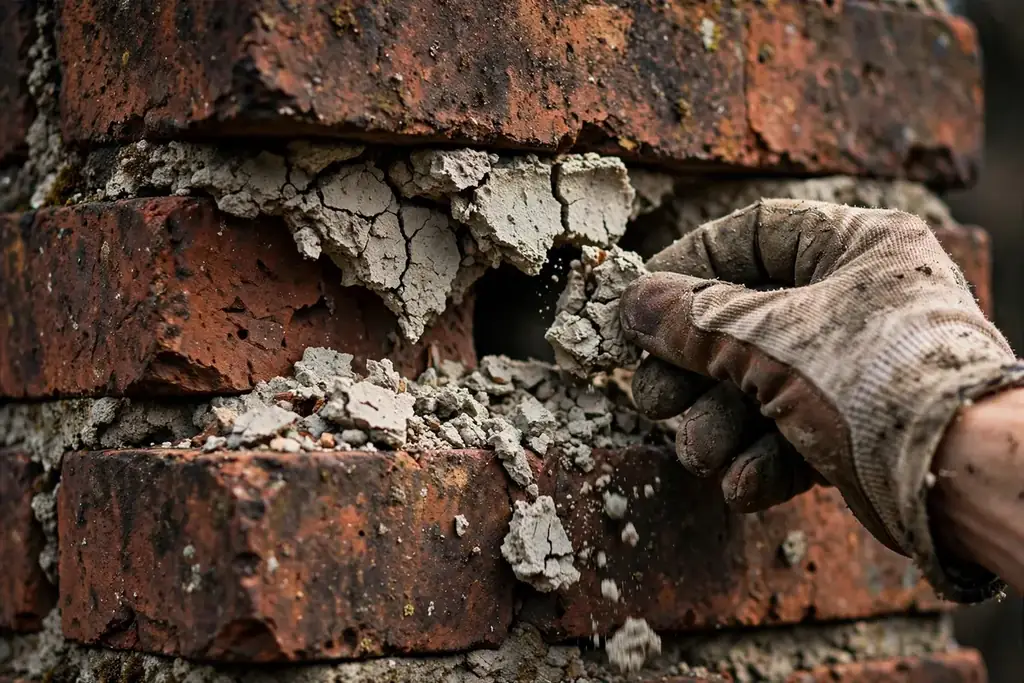
Mortar is the material holding your chimney’s bricks together and it’s usually the first thing to fail. If you can see gaps between bricks or if mortar crumbles when you touch it water is already getting into the structure. In Portland freeze thaw cycles during colder months make this worse. Water seeps into small cracks freezes, expands and turns a hairline crack into a much larger one. Left alone deteriorating mortar joints can eventually lead to a partial chimney collapse so this is one sign that genuinely shouldn’t wait.
Cracked or Damaged Chimney Crown
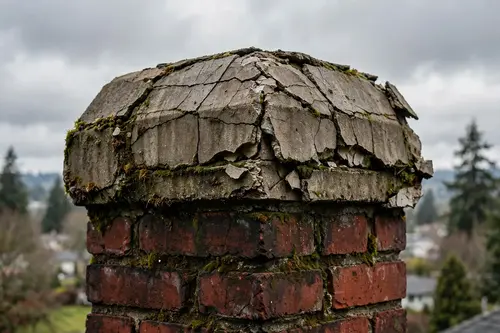
The crown is the concrete slab at the very top of your chimney and its job is to keep water from entering the flue and the space between the flue and the outer masonry. A cracked crown lets rainwater pour directly into the chimney structure every time it storms which in Portland can mean months of steady moisture exposure each year. Signs of crown damage include visible cracks chipped edges or water stains just below the top of the chimney. A damaged crown is one of the most affordable repairs when caught early but it becomes far more expensive once water has had time to work its way into the masonry underneath.
White Staining (Efflorescence) on the Brick
If you notice a white chalky residue on your chimney’s exterior brick that’s efflorescence and it’s a clear sign that moisture is moving through the masonry. Efflorescence itself isn’t structural damage but it’s a warning that your chimney is absorbing more water than it should. Over time that trapped moisture weakens the brick from the inside leading to spalling cracking and eventually crumbling masonry. Seeing this staining is a good reason to have a professional check the chimney before the damage spreads .
Rust Inside the Firebox or on the Damper
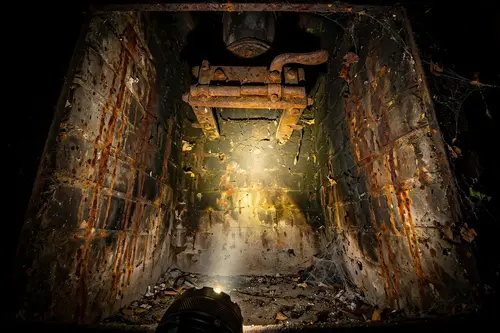
Metal components inside a chimney system including the damper and any metal fireplace insert parts shouldn’t be rusting. Rust is a telltale sign that water is getting into the chimney somewhere above often through a damaged cap or a cracked crown. Early rust is a simple fix but once it progresses to flaking or scaling metal, you’re usually looking at full component replacement rather than a quick repair.
A Leaning or Shifting Chimney
A chimney that visibly leans away from the house is one of the more serious signs on this list. This usually points to a foundation problem or long term water damage that has compromised the chimney’s structural integrity. A leaning chimney should be inspected immediately since continued shifting can eventually lead to a partial or full structural failure.
Broken Flue Tile Pieces in the Firebox
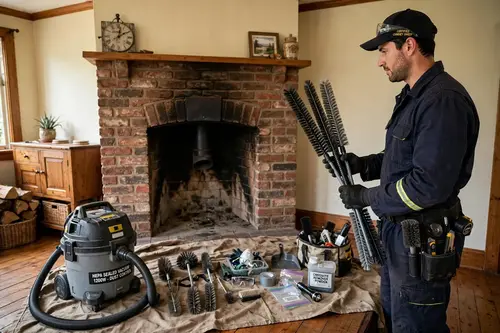
If you find small chips or shards of tile at the bottom of your fireplace your flue liner is likely deteriorating. The flue liner protects your home from the heat and combustion gases produced by a wood-burning fire and damaged tile means that protection is compromised. Chimney sweeps typically confirm liner damage using a specialized camera inspection since much of the flue isn’t visible from the firebox. If you see tile debris, it’s best to avoid using the fireplace until a professional has confirmed whether the liner needs repair or full replacement.
Water Stains, Puddling, or a Musty Smell
Water should never be present inside your fireplace. Stains, standing water, or a persistent musty odor almost always point to an issue at the top of the chimney, such as a missing chimney cap, cracked crown, or failing flashing where the chimney meets the roofline. Left unaddressed, this kind of moisture intrusion leads to mold growth, rotting wood framing near the chimney, and rusted metal components.
Damaged Flashing Around the Roofline
Flashing is the metal barrier sealing the joint between your chimney and your roof. When flashing rusts separates or was installed incorrectly water can leak into your attic or the walls surrounding the chimney rather than the chimney itself. This is a common cause of what homeowners assume is a roof leak when it’s actually a chimney flashing problem, so it’s worth having both checked together.
Signs vs Repair Type
| Warning Sign | Likely Cause | Urgency |
| Crumbling mortar joints | Water intrusion, freeze thaw cycles | High |
| Cracked chimney crown | Age, weather exposure | High |
| White efflorescence staining | Moisture moving through brick | Medium |
| Rust in firebox or damper | Water entering from above | Medium |
| Leaning chimney | Foundation or structural failure | Emergency |
| Broken flue tile in firebox | Deteriorating liner | High |
| Water stains or musty smell | Cap, crown, or flashing failure | Medium to High |
| Damaged flashing | Poor seal at roofline | Medium |
Why Portland Chimneys Show These Signs Faster
Portland receives close to 36 to 38 inches of rain a year, and that consistent moisture is the single biggest factor behind early chimney damage in the area. Older neighborhoods like Sellwood, Irvington and Alameda have a large number of original brick chimneys that were built decades before modern waterproofing standards which makes them more susceptible to mortar erosion and spalling. Combine that with the region’s freeze thaw swings in winter and small cracks that might sit unchanged for years in a drier climate can turn into serious structural issues within a single wet season in Portland.
What to Do If You Notice These Signs
If you spot one or more of these warning signs avoid using your fireplace until a certified chimney technician has had a chance to inspect it. Continuing to use a damaged chimney risks carbon monoxide exposure smoke leaking into the home and in more serious cases a chimney fire. A CSIA certified sweep can determine whether you’re dealing with a simple mortar repair or a more significant structural issue and catching problems early is almost always cheaper than waiting until the damage spreads.
Not sure how serious your chimney’s damage is? See our Chimney Repair in Portland, OR page for what each repair involves or call (503) 433-7104 for a free estimate. The safest first step is a Chimney Inspection in Portland, OR it shows exactly how serious the damage is.
Some damage can be patched, but widespread failure is different — see our guide on when to repair vs replace a chimney.
Frequently Asked Questions
Schedule a Chimney Inspection in Portland
Catching chimney damage early is almost always the difference between an affordable repair and a costly rebuild. If you’ve noticed any of the signs above whether it’s crumbling mortar a stained crown or water where it shouldn’t be scheduling a professional inspection before your next fire is the safest next step especially heading into Portland’s wetter months.