How Long Does Brick Chimney Repair Last?
Most brick chimney repairs last roughly 10 to 30 years, but the actual lifespan depends on the type of repair, the materials used, the quality of the workmanship, and how well the chimney is protected from water afterward. Properly done tuckpointing often reaches 20 to 30 years, while a basic crown patch may need attention much sooner.
If you are planning repairs or just received a quote, this guide explains what to expect from each fix so you can budget wisely and avoid paying for the same job twice. Keep in mind that every figure below is an estimate, not a guarantee. A real timeline can only be set after an inspection of your chimney and a review of the materials used.
Not every repair ages the same way. Here is a quick reference with estimated ranges under typical conditions:
How Long Does Brick Chimney Repair Last? The Short Answer
| Repair Type | Estimated Lifespan |
|---|---|
| Tuckpointing (repointing mortar joints) | About 20 to 30 years |
| Brick replacement | Often 50 years or more, if the moisture source is fixed |
| Chimney crown coating or patch | Roughly 5 to 15 years, depending on the product |
| Full crown rebuild | Many years, depending on materials, workmanship, and exposure |
| Flashing repair or replacement | Broadly 10 to 30 years |
| Flue liner replacement | Varies widely by liner material |
Notice the pattern. Brick itself can last 100 years or more, according to Brick Industry Association guidance, yet the parts around it that manage water wear out much sooner. Exposed chimney masonry can also need repairs earlier than masonry on a wall, since a chimney takes weather on every side.
Why Bricks Outlast Mortar
Fired clay brick is extremely durable. Mortar is softer by design. It acts as a sacrificial layer that absorbs movement and moisture so the brick does not have to.
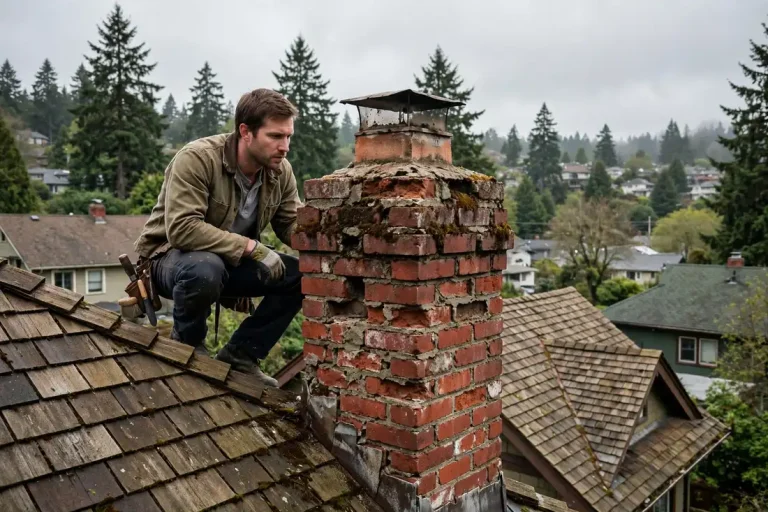
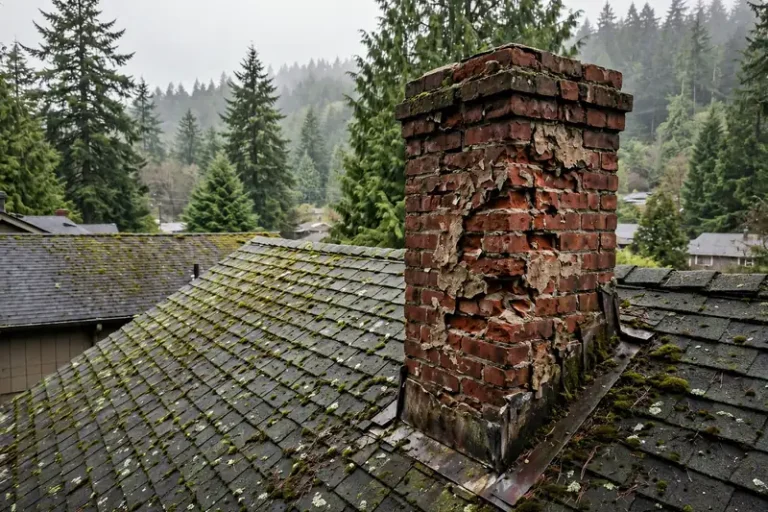
Rain soaks into the joints, then freezes, expands, and thaws. Repeat that cycle through enough seasons and the mortar crumbles. Once joints open up, water reaches the bricks, and that is when spalling begins, meaning the brick faces flake or pop off. If you notice this, read more about chimney brick spalling and how early repairs can limit the damage.
How Portland Weather Affects Chimney Repair Lifespan
Portland’s wet winters and recurring periods of moisture exposure can accelerate deterioration in brick chimneys. Water can enter through damaged mortar joints, cracked crowns, and poorly sealed flashing. When temperatures drop below freezing, trapped moisture can contribute to freeze thaw damage. Regular inspections and timely masonry repairs help Portland homeowners protect their chimneys against long term water damage.
How Long Does Tuckpointing Last?
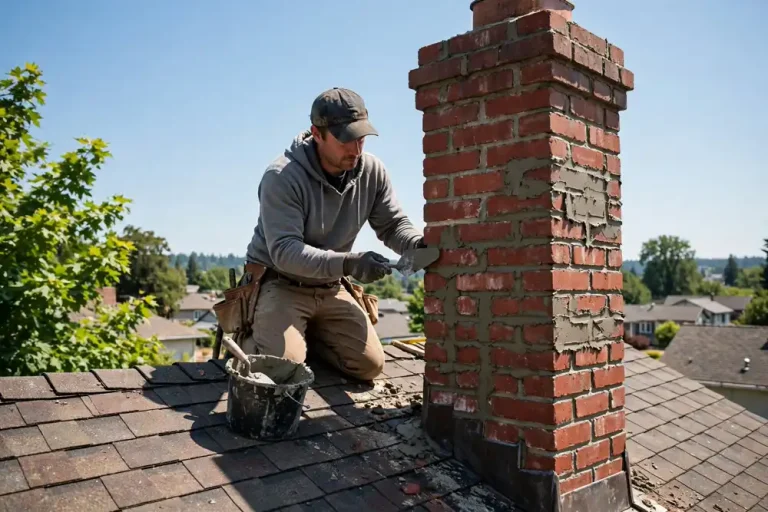
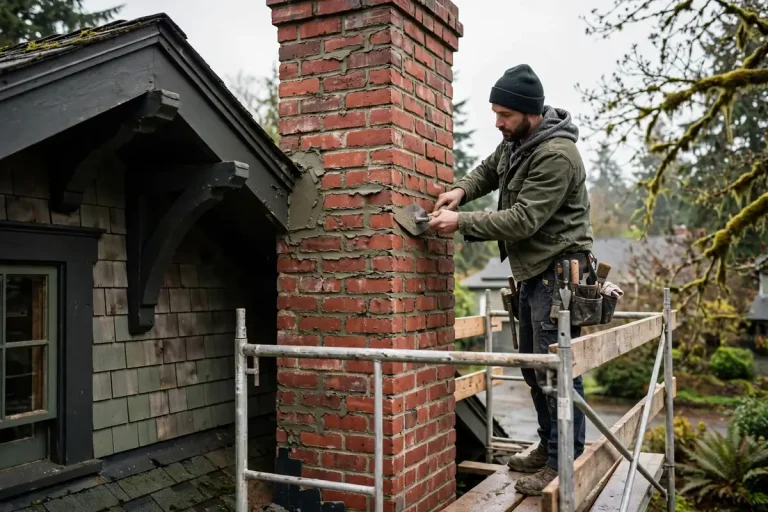
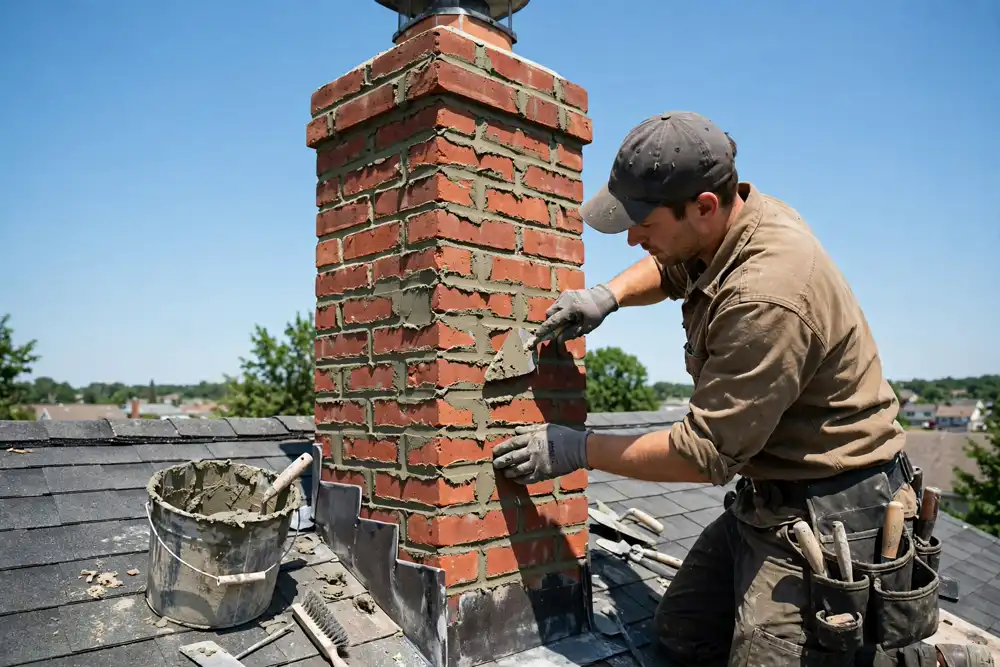
Chimney tuckpointing, also called repointing, means removing damaged mortar and packing in fresh mortar. Done well, it is commonly estimated to last 20 to 30 years. Done poorly, joints can crack or fall out much sooner.
Three things strongly influence the result:
- Mortar match. The replacement mortar should be compatible with the original brick and mortar. Older or softer bricks may require a softer mortar mix. Using mortar that is too hard can cause damage to the surrounding brickwork.
- Joint preparation. The depth of preparation should match the condition of the existing mortar joint and the surrounding masonry, and the new mortar should be packed in firmly so it bonds well.
- Weather during the job. Mortar needs time to cure. Rushing work in freezing or soaking conditions can weaken the bond.
How Long Does a Chimney Crown Repair Last?
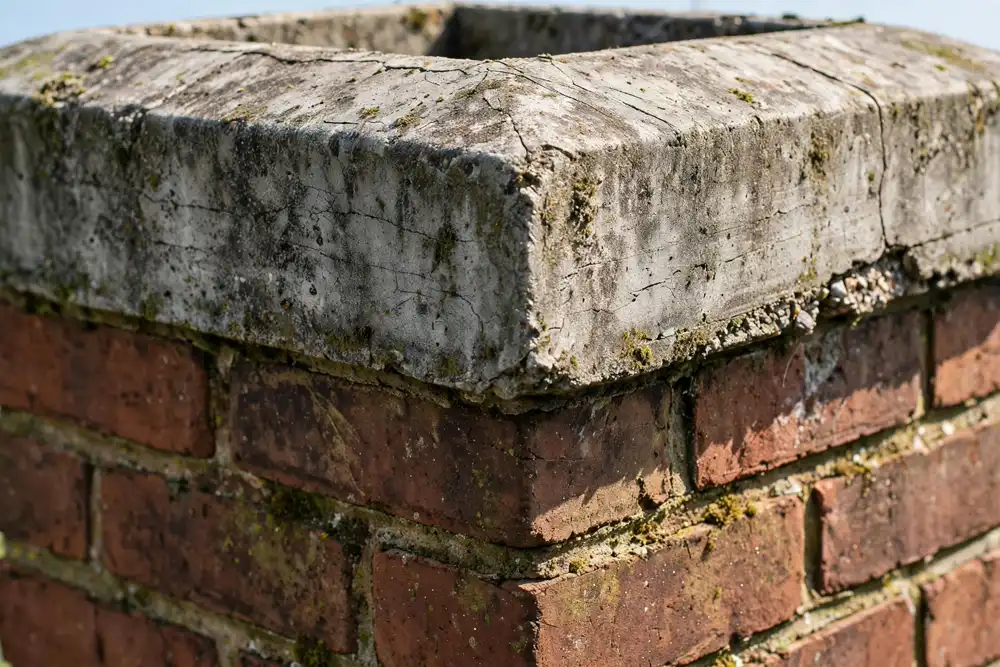
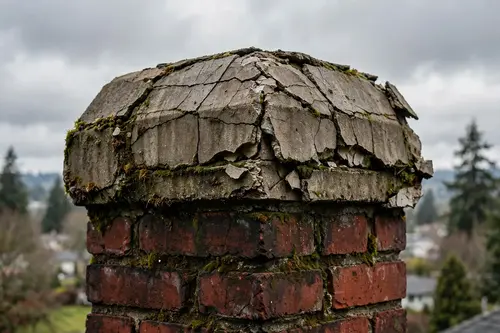
The chimney crown is the concrete or mortar slab at the top that sheds water away from the flue and brick. If the crown has only hairline cracks, a chimney crown repair with a flexible coating can protect it for roughly 5 to 15 years, depending on the product and exposure.
When cracks are wide, edges are crumbling, or the crown has little overhang, patching only buys time. A properly constructed crown with adequate slope, sufficient overhang, and a drip edge can provide many years of protection. Its actual lifespan depends on the materials used, installation quality, and exposure to weather.
How Long Does Brick Replacement Last?
When individual bricks are cracked, spalled, or loose, a mason removes them and sets matching bricks. Chimney brick replacement can last for decades, since new brick is just as durable as the old. The catch is that replacement only holds up if the water source is fixed too. If leaking flashing or a failed crown caused the damage, the new bricks can fail the same way.
Flashing: The Hidden Factor
Flashing is the metal seal where the chimney meets your roof. The durability of chimney flashing repair depends on the metal used, the installation, and the condition of the connections and sealants. Stainless steel and copper are generally durable choices, but poor installation or failed sealant can let water in long before the metal itself wears out.
What Shortens the Life of a Chimney Repair?
Even a good repair can fall short when these problems show up:
- Missing chimney cap. A cap keeps rain and animals out of the flue. Without one, water can enter the system and attack from within.
- Mismatched materials. Mortar or brick of very different hardness creates stress points.
- Skipped inspections. Small cracks grow quietly. A yearly inspection by a qualified chimney professional catches them early.
- A damaged flue liner. Cracks in a terra cotta liner allow heat and acidic creosote to reach the masonry.
- Ignoring efflorescence. The white, chalky residue on brick means moisture is moving through it. It is a warning sign, not just a cosmetic issue.
How to Make Your Chimney Repair Last Longer
A few simple habits can stretch repair life:
- Schedule an annual inspection, ideally before winter. The Chimney Safety Institute of America and NFPA 211 recommend at least a yearly inspection of chimneys, fireplaces, and vents.
- Keep gutters clean and trim overhanging branches so water does not pool near the chimney.
- Install a stainless steel chimney cap with a mesh screen.
- Hire an experienced masonry and chimney specialist who selects materials to suit your existing brick.
- Repair small cracks quickly. Early fixes cost less and last longer than emergency rebuilds.
Signs Your Repair Is Failing
Watch for these red flags after any chimney work:
- New cracks in mortar joints or along the crown
- Bricks flaking or crumbling
- Water stains on interior walls or ceilings near the chimney
- A musty smell when the fireplace is not in use
- Gaps between the flashing and the brick
- White staining on the exterior brick
If you spot any of these, book a chimney inspection in Portland right away. Moisture damage spreads fast and can turn a small repair into a much larger project.
Repair or Rebuild: How to Decide
A partial or full chimney rebuilding project may be necessary when damage is widespread, the chimney is leaning, the masonry is structurally unstable, or the underlying foundation has shifted. A professional inspection can determine whether targeted repairs are enough or rebuilding is the safer option. Our guide to brick repair vs complete chimney rebuild explains how to tell which side of that line your chimney sits on.
Ask your mason for a written scope that explains the cause of the damage, the materials they plan to use, and what lifespan you can reasonably expect from each fix. A trustworthy contractor explains why a repair should hold up, rather than simply promising that it will.
Final Thoughts
So, how long does brick chimney repair last? With quality materials, skilled workmanship, and yearly upkeep, many repairs deliver decades of service. The key is fixing the cause of the damage, not just the symptoms. If your chimney shows cracks, loose bricks, or water stains, schedule an inspection with Portland Chimney Care before small issues become costly rebuilds.