Brick Chimney Repair: Signs, Costs, and Fixes Every Portland Homeowner Should Know
Brick chimney repair means fixing crumbling mortar, cracked or flaking bricks, a damaged crown, and leaking flashing before water spreads deeper into the masonry. Small localized jobs often cost a few hundred dollars, while full repointing commonly runs from $500 to $2,500 depending on scope and access. The earlier you act, the smaller the bill, and in a rainy city like Portland, waiting is rarely a good idea.
Why Brick Chimneys Break Down
A brick chimney sits on your roof taking everything the weather throws at it. Bricks and mortar are porous, so they soak up water like a sponge. Over time, that moisture causes most of the damage you will ever see.
In the Pacific Northwest, the main causes are:
- Constant moisture. Long wet seasons keep masonry damp for months, which softens mortar joints.
- Moss and algae. Shaded chimneys under tall trees grow moss that holds water against the brick.
- Freeze and thaw cycles. Even occasional cold snaps can make trapped water expand and break the faces off bricks.
- Age. Mortar is designed to wear out before the brick does, so it eventually needs replacing.
- Settling and seismic movement. Older Portland homes can develop cracks from shifting foundations or past earthquakes.
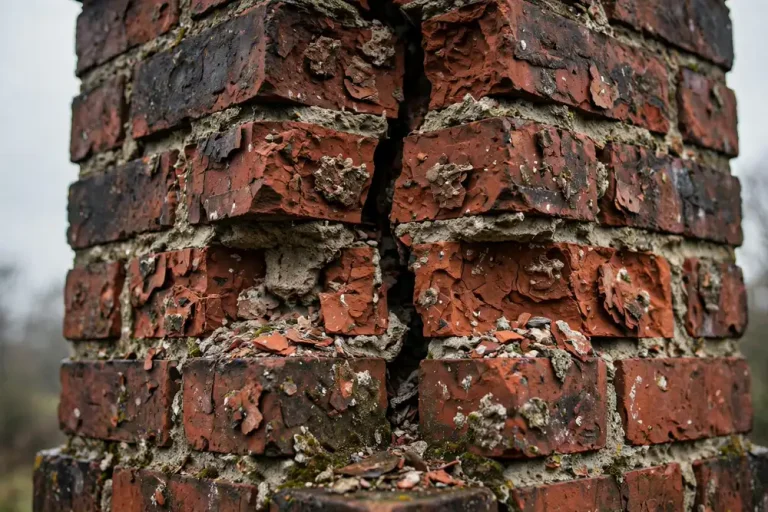
Before paying for repairs, it helps to understand why chimney bricks spall in the first place.
Warning Signs Your Chimney Needs Attention
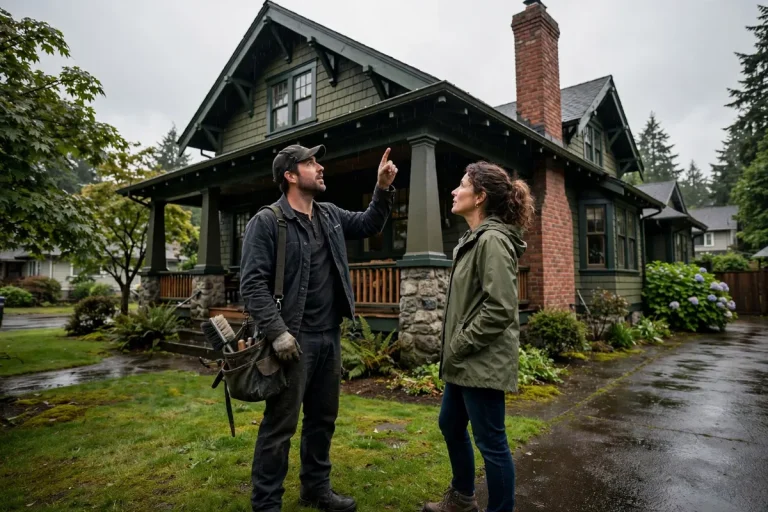
You do not need to climb onto the roof to spot trouble. Check from the ground with binoculars, and look inside the attic and fireplace.
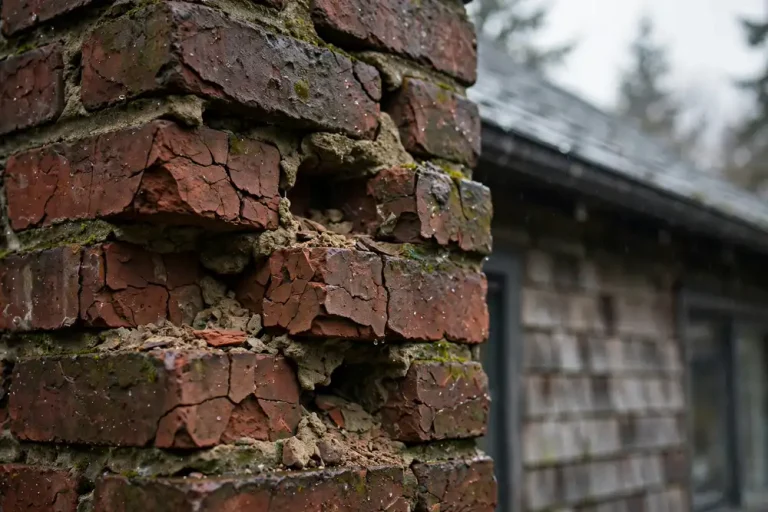
Crumbling or missing mortar. Sandy, recessed, or powdery joints, or mortar that falls out when touched, suggest the joints are failing.
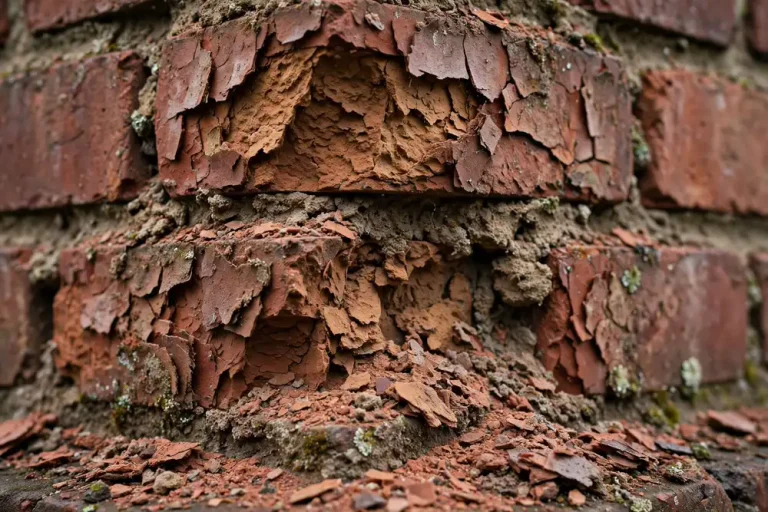
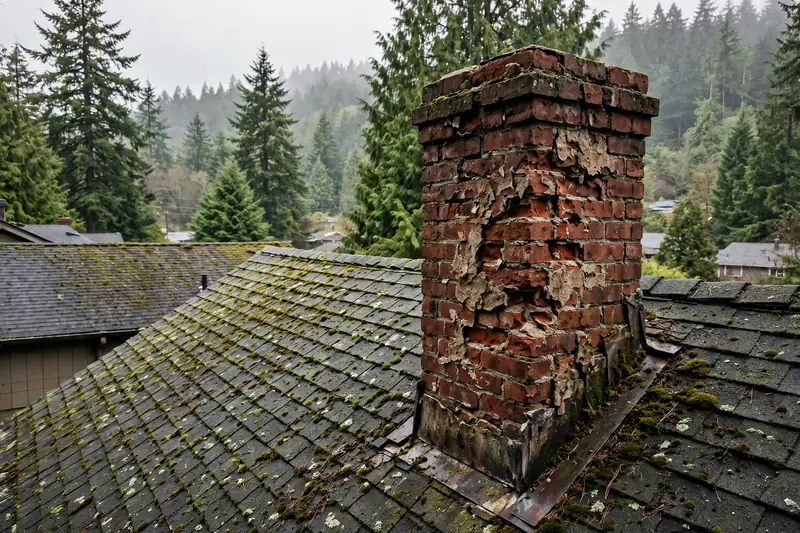
Spalling bricks. Spalling is when the outer face of a brick peels, flakes, or pops off. It usually points to heavy moisture damage.
Most brick problems start with freeze thaw chimney damage in Portland, when saturated masonry freezes overnight.
White powdery stains. This is efflorescence, a salt deposit left behind when water travels through brick and evaporates. It is not harmful by itself, but it shows that water is getting in.
A cracked or crumbling crown. The crown is the concrete or mortar slab at the top that sheds water away from the flue. When it cracks, rain can reach the stack directly.
Rusted or loose flashing. Flashing is the metal seal where the chimney meets the roof. Gaps there can cause leaks that appear as ceiling stains.
A leaning stack. A tilting chimney is a safety concern and needs prompt professional attention.
A damp or musty smell. This can point to moisture entering through the crown, flashing, or flue.
Smoke or combustion gases entering the home. This is an urgent safety issue. Stop using the fireplace and call a qualified professional right away.
Common Repair Methods Explained
Understanding the options helps you read a contractor’s estimate with confidence.
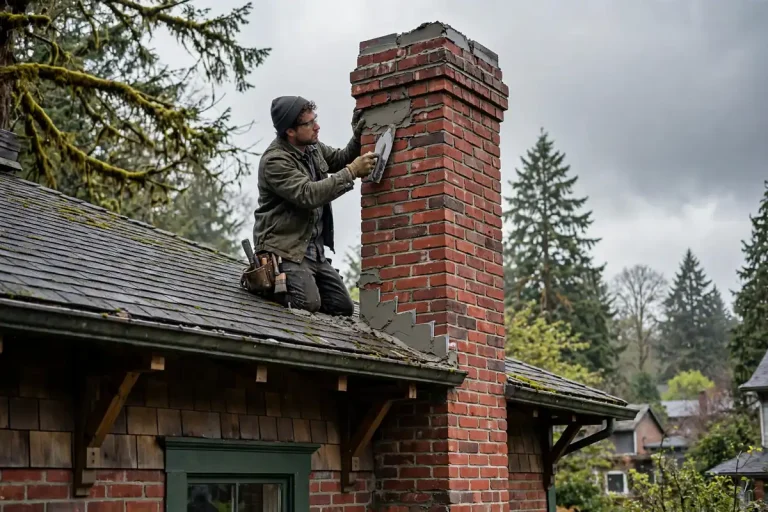
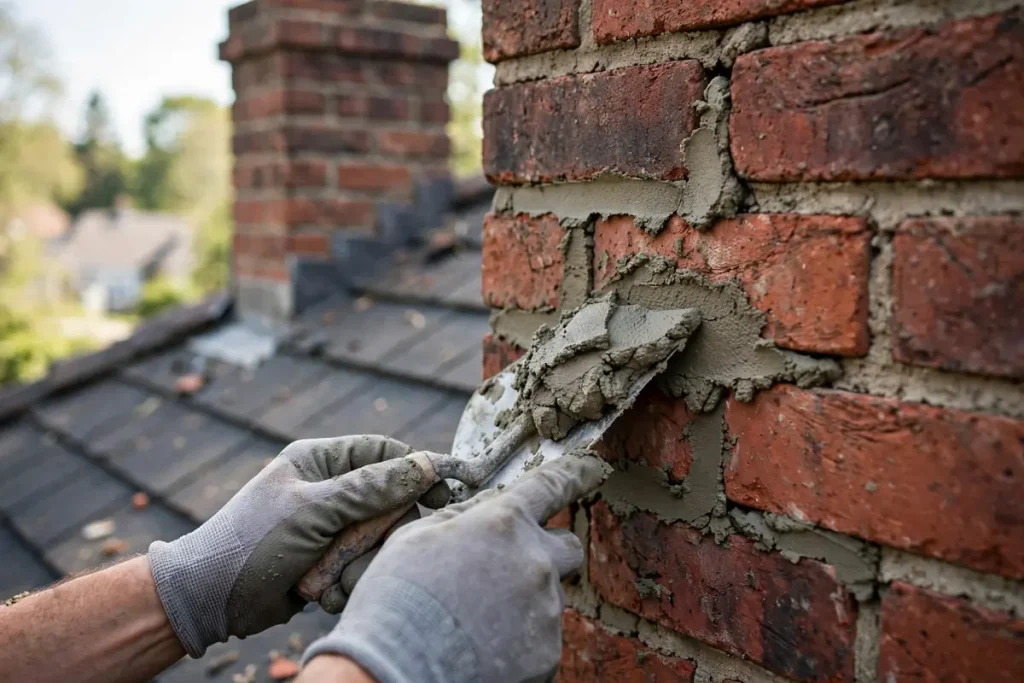
Repointing (tuckpointing). A mason removes deteriorated mortar and fills the joints with compatible new mortar. The replacement mortar should match the original masonry in strength, composition, and flexibility. Using mortar that is too hard can damage older, softer bricks. Ask your contractor to explain how the mortar will be selected for your chimney. Our chimney mortar and tuckpointing guide explains the warning signs, the repair steps, and how to choose the right mortar for a Portland home. If you are wondering what chimney tuckpointing involves, our step by step guide explains the process, signs and mortar matching.
Brick replacement. Individual spalled bricks are cut out and replaced with matching ones. Color and size matching matters, especially on historic homes.
Crown repair or rebuild. Minor hairline cracks can sometimes be sealed with a crown coating. A badly broken crown may need to be rebuilt with a sloped, overhanging slab and a drip edge.
Flashing replacement. Old flashing is removed and new metal is installed and sealed, often with step flashing and counter flashing.
Chimney cap installation. A stainless steel cap with a mesh screen helps keep out rain, birds, and debris.
Partial or full rebuild. When damage is deep or widespread, a mason may rebuild the stack above the roofline or, in serious cases, from the foundation up, to current code.
How Much Does It Cost?
Prices vary by chimney height, roof access, material matching, labor, and how much hidden damage is found. These are planning estimates, not guaranteed quotes:
- Minor mortar and crack repair: $150 to $500, for small localized fixes only
- Full chimney repointing: $500 to $2,500, depending on scope and access
- Spalling brick repair: $1,000 to $3,000, depending on how many bricks are affected
- Crown repair or rebuild: roughly $300 to $1,500 as an estimate
- Flashing replacement: roughly $200 to $1,000
- Rebuild above the roofline: often a few thousand dollars or more
- Rebuild from the foundation up: several thousand dollars or more, and usually the highest cost
A repair is almost always cheaper than the water damage it prevents. A leaking chimney can rot roof decking, stain ceilings, and soak insulation.
Repair or Rebuild? A Simple Decision Guide
If damage is limited to a few mortar joints or isolated bricks and the chimney remains structurally sound, localized repairs may be enough. Widespread spalling, deep masonry deterioration, a leaning stack, or significant structural movement may require partial or full rebuilding. A qualified masonry contractor should inspect the chimney and explain why the recommended repair is appropriate for your home.
For repair types, costs and priorities in one place, see our complete chimney repair guide.
Can You Do It Yourself?
Homeowners can check for visible damage from the ground using binoculars and keep notes of ceiling stains, damp smells, or falling mortar. Avoid climbing onto a wet or steep roof, and do not attempt structural chimney work yourself. Moss covered surfaces are especially slippery. Repointing, replacing bricks, repairing the crown, and replacing flashing require the right materials, access equipment, and experience. For these jobs, hire a qualified professional.
How to Choose the Right Contractor
For Portland homeowners, verify the contractor’s Oregon Construction Contractors Board (CCB) license before hiring. You can check license status, bond, insurance details, and complaint history through the CCB. Ask for proof of current liability insurance, references, and a written estimate that explains the repair method, materials, and expected timeline.
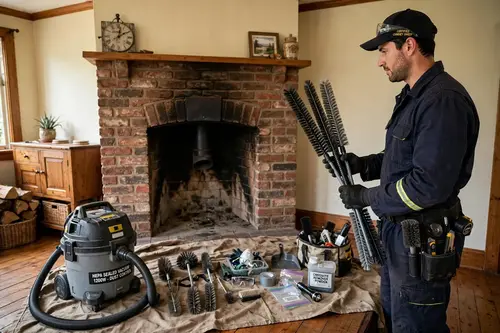
Certification from the Chimney Safety Institute of America (CSIA) is a useful extra sign of training, but it does not replace a valid Oregon license. A Level 2 chimney inspection may be appropriate when significant damage is suspected or a more detailed look at the flue is needed. Ask the contractor why that inspection level is recommended for your situation, and be cautious of anyone who pushes a full rebuild without clear explanations and photos.
How to Prevent Future Damage
A little maintenance goes a long way:
- Schedule a yearly inspection, ideally before fall.
- Keep the cap and crown in good shape.
- Trim overhanging branches to reduce moss and debris.
- Fix small cracks right away.
Frequently Asked Questions
Final Thoughts
Water is the enemy of every masonry stack, and Portland has plenty of it. Catching small cracks, loose mortar, and failing flashing early keeps repairs affordable and your home dry. If you notice any warning sign above, do not wait for the next storm to find out how bad it is. Schedule an inspection with a licensed local mason, and make brick chimney repair part of your regular home care routine.