Complete Homeowner’s Guide to Chimney Repairs
Chimney repairs should start with a professional inspection, then fix water entry points first (crown, flashing, and mortar joints), then the flue liner, and only then cosmetic masonry. That order protects your home from leaks and fire risk while keeping costs under control. This Complete Homeowner’s Guide to Chimney Repairs walks you through the warning signs, the most common fixes, estimated costs, and how to decide what can wait.
What Counts as a Chimney Repair?
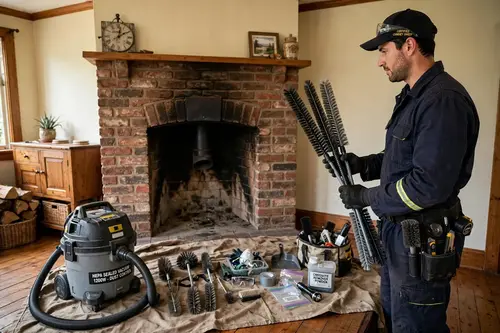
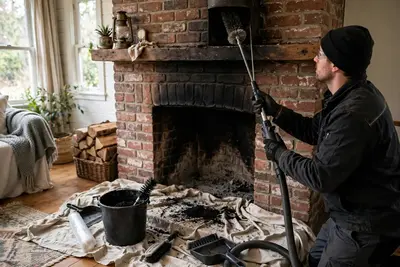
A chimney repair is any work that restores the structure, the flue, or the weather barriers of your chimney. Cleaning removes creosote and soot, but repairs correct damage. Think cracked crowns, failing flashing, crumbling mortar, broken flue tiles, and rusted caps.
Most chimney damage begins with water. Brick and mortar are porous, so moisture slips in, reezes, expands, and slowly breaks the masonry apart. Fixing the entry point early is almost always cheaper than rebuilding later.
Warning Signs Your Chimney Needs Repair
You do not need to climb on the roof to spot trouble. Watch for these clues:
- White chalky stains on the brick (efflorescence), which signal moisture moving through the masonry
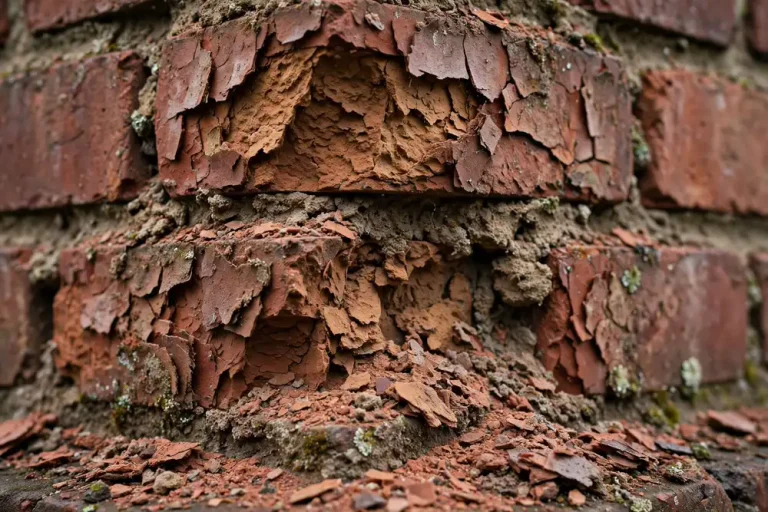
- Flaking or popping brick faces, known as spalling
- Mortar that looks sandy, recessed, or missing
- Rust on the damper, firebox, or cap
- Water stains on the ceiling or wall near the chimney
- A musty smell, especially after rain
- Smoke drifting into the room instead of up the flue
- Pieces of clay tile in the firebox or ash pit
- A chimney that leans or shows horizontal cracks
If you notice smoke indoors or tile debris, stop using the fireplace until a technician checks it. Those signs can point to a blocked or damaged flue, which raises carbon monoxide risk.
The Most Common Chimney Repairs Explained
Chimney Crown Repair
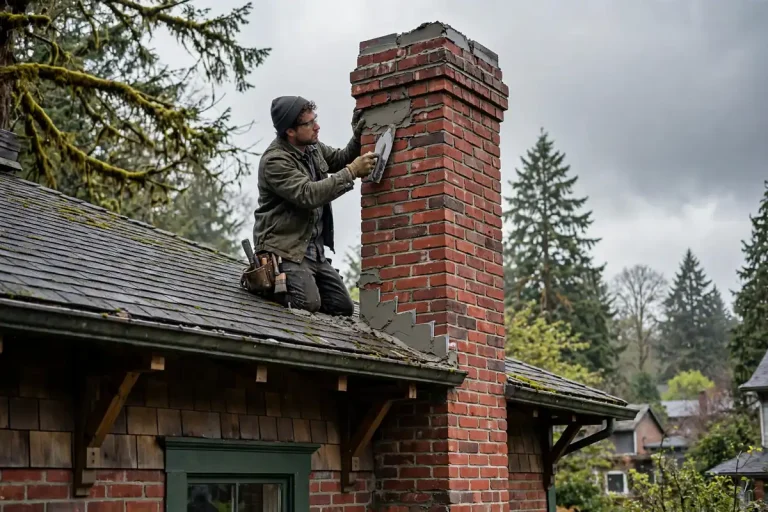
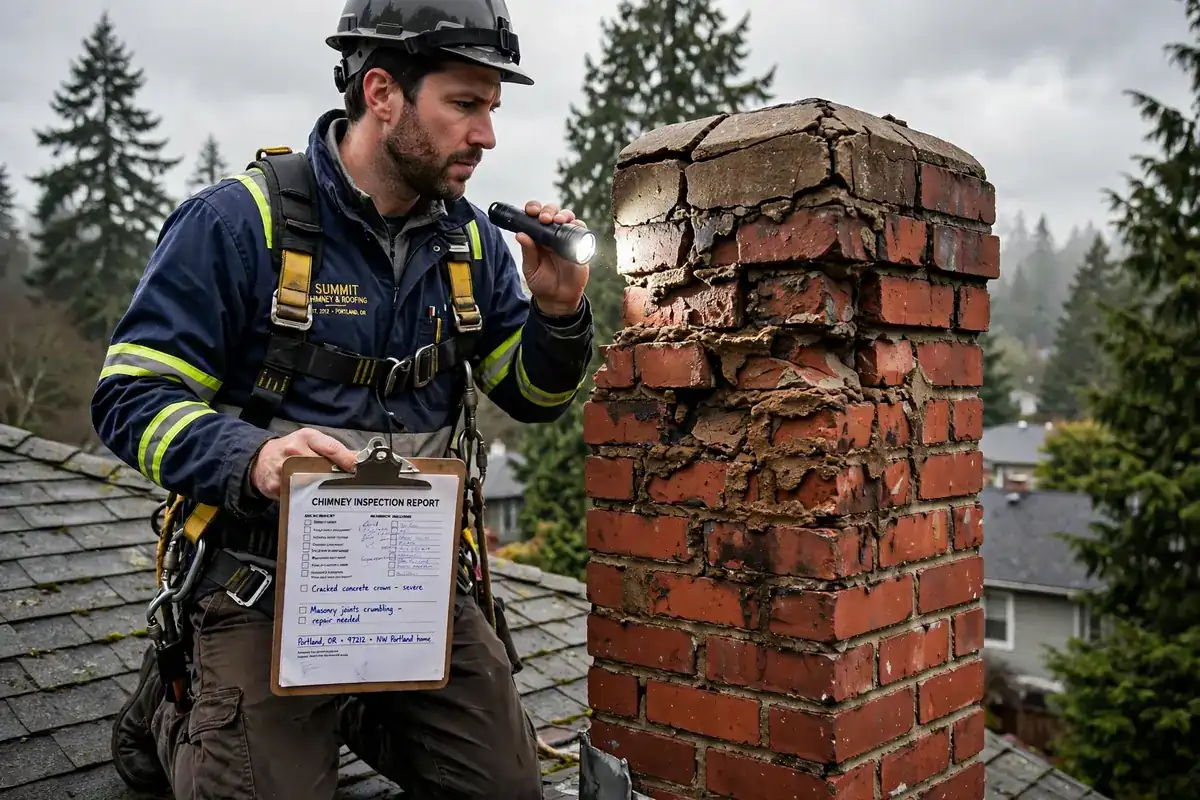
The crown is the concrete or mortar slab on top that sheds water away from the masonry. Hairline cracks can often be sealed or resurfaced. Large cracks or missing chunks usually mean the crown needs rebuilding.
Flashing Repair
Flashing is the metal seal where the chimney meets the roof. When it lifts, rusts, or separates, water runs behind it and into your attic. Many “chimney leaks” are really flashing failures.
Tuckpointing and Repointing
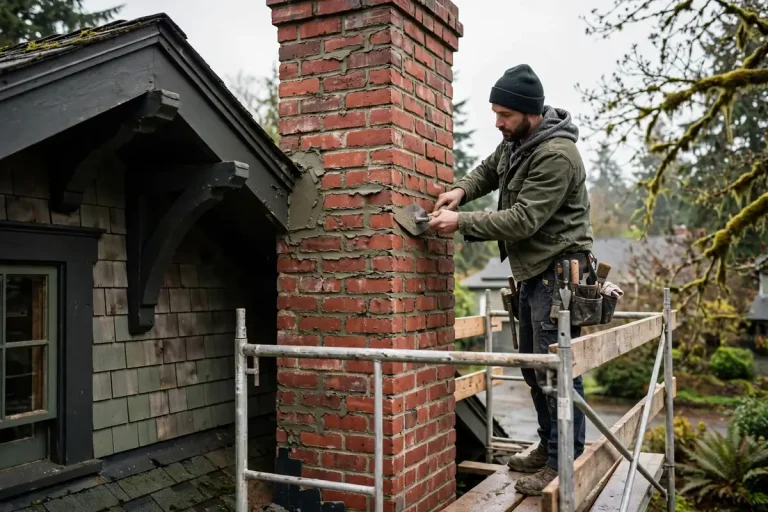
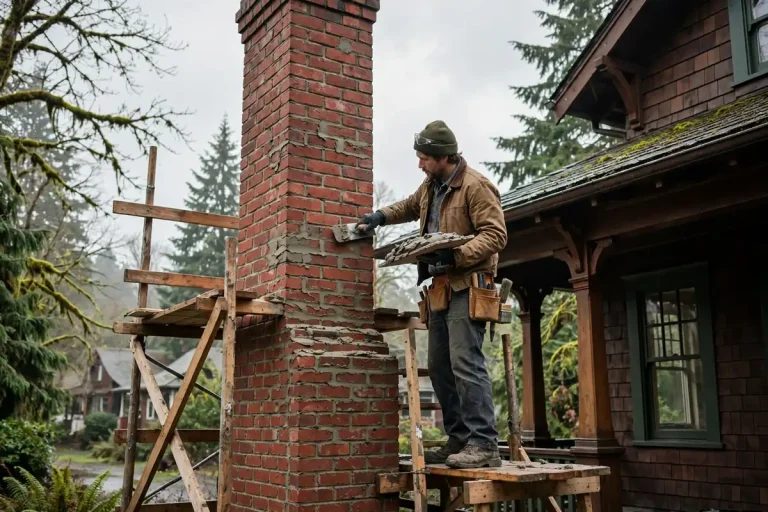
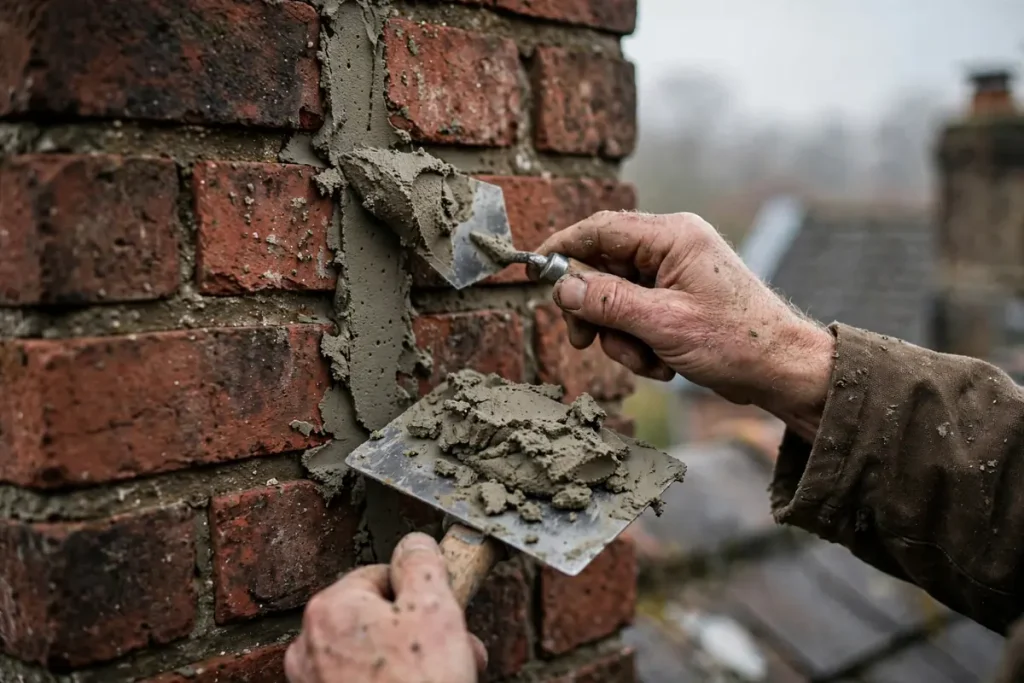
Tuckpointing replaces deteriorated mortar between bricks with fresh mortar. It restores strength and stops water from soaking the brick. Skipping it lets small gaps turn into loose bricks.
Brick chimneys have their own damage patterns and price ranges — see our brick chimney repair guide for the details.
Spalling Brick Replacement
When brick faces peel away, the damaged units are cut out and replaced. A mason also looks for the moisture source, because new brick will fail again if the leak remains.
Flue Liner Repair or Relining
The flue liner protects your home’s framing from heat and keeps combustion gases inside the flue. Cracked clay tiles can leak heat into nearby wood. Options include stainless steel liners or cast in place liners, depending on the chimney and fuel type.
Chimney Cap and Chase Cover Replacement
A cap keeps out rain, birds, and debris. On prefabricated chimneys, the chase cover is the metal lid across the top, and rust here causes rot below. Both are fast fixes with a big payoff.
Not sure which of these applies to you? Our Portland chimney repair team can diagnose it and show you photos of the problem.
Why Portland Chimneys Wear Out Faster
Portland’s long rainy season, moss growth, and shaded lots keep chimneys damp for months. Add occasional cold snaps and you get the freeze and thaw cycle that pries mortar and brick apart. Tall evergreens also drop needles that clog caps and hold moisture against the crown.
To understand why cracks form, read how freeze thaw weather affects chimneys in our region.
Because of this, yearly chimney cleaning before the first fire of fall also helps you spot early moisture damage. A small crown crack found in September is a minor job. The same crack ignored through a wet winter can become a structural repair.
To choose the right time of year for the work, read our guide to the best season to schedule brick chimney repairs in Portland.
Which Repairs Come First?
If your inspection finds several problems, use this priority order:
- Safety issues: damaged flue liners, blockages, or clearance problems
- Water entry points: crown, flashing, cap, and chase cover
- Structural masonry: mortar joints, leaning sections, and spalled brick
- Cosmetic work: staining, paint, and surface finishes
This is the heart of any Complete Homeowner’s Guide to Chimney Repairs: stop fire hazards first, stop water second, and save appearance for last.
Inspection Levels and Why They Matter
Repairs begin with an accurate diagnosis. The National Fire Protection Association’s NFPA 211 standard describes three inspection levels, and the Chimney Safety Institute of America (CSIA) recommends yearly inspections.
Level 1: A visual check of accessible areas for chimneys in regular, unchanged use.
Level 2: A more detailed inspection of accessible areas, including attics, crawl spaces, and basements, with video scanning or additional testing when needed. It is commonly required after certain system changes, chimney fires, or property transfers.
Level 3: Involves opening walls or removing parts of the chimney when serious hidden damage is suspected.
Ask for photos with any report. Pictures let you see the problem yourself, compare quotes, and decide with confidence. You can learn more on our chimney inspection Portland page.
Estimated Chimney Repair Costs in Portland, OR
Prices depend on roof height, access, materials, and how far the damage has spread. The figures below are general estimates as of October 2026, not quotes, and local contractors may price differently.
| Repair Type | Estimated Cost | Main Cost Factor |
|---|---|---|
| Chimney cap or chase cover | A few hundred dollars | Size and material |
| Flashing repair | $200 to $800 | Roof pitch and extent of damage |
| Crown sealing or resurfacing | $200 to $800 | Crack size (a full rebuild costs more) |
| Tuckpointing | $500 to $2,500 | Amount of mortar and height |
| Flue relining | $2,000 to $5,000 or more | Liner type and chimney height |
Waiting rarely saves money. Water damage spreads quietly, and a minor sealing job can grow into a rebuild. Get a written estimate that lists materials, labor, and warranty terms.
DIY or Professional Repair?
Some minor maintenance may be suitable for homeowners, but masonry water repellents must be breathable and compatible with the brick and mortar. The wrong product can trap moisture and speed up damage.
Leave roof work, flashing, crowns, flue liners, and structural repairs to qualified professionals. Roof access is dangerous, and a flue problem is invisible from the ground.
How to Choose a Chimney Repair Company
Look for these signs of a trustworthy contractor:
- Proof of insurance and licensing
- Certified technicians or equivalent training
- Photo documentation of every problem found
- A written estimate before work starts
- A clear warranty on materials and labor
- No pressure to approve extra work on the spot
A good company explains the reason behind each recommendation and gives you time to decide.
Chimney Repair FAQs
Final Thoughts
Chimneys rarely fail overnight. They give warnings through stains, cracks, odors, and drafts, and homeowners who act early save the most money. Use this Complete Homeowner’s Guide to Chimney Repairs as your checklist: inspect, prioritize safety, seal out water, and repair structure before appearance.
If you are in the Portland area, Portland Chimney Care offers photo reports and free estimates. Call +1 (503) 433-7104 or request a free estimate before the rainy season gets ahead of you.