What Is a Chimney Crown?
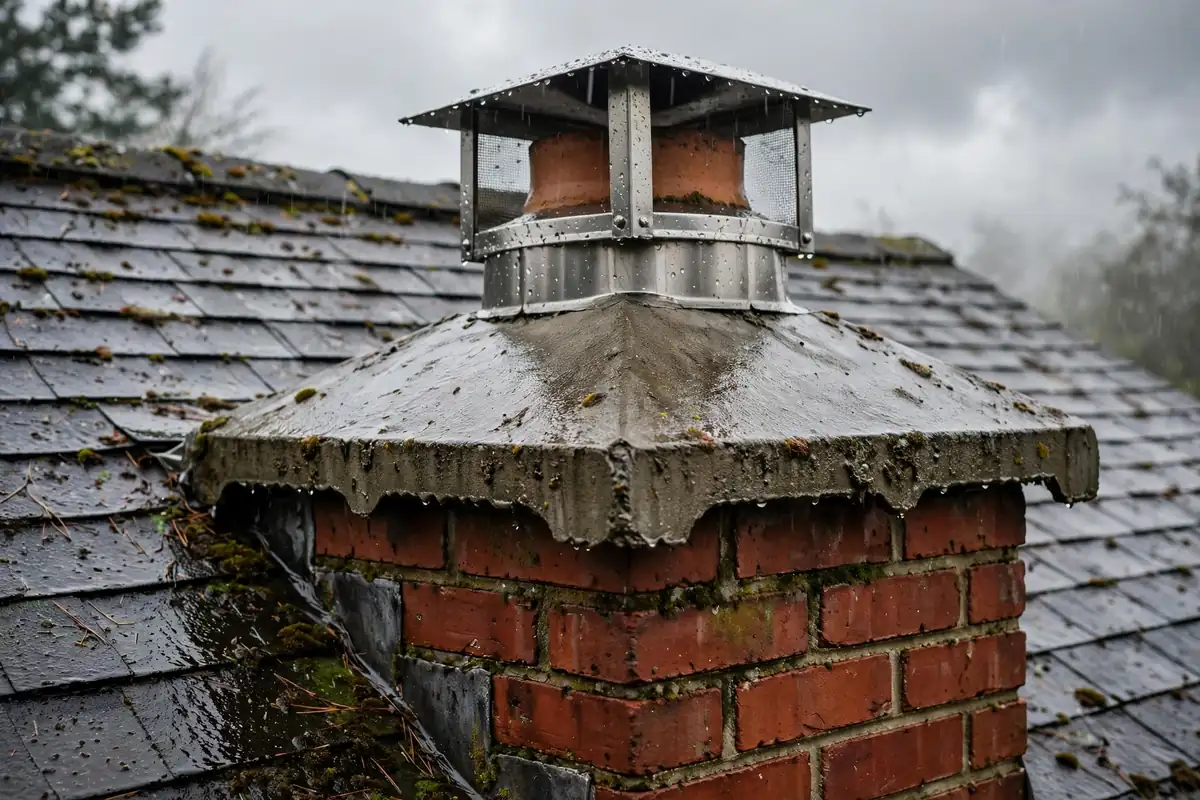
Look up at the top of a brick chimney and you’ll see a flat slab of concrete with a pipe sticking out of the middle — a part most homeowners never think about. So what is a chimney crown? It’s that slab — and it’s the part of your chimney that takes the worst of the weather, every single day. The crown is the roof of your chimney. Its only job is to throw rainwater off the masonry before it can soak in. When it works, you forget it exists. When it cracks, water gets a direct path into the brick, the mortar, and the flue.
The Short Answer
A chimney crown is a sloped slab of concrete — sometimes mortar — covering the entire top of a masonry chimney, except for the flue opening. It seals the gap between the outer brick and the flue liner, and its slope carries rainwater past the brick face so it drips clear instead of running down the wall. A good way to remember what is a chimney crown is this: it’s the roof of the chimney, and like any roof, it only works if it sheds water.
A properly built crown is thick enough to hold its shape, slopes away from the flue, extends past the brick to form a drip edge, and leaves a small gap — a bond break — around the flue tile, so the flue can expand without cracking the slab.
Crown vs. Cap vs. Flue: Three Parts, Three Jobs
People mix these three up, but they do different jobs.
The crown is the concrete slab across the top of the masonry. It protects the brick and mortar from water coming in from above.
The chimney cap is the metal cover over the flue opening. It keeps rain, birds, and debris out of the flue, and its mesh screen keeps sparks in. A cap sits on the crown, but it is not the crown.
The flue is the lined passage that carries smoke and gases out, and the crown seals the gap around it. The short version: the crown covers everything around the hole, the cap covers the hole, and the flue is the hole.
What Crowns Are Made Of
There are really two kinds of crowns, and knowing which one you have tells you a lot about how long it will last.
A cast concrete crown is the right way to build one: poured in place from a proper concrete mix, thick enough to hold its shape, sloped to drain, and finished with an overhang and drip edge. Built this way, a crown can last decades.
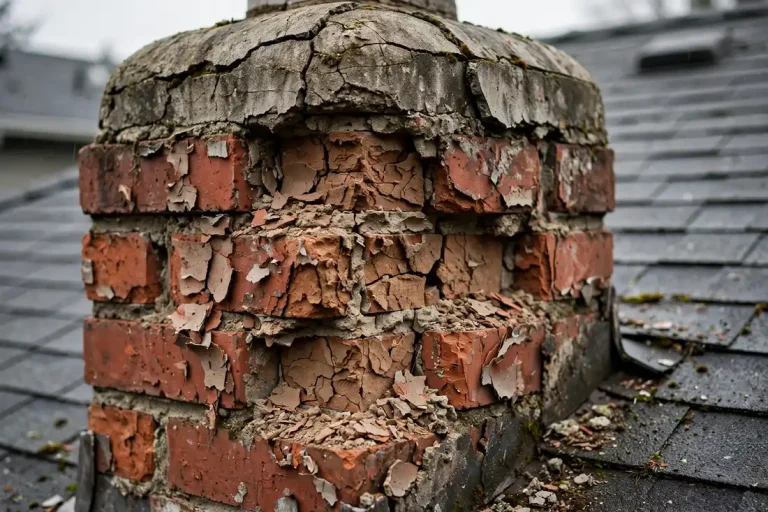
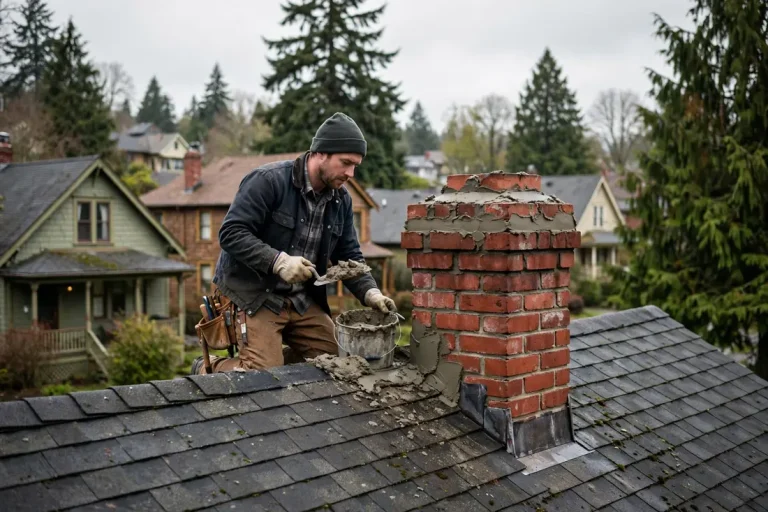
Many older Portland chimneys were finished with a thin layer of mortar over the top course of brick — a crown wash. Mortar is made for joining bricks, not for facing decades of rain and frost. A wash is thin, has no real overhang, and cracks early. If the top of your chimney looks like a thin, brittle skim of mortar flaking apart, you probably have a wash, not a crown. Patching it will not turn it into one; it needs to be rebuilt as a proper cast crown.
Signs Your Crown Is Failing
You can spot most crown problems from the ground with binoculars.
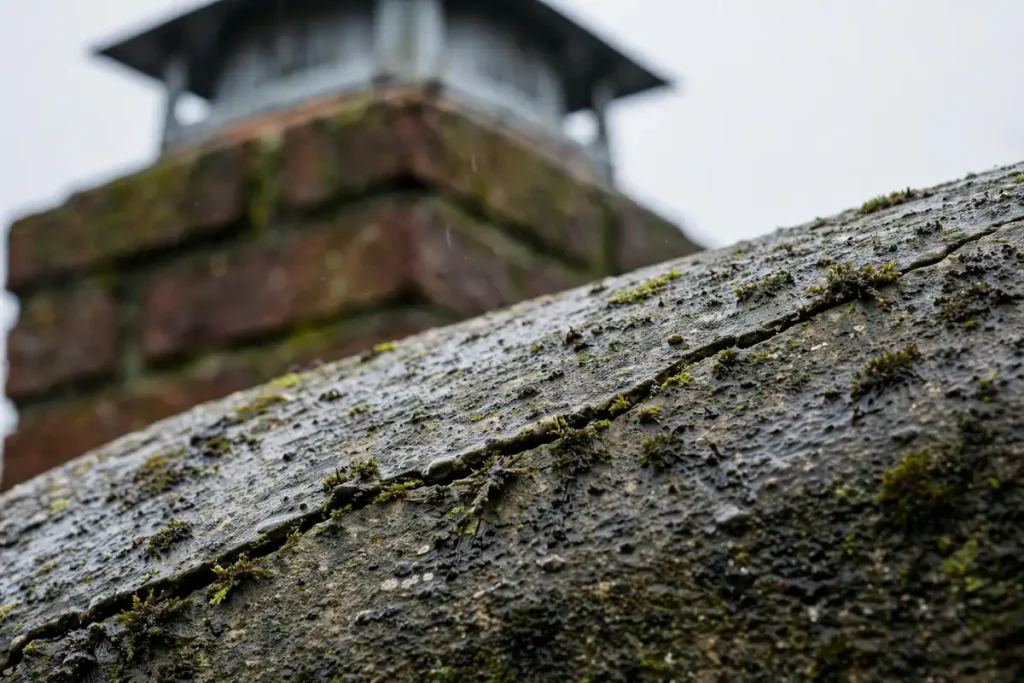
- Cracks in the crown — hairline cracks, spiderweb patterns, or a gap where the crown meets the flue.
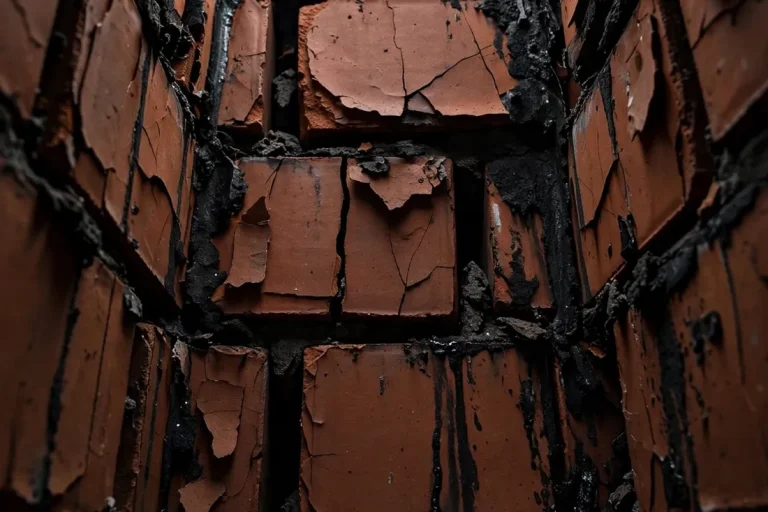
- Crumbling or flaking material — chunks missing or spots that sound hollow when tapped.
- Rust stains below the crown — orange streaks on the upper brick mean water is reaching metal up top.
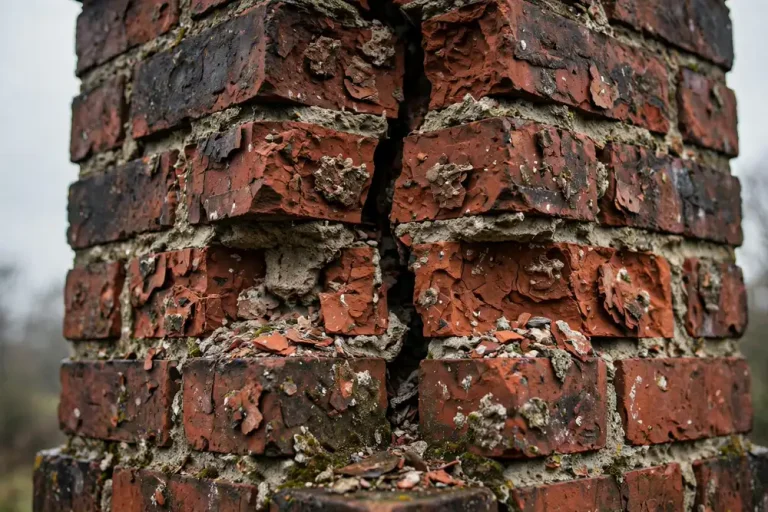
- Spalling brick below the crown — the face of the brick flakes or pops off, and water soaking in from a failed crown is a common cause.
- White powdery stains — efflorescence, left behind when water moves through the masonry and dries.
- Water in the fireplace — puddles or a damp hearth. By then, the leak has been going on for a while.
- Spot more than one? Read the full list of signs your chimney needs repair before you call.
What Happens If You Ignore a Bad Crown
Water is patient. A cracked crown does not flood your house overnight. It lets a little water in every time it rains, and water damage builds quietly, from the top down.
Water soaks into the brick and mortar. In winter it freezes and expands, widening the cracks a little more each time. This freeze-thaw cycle turns a hairline crack into crumbling masonry.
Saturated brick spalls, and once the hard outer face is gone, the softer brick underneath soaks up water faster. Mortar joints soften and wash out, weakening the top courses.
Water can also reach the flue liner. A cracked clay liner is a bigger problem than a cracked crown, because it affects how safely the chimney vents.
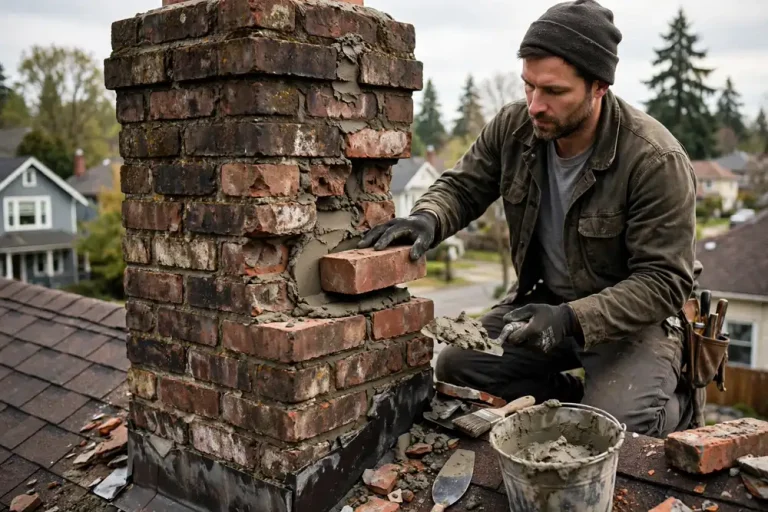
A small crown repair is a small job. A rebuild of the top of the chimney is not. The difference is usually just time — and how many rainy seasons the crack gets.
Repair or Replace?
Not every cracked crown needs to be torn off. The decision comes down to what is underneath.
Repair is usually enough when the cracks are minor and shallow, the concrete underneath is solid with no hollow spots, and the brick below is sound with the flue tiles intact.
Replacement is the better call when the “crown” is really a deteriorated mortar wash, large sections are missing or crumbling, deep cracks run through the slab, or the crown is flat or holds standing water.
Pricing is assessed on inspection — it depends on the size of the chimney, how much of the crown has to come off, and whether the brick or flue underneath needs work. If the damage goes beyond the crown itself, our guide on when to repair or replace a chimney walks through that decision.
A crown-specific coating can protect a sound crown, but coating a failing one just hides the problem for a season.
Keeping Your Crown in Shape
Have the chimney inspected once a year, ideally in the fall before the rainy season. An annual chimney cleaning (typically $150–$350, 45–90 minutes) is a good time to have the crown checked.
Check it from the ground after a storm — binoculars and five minutes are enough.
Keep the cap in place — a missing cap lets rain straight down the flue.
Don’t ignore small cracks. Sealing a hairline crack early is a small job; the same crack after two wet winters is not.
If the mortar joints below the crown are crumbling too, tuckpointing may be needed first — a new crown on failing mortar will not last.
Why Portland Rain Is Hard on Crowns
Portland gets roughly 40 inches of rain a year, spread across about 150 rainy days, mostly between October and April. A chimney crown here spends months at a time wet, with barely a dry stretch to recover.
That steady wetting is what makes small cracks matter more here. Water sits in the crack, freezes overnight, and the crack grows a little at a time.
The other Portland factor is age. Many older brick chimneys were built with thin mortar washes instead of cast crowns, never meant to handle this much rain for this many decades.
The Bottom Line
Now you know what is a chimney crown, what it does, and what happens when it fails. It is a small slab of concrete with an outsized job — keeping months of Portland rain out of the brick and the flue.
If your crown is cracked, crumbling, or you simply don’t know what condition it’s in, call Portland Chimney Care at +1 (503) 433-7104. We serve Portland, OR, and we can tell you plainly whether it needs a repair, a rebuild, or nothing at all.