Is It Safe to Use a Cracked Chimney?
You spot a crack in the chimney — in the firebox, up the brickwork outside, or in the liner a camera found during a cleaning — and the fire season is coming. The question you actually need answered is simple: can I light a fire or not? So is it safe to use a cracked chimney? The short answer is no — not until a professional has looked inside it. That sounds cautious, but the reason is straightforward: you can’t tell from the outside how far a crack goes, and the risks of getting it wrong are a house fire and carbon monoxide in your living room. This guide explains when to stop, what the real risks are, and what happens next.
Contents
- The Short Answer: Stop Using It Until It Is Inspected
- Not All Cracks Are the Same
- The Three Risks of Using a Cracked Chimney
- Warning Signs the Crack Is Serious
- What a Chimney Inspection Finds
- Repair or Replace: What Happens Next
- What to Do Tonight
- FAQ
The Short Answer: Stop Using It Until It Is Inspected
If you have found a crack anywhere in the chimney system — firebox, flue liner, or the brickwork outside — don’t light the fireplace again until someone qualified has inspected it. That is the advice every chimney professional gives, and it holds even when the crack looks small. A hairline crack in the mortar between bricks is often a minor repair, and a crack through the flue liner is a serious safety problem, but from the ground or the fireplace opening you usually can’t tell which one you are looking at. The liner, the part that matters most, is hidden inside the chimney. Stopping use costs you nothing but a few fires. Using a cracked chimney and being wrong about it can cost far more.
Not All Cracks Are the Same
The answer to the question “is it safe to use a cracked chimney” depends on where the crack sits, so the first job is working out which kind of crack you have. There are three places cracks show up, and they mean different things.
Cracks in the firebox. The firebox is the open part of the fireplace where the fire actually burns. Its bricks and mortar take the most direct heat, so small cracks here are common in older fireplaces. A hairline crack in a firebox brick is usually a repair, not an emergency — but a crack you can fit a coin into, or a firebox floor that has pieces missing, is a different matter, because heat can pass straight through to the structure behind it.
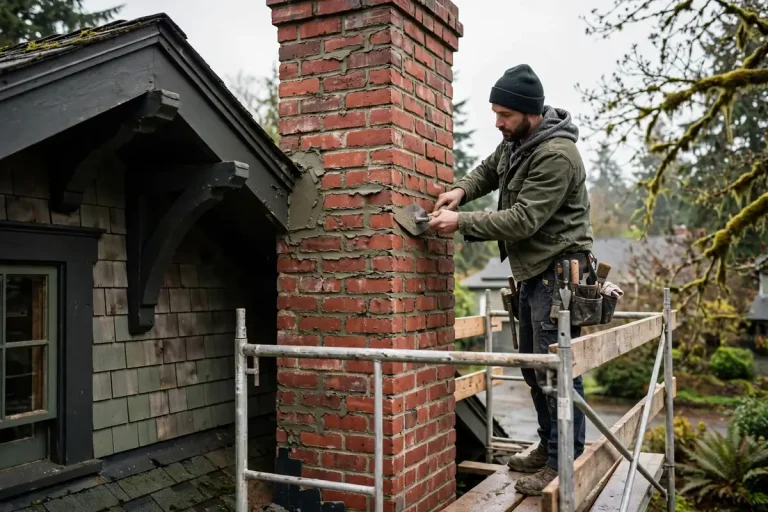
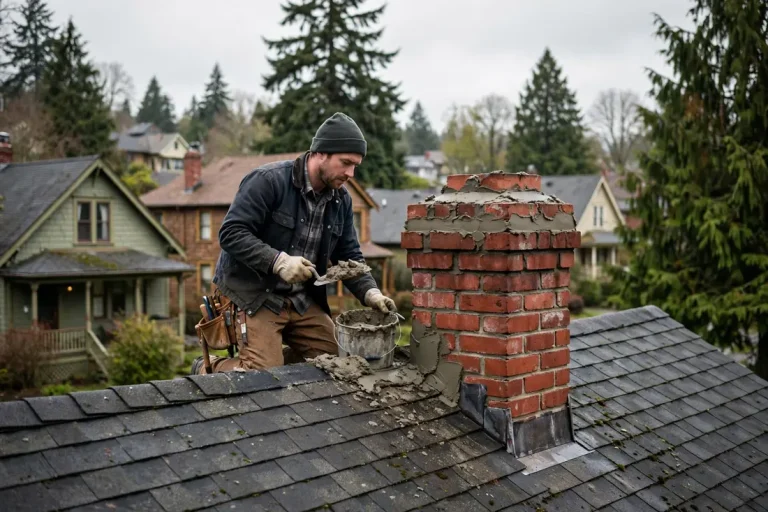
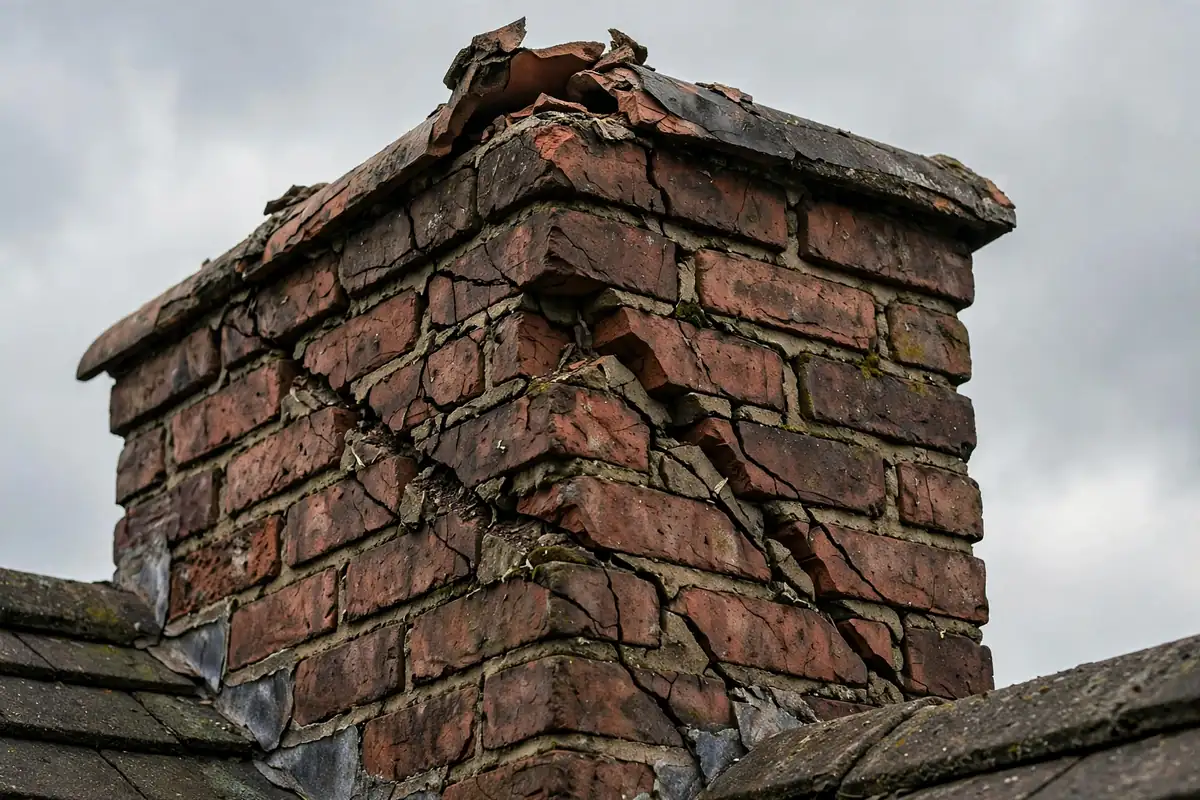
Cracks in the exterior masonry. These run through the brickwork or the mortar joints on the outside of the chimney. A fine crack that steps along the mortar joints usually means the pointing has weathered — rain gets in, so it needs mending, but the stack itself is often sound. A crack that cuts straight through the bricks, runs the full height of one face, or is wider at the top than the bottom tells a different story: the stack may have shifted, frost may have pushed the bricks apart, or the flue lining inside may have moved and be pressing outward. A chimney that has started to lean, or bricks that move when touched, is a safety matter — keep clear of the area underneath it.
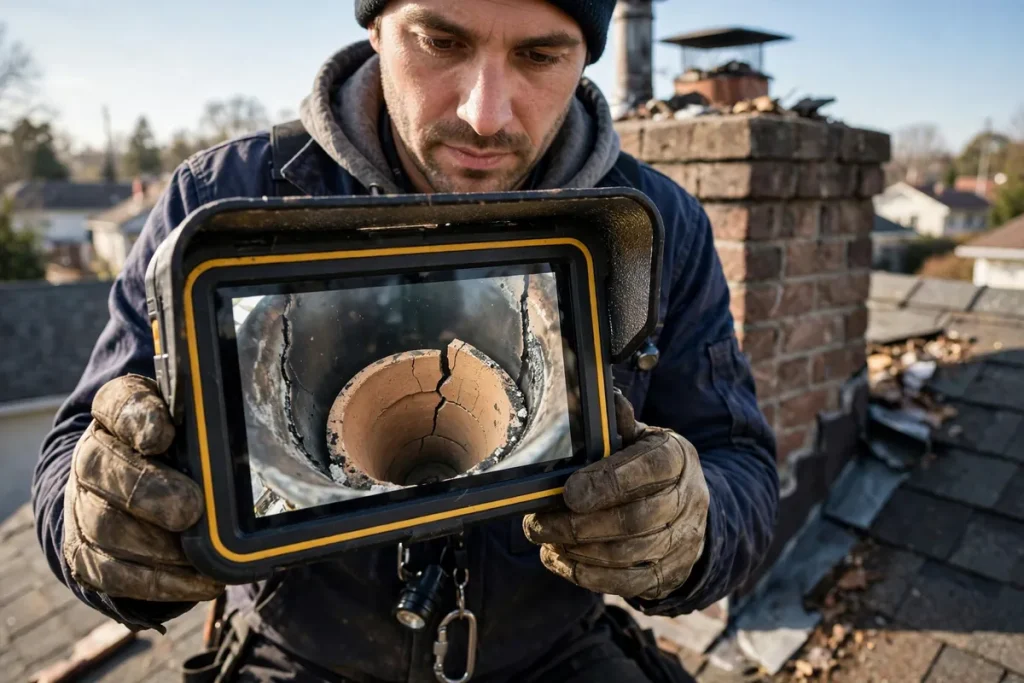
Cracks in the flue liner. The liner is the sleeve inside the chimney that carries smoke and gases safely out of the house. Clay tile liners crack from sudden heat — often after a chimney fire — or from water that freezes and expands in the joints. Unlike the other two, a cracked liner usually can’t be seen from the fireplace opening at all. Only a camera inspection finds it. And a cracked liner is the most dangerous kind, because it lets heat and gases escape into the parts of the house the liner was built to protect. If you want the full picture of how that danger develops, our guide on how cracked flue liners become dangerous walks through the mechanism step by step.
The Three Risks of Using a Cracked Chimney
Fire. A chimney liner exists to keep the extreme heat of a fire away from the wooden framing of your house. When the liner is cracked, heat passes through the gaps and reaches framing, insulation, and other combustible material that was never meant to get hot. That is how a crack turns into a house fire — not with flames in the room, but with heat building up silently inside a wall.
Carbon monoxide. A cracked flue lets combustion gases escape into the house instead of carrying them up and out. Carbon monoxide is colourless, odourless, and tasteless, and you won’t notice it without a working carbon monoxide detector. It is the risk professionals worry about most, because it gives no warning. A chimney that is cracked and still in use is one of the most common ways it gets into a home.
Creosote finding new places. Creosote is the tar-like residue that builds up inside a flue. In a sound chimney it stays inside the liner, where a cleaning removes it. When the liner is cracked, creosote seeps through the gaps and coats surfaces it was never supposed to reach — including the outside of the liner and the masonry around it. Creosote is flammable, so a crack doesn’t just let it out, it spreads the fuel for a chimney fire into new places. As a rule of thumb from one chimney guide, if you scratch the creosote above the damper and the groove is about 1/8 of an inch deep, the flue is due for a cleaning; at 1/4 of an inch or deeper, stop using the fireplace until it has been cleaned.
Warning Signs the Crack Is Serious
Some cracks need a repair planned; others need the fireplace shut down now. Treat the crack as serious — and keep the fireplace unlit — if you notice any of these:
- Smoke coming into the room when you light a fire, or a smell of smoke when the fireplace isn’t lit
- Pieces of flue tile, brick, or mortar in the firebox, or flakes of tile-coloured material on the hearth
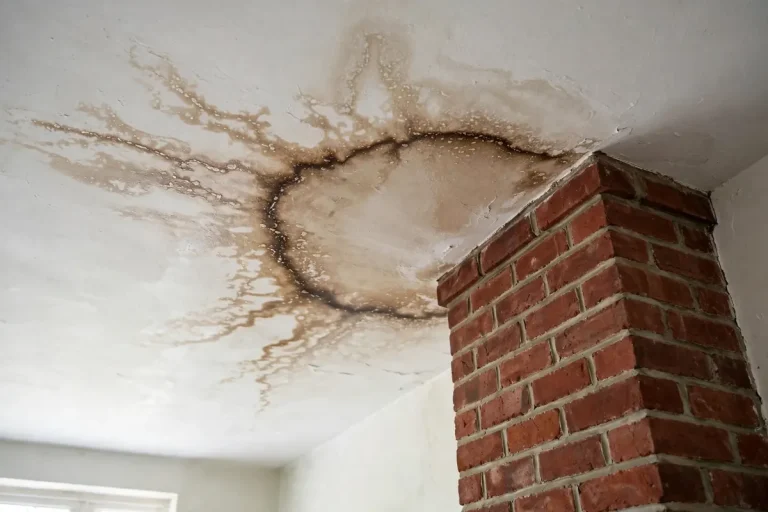
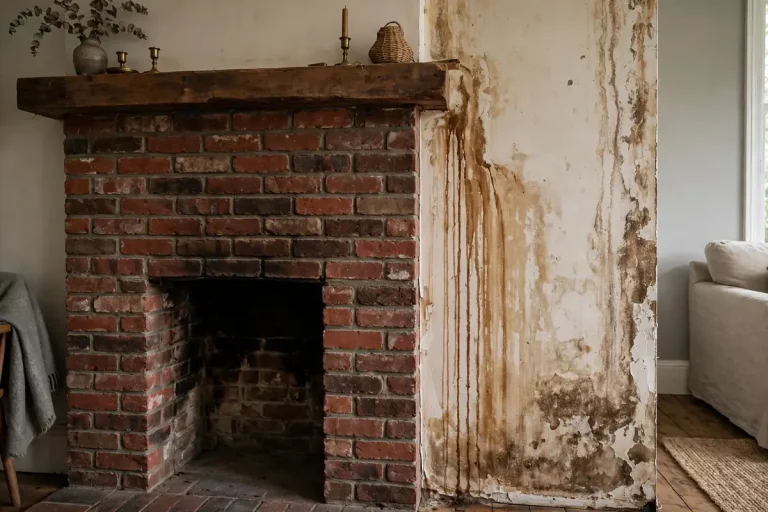
- A white chalky stain (efflorescence) or dark damp patches on the chimney breast — water getting in through the crack
- Bricks that are loose, or a section of the stack that has moved out of line
- A chimney that has started to lean, even slightly
- A carbon monoxide alarm going off, or headaches, dizziness, or nausea that ease when you leave the house
- Rust on the damper or firebox, which usually means water has been getting in for a while
That last point is easy to miss. Rust on the damper is often the first visible sign of a liner problem, because water entering through cracks runs down and sits on the metal. If you see it, the crack has been there longer than you think — and water damage around a fireplace rarely stays small.
What a Chimney Inspection Finds
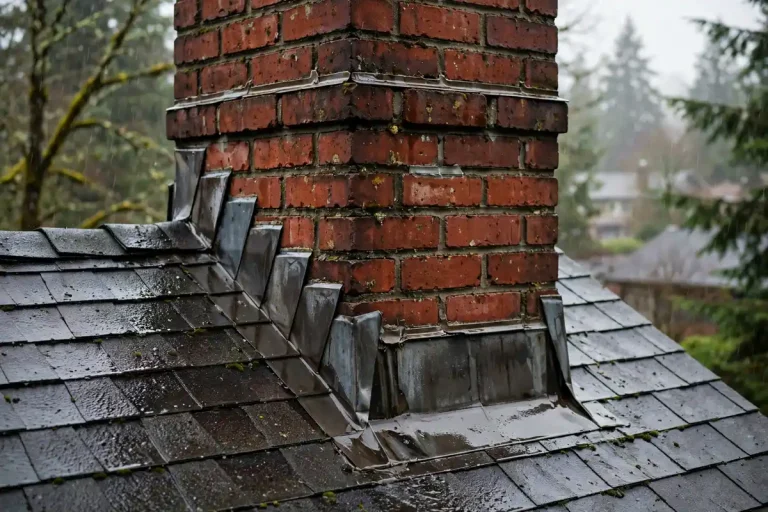
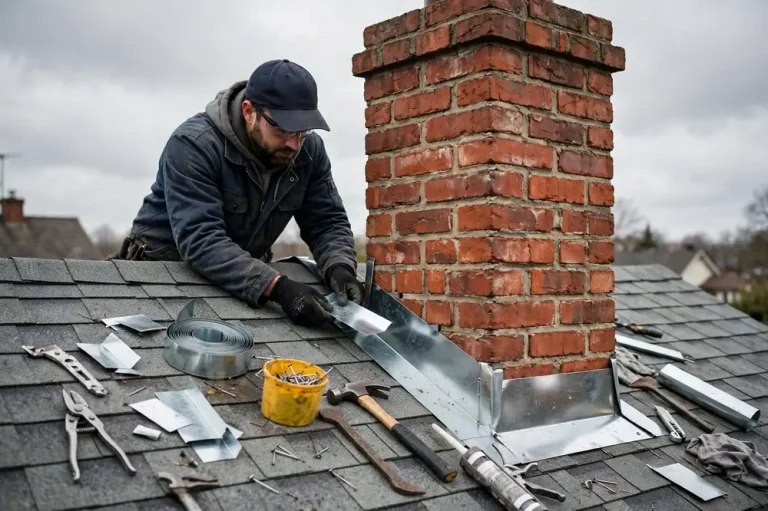
A proper inspection of a cracked chimney has two parts: what can be seen from outside, and what can only be seen with a camera. From the roof and the ground, the inspector photographs each face of the stack, the pointing, the crown, and the flashing, and checks whether the stack is plumb or has moved. From inside, a camera is lowered down the full height of the flue, recording every tile and joint. That camera scan is the part that matters most: it shows hairline cracks, gaps in the mortar joints, missing sections of tile, and whether the damage stops where you can see it or continues out of view. Inspectors call this a Level 2 inspection, and it is the standard way to judge a cracked flue — a look from the fireplace opening alone can’t do the job. You will get a clear answer at the end of it: what is cracked, where, how serious it is, and what the options are. A chimney inspection is also the point where the cost question gets answered — repair pricing is assessed on inspection, because it depends entirely on what the camera finds.
Repair or Replace: What Happens Next
What happens next depends on the damage, and it falls into three rough groups. A small, localised problem — one cracked tile, a short run of failed mortar joints, a hairline crack in an otherwise sound liner — can often be repaired. That usually means refractory mortar work, a joint-sealing system applied from inside, or a resurfacing coating that restores a smooth, continuous surface. The key condition is proof that the damage is localised: the camera scan has to show the rest of the liner is sound.
When the damage is widespread, repair stops being honest. Multiple tiles cracked at different heights, large sections missing, joints failed throughout, or a liner that has been heat-checked by a chimney fire all point to relining — a new liner fitted inside the old flue. Most relines use a stainless steel liner, dropped down the flue as one continuous, correctly sized sleeve; another option is a cast-in-place liner, where a cement-like mixture is pumped in and cures into a new solid lining. Our guide on chimney liner repair covers the warning signs that point this way, and the repair-versus-replacement decision is covered in detail in our comparison of whether a liner should be repaired or replaced. The material choice matters too — clay or stainless steel behave differently once damaged, and a reline is also the moment to make sure the flue is sized correctly for the appliance it serves.
In the most severe cases — a stack that has moved on its base, upper courses loose all round, or structural failure beyond the liner — part or all of the chimney may need to be dismantled and rebuilt. That is uncommon, and it is a decision an inspection has to support with photographs and measurements, not a guess from the ground.
What to Do Tonight
You found the crack today and the inspection is days away. Here is what to do in the meantime:
- Don’t light a fire. Not a small one, not “just to test it”. A cracked chimney is not a test-it-and-see problem.
- Check your carbon monoxide detector. Make sure it has power and isn’t past its expiry date. If you don’t have one, get one — it belongs near the fireplace and near bedrooms regardless of the crack.
- Keep the area clear. If the crack is in the exterior masonry, keep people, cars, and garden furniture out from under the stack until it has been looked at. Loose bricks fall without warning.
- Take dated photos from the ground. Photograph the crack from a safe distance. If the crack grows, the photos show it, and they are useful for your insurer if storm damage caused it.
- Don’t climb up to look, and don’t pick at loose mortar. You will not learn anything useful from the roof, and you risk making the damage worse — or getting hurt.
- Book the inspection. Tell the company you found a crack and have stopped using the fireplace. That puts the visit in the right category.
- If the carbon monoxide alarm sounds, leave the house and call emergency services. Don’t open windows and wait it out, and don’t go back in to check the fireplace.
FAQ
So is it safe to use a cracked chimney? Only an inspection can say for certain — and until that inspection happens, the safe choice is to leave the fireplace unlit. Portland’s older brick chimneys have lasted decades because they were built well, but a crack is the chimney telling you something has changed. Listen to it, get it looked at, and light the next fire knowing the flue is sound. To book an inspection, call Portland Chimney Care at +1 (503) 433-7104 — tell us you found a crack and have stopped using the fireplace, and we will get you seen.