Signs Your Chimney Cap Needs Replacement
Most Portland homeowners never look at their chimney cap. It sits on top of the chimney, out of sight, and it does its job quietly — until the day it doesn’t. Then the first sign is usually water where it shouldn’t be, a smell near the fireplace, or scratching sounds inside the flue. By that point the cap has been failing for a while. This guide walks through the signs your chimney cap needs replacement, in the order you are most likely to notice them — starting with what you can see from the ground.
Contents
- What a Chimney Cap Actually Does
- Rust You Can See From the Ground
- A Cap That Has Shifted, Tilted, or Gone Missing
- Torn or Clogged Mesh
- Water Stains and Damp Smells Near the Fireplace
- Animals, Nesting Material, or Scratching Sounds
- Smoke Blowing Back Into the Room
- A Cap That No Longer Fits the Flue
- Repair or Replace: How to Decide
- What a Cap Replacement Visit Looks Like
- FAQ
What a Chimney Cap Actually Does
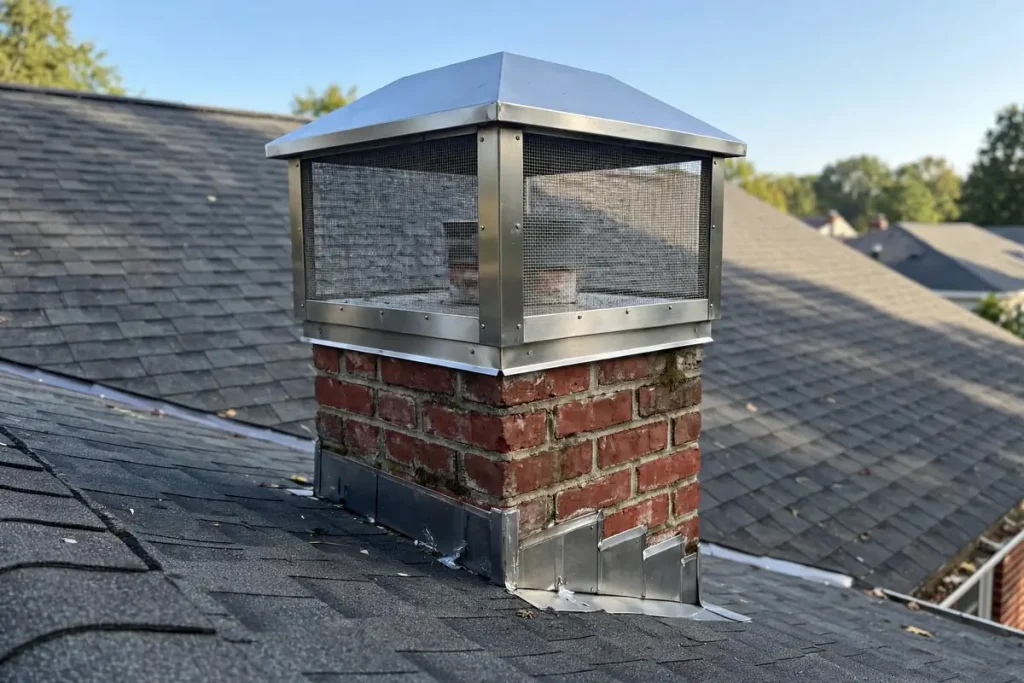
A chimney cap is the metal cover that sits on top of the flue. It keeps rain, leaves, and animals out while letting smoke escape, and its mesh sides act as a spark guard so embers don’t land on the roof. If you want the full picture of why every chimney needs a cap, that guide covers the basics. This one is about what happens when the cap itself wears out — and how to tell before the damage spreads to the rest of the chimney.
Rust You Can See From the Ground
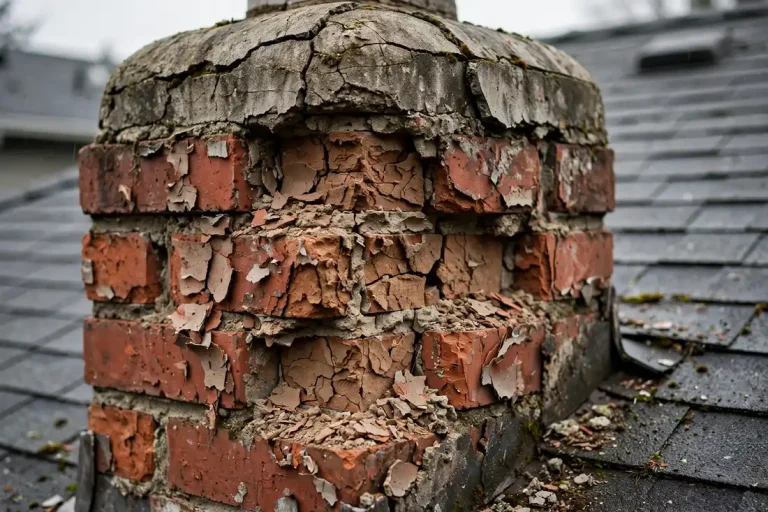
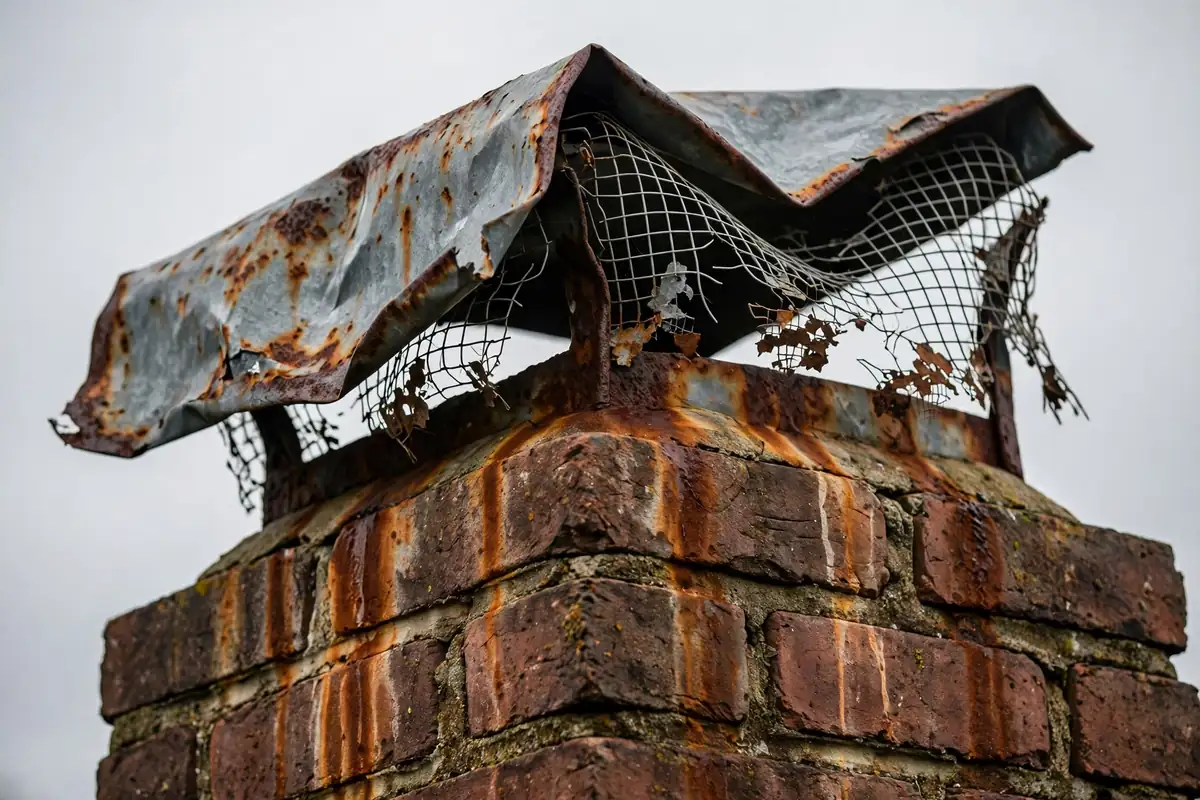
Rust is the most common reason a cap gets replaced, and in Portland it shows up sooner than most homeowners expect. Our wet season is long, and a galvanized steel cap spends months damp. Stand on the ground and look up at the chimney: rust stains running down the brickwork below the cap, orange-brown streaks on the cap itself, or a cap that looks swollen and flaky at the edges all mean the metal is thinning. A rusted cap turns brittle. The mesh tears more easily, the seams open up, and a strong wind can finish the job. Surface rust on a newer stainless cap is a different story — that is often just staining — but a galvanized cap with rust eating through the metal is done.
A Cap That Has Shifted, Tilted, or Gone Missing
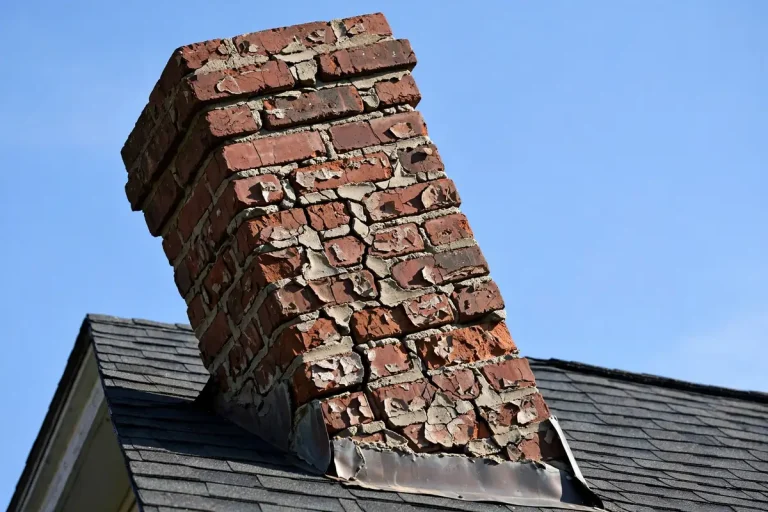
Portland gets its share of windstorms, and a cap that wasn’t fitted tightly can shift, tilt, or blow off entirely. From the ground, a healthy cap sits level and centred on the flue. If yours leans to one side, sits crooked, or has a visible gap between the cap and the flue tile, wind or a falling branch has moved it. A missing chimney cap leaves the flue wide open to rain and everything that falls or crawls in — and it is the one sign you should never put off, because every storm after it pushes water straight down the flue. If you ever find the cap itself lying in the yard, don’t just set it back on top. A cap that blew off once will blow off again unless it is refitted or replaced with the right size.
Torn or Clogged Mesh
The mesh around the sides of the cap is what keeps birds, squirrels, and raccoons out while letting smoke through. It fails in two ways. First, it tears: rust weakens the wire, animals chew through it, and a torn section is an open door. Second, it clogs: creosote and soot build up on the mesh over time, especially on wood-burning fireplaces that don’t get a regular chimney cleaning. A clogged mesh chokes the draft, and smoke starts looking for another way out — usually into the room. If the mesh is torn, bent inward, or so clogged that you can’t see through it from the ground, the cap has stopped doing half its job. Mesh can sometimes be cleaned, but once the wire itself is rusted through or bent out of shape, a new cap is the fix.
Water Stains and Damp Smells Near the Fireplace
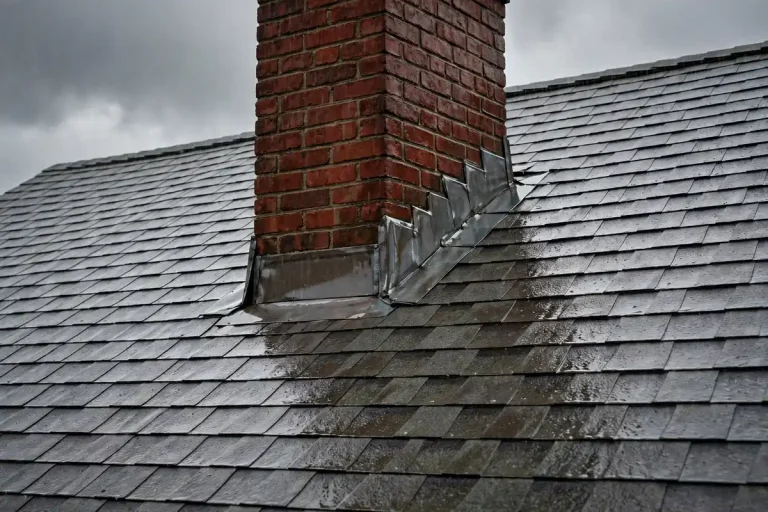
Water getting past a failed cap doesn’t always show up as a drip. More often it shows up as a dark stain on the wall beside the fireplace, a damp patch on the ceiling, a musty smell that appears after rain, or white chalky marks — efflorescence — on the brick. This is where a cap problem starts looking like a leak problem, and telling the two apart matters, because a chimney leak can also come from the crown or the flashing. The quick test is timing: if the dampness appears during or right after rain and dries out between storms, the water is coming in from the top, and the cap is the first suspect. Water that sits in the flue also rusts the damper and stains the firebox, so a damp smell near the fireplace is worth checking even if you can’t see a stain yet. Left alone, that moisture works into the mortar and the liner — and water damage around a fireplace rarely stays small.
Animals, Nesting Material, or Scratching Sounds
A cap with a torn mesh or a gap at its base is an invitation. Birds nest in the flue in spring, squirrels store food there, and raccoons are strong enough to lift a loose cap clean off. The signs are hard to miss once you know them: scratching or scurrying sounds inside the chimney, twigs or nesting material visible at the top of the flue, feathers or droppings in the firebox, or a sudden smell of animals near the fireplace. A nest inside the flue is more than a nuisance — it blocks the draft, and a blocked flue can push smoke and carbon monoxide back into the house when the fireplace is lit. Never light a fire to “smoke out” an animal. The nest needs to be removed, the flue checked, and the cap replaced with one whose mesh is intact.
Smoke Blowing Back Into the Room
If smoke puffs into the room when you light a fire — especially on a windy day — the cap is a likely suspect. A cap that has collapsed inward, a hood that sits too low over the flue, or mesh clogged with soot all restrict the draft. Wind can also force air straight down an unprotected flue, carrying soot and ash with it. Before blaming the cap, rule out the simple causes: a damper that isn’t fully open, or a fire built with damp wood. But if the damper is open, the wood is dry, and smoke still comes back into the room, have the cap checked. This is also the sign that most often gets misread as a roof problem — if you’re unsure whether the trouble is the roof or the chimney, that guide walks through the difference.
A Cap That No Longer Fits the Flue
This is the sign almost nobody thinks about. Caps are sized to the flue, and the flue can change. If your chimney was relined with a stainless steel liner, or a new insert was fitted, the old cap may no longer sit properly on the new flue — too small and it won’t cover the opening, too large and it rocks in the wind. The same goes for a cap fitted decades ago to a flue that has since been repaired or rebuilt. A cap that doesn’t fit is a cap that doesn’t seal, and gaps around the base let in exactly the rain and animals the cap is supposed to keep out. Any time work is done on the flue, the cap should be checked as part of the same visit.
Repair or Replace: How to Decide
Not every worn cap needs replacing. A cap with a small patch of surface rust and solid mesh can often be cleaned and kept for another season or two. Replacement is the right call when the metal is rusted through, the mesh is torn or bent out of shape, the cap is cracked or crushed, or it no longer fits the flue. If two or more of the signs your chimney cap needs replacement are showing up on the same cap, replacement is usually the honest answer. Material matters for the next cap: galvanized steel is the cheapest option but rusts fastest in Portland’s wet climate, typically lasting roughly 5 to 12 years; stainless steel costs more upfront and typically lasts roughly 15 to 25 years; copper lasts longest of all and suits older homes, but costs the most. The cost of a replacement is assessed on inspection — it depends on the flue size, the material, and how easy the chimney is to reach — so treat any flat price you see online with suspicion. A chimney inspection will tell you which side of the repair-or-replace line your cap sits on.
What a Cap Replacement Visit Looks Like
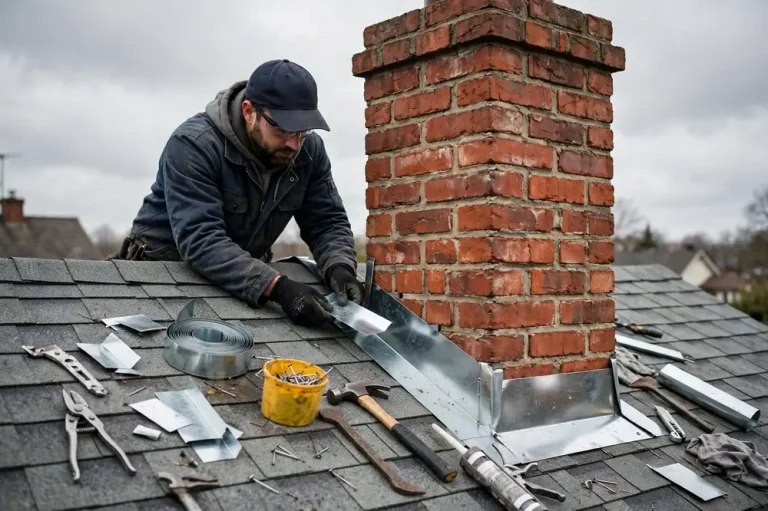
A cap replacement is a short visit, and knowing what happens takes the mystery out of it. The technician checks the cap, the crown, and the flashing from the roof, measures the flue opening, and removes the old cap. The new cap is fitted to the flue — not just set on top of it — and secured so wind can’t lift it. While up there, the crown and flashing get a look too, since a new cap on a cracked crown still lets water in. The flue is checked for nesting material or debris left behind by the old cap, and the damper is tested. Most visits are done within the same appointment as a cleaning or inspection, and the chimney is usable again the same day once everything is checked.
FAQ
If anything in this guide sounded familiar, do not wait for the next storm to test it — the signs your chimney cap needs replacement only get clearer, and the water damage they let in costs far more than a new cap. Portland Chimney Care can check the cap, crown, and flashing in a single visit and tell you plainly whether it needs replacing. Call +1 (503) 433-7104 or book a chimney inspection, and we will take a look before the next round of rain does.