Can a Missing Chimney Cap Cause Leaks?
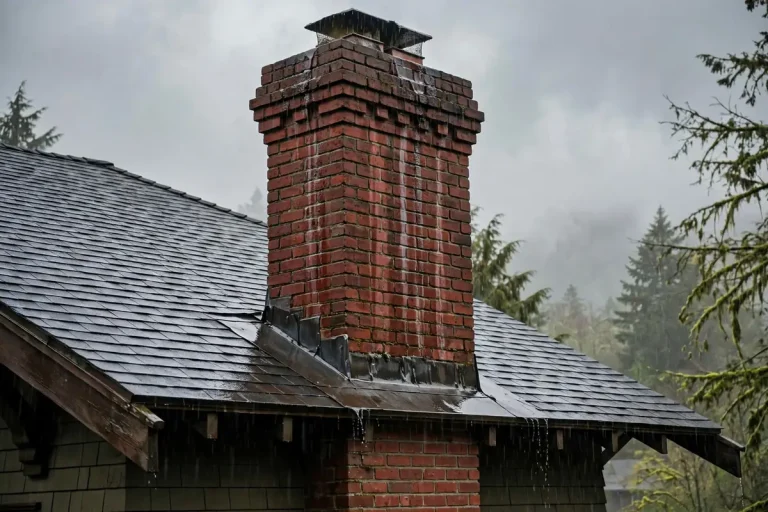
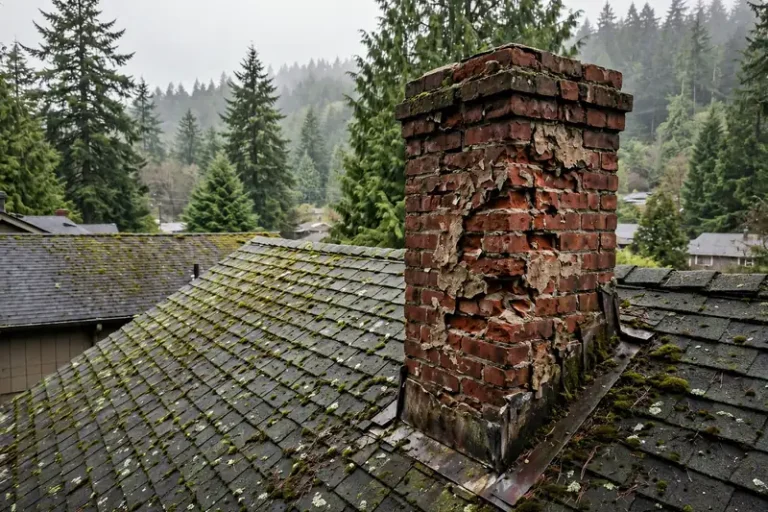
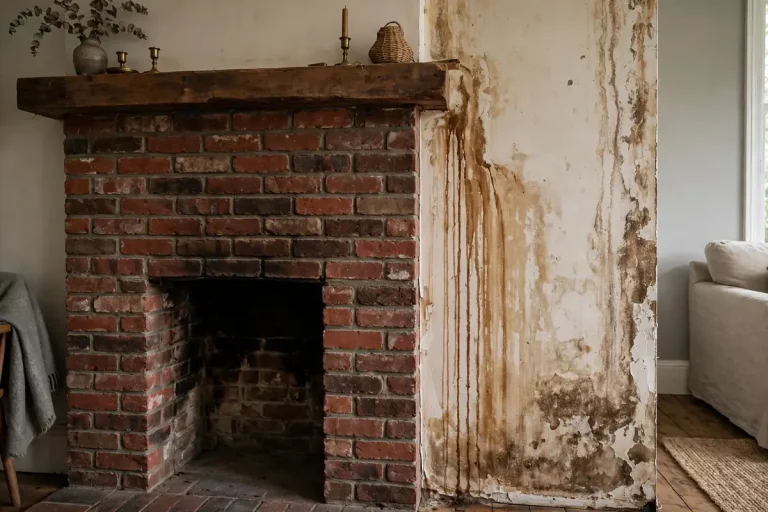
A brown stain spreads across the ceiling next to the chimney. Or water appears in the firebox after a storm, and the damper has started to rust. The roof looks fine. The chimney looks fine. So where is the water coming from? More often than not, the first suspect is the small metal cover at the very top of the chimney — or the fact that there is no cover there at all. A chimney with no cap is an open pipe into your house, and in a city that rains as much as Portland does, an open pipe is a leak waiting for the next storm.
Key Takeaways
- Yes — an open flue lets rain fall straight down to the damper and firebox, so a cap that is missing is a direct cause of leaks.
- Where the water shows up tells you where it got in: water in the firebox points to the top of the chimney; ceiling stains or damp attic wood point to the flashing or to water soaking through the masonry.
- A cap that is missing also lets in animals, leaves, and debris. A nest in the flue can block it almost completely — a safety problem, not just a mess.
- A cap can be present and still leak: too small, loose, rusted through, or its mesh screen clogged.
- In Portland, an uncapped flue takes water for months every year. Check the cap from the ground with binoculars after a storm.
In This Post
- The Short Answer
- Where the Water Shows Up
- What Water Does Inside an Uncapped Flue
- Cap or Crown — or Both?
- When the Cap Is There but the Leak Continues
- What to Do Next
- Frequently Asked Questions
The Short Answer
A chimney cap is a metal cover that sits over the flue opening at the top of the chimney. It has a solid lid that sheds rain and mesh sides that let smoke out while keeping rain, leaves, birds, and sparks in their proper places. Take it away, and the flue is open to the sky.
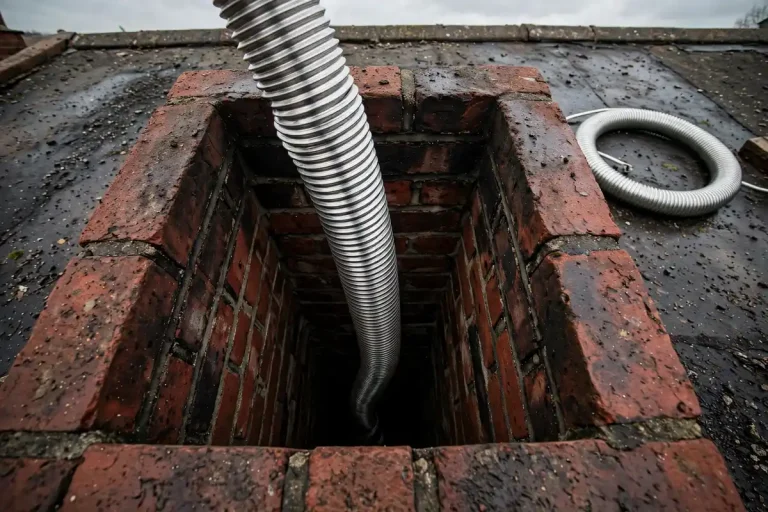
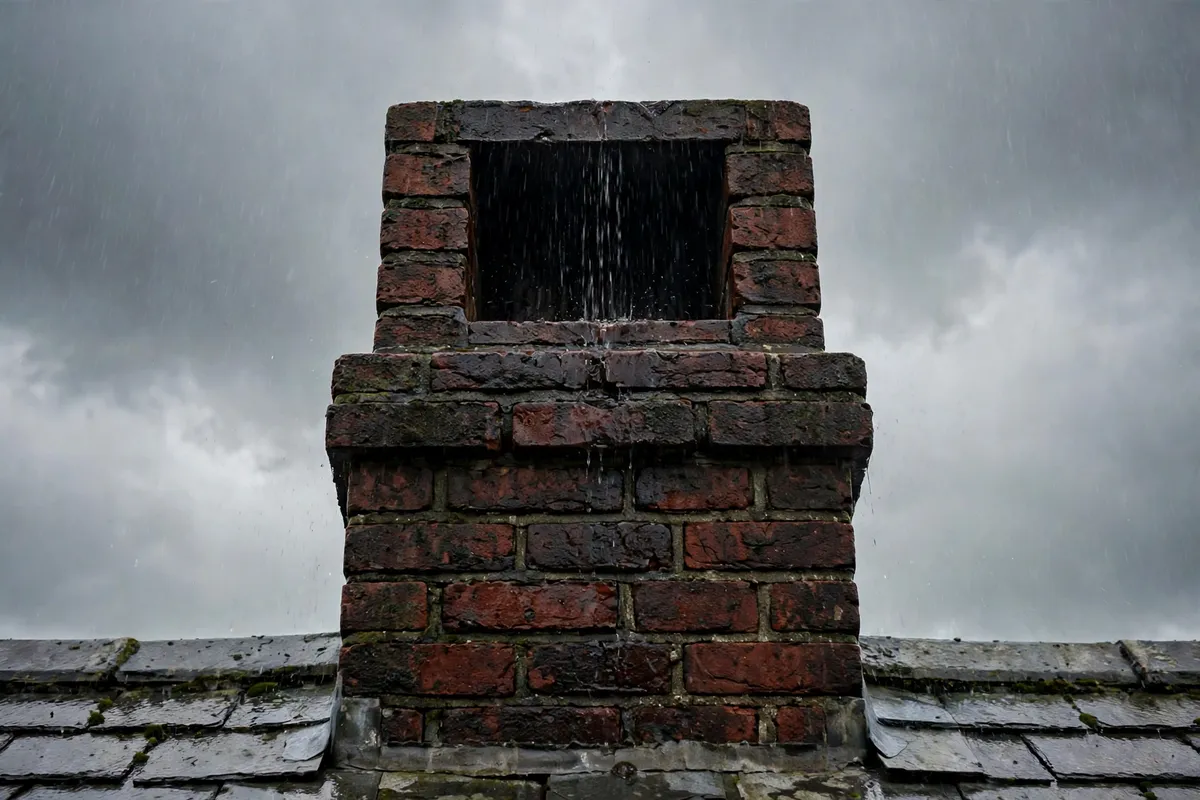
So can a missing chimney cap cause leaks? Yes — directly. Rain falls straight down the flue, pools on the damper, and runs into the firebox. It does not need a crack or a failed joint to get in. The opening itself is the leak.
Where the Water Shows Up
Chimney leaks are hard to trace because water travels. It runs along framing and soaks through masonry, so it can appear far from where it got in. But the place it shows up is still the best clue you have.
Water in the firebox, rust on the damper, white or grey streaking, damp firebox walls, a musty smell, or standing water on the smoke shelf all say the same thing: water is coming down the flue. A cap that is missing, too small, or damaged is the first thing to check, along with the crown around the flue.
Damp attic wood, dark staining on the roof sheathing near the chimney, or drip marks on the rafters point to water soaking down through the chimney mass — or to the flashing where the chimney meets the roof. If the wettest area is at the roofline rather than in the firebox, the flashing is the prime suspect. Read our guide on chimney flashing to see how it fails and how to tell it apart from a roof leak. A stain on the ceiling or wall near the chimney, but not right beside it, is the classic head fake: water can run along a framing member and show up in the wrong room entirely. Trace the highest wet point after a rain — fresh wet wood beats old stains for diagnosis, and the highest wet point is usually closest to where the water got in.
What Water Does Inside an Uncapped Flue
One storm does not ruin a chimney. Months of water running down the inside of it does. Water pools on the damper and rusts it until it sticks or will not close. It soaks into the flue liner from the inside, and a clay liner that stays wet and then freezes can crack — a much bigger repair than a cap. It saturates the brick and mortar from the inside out, weakening the joints a little more each winter, and where water sits, mould and mildew follow.
Animals make it worse. Birds, squirrels, and raccoons all look for dry, sheltered nesting spots, and an open chimney is one of the best they will find. Nesting material packed into a flue restricts airflow and is a fire hazard, and a blocked flue can push smoke and carbon monoxide back into the house instead of venting it outside. That is why a cap that is missing is a safety issue, not a cosmetic one. Leaves do the same job more quietly: an open flue collects wind-blown leaves all autumn, and in Portland’s older neighbourhoods, where big trees overhang the roofs, an uncapped chimney can fill with leaves in a single season.
Cap or Crown — or Both?
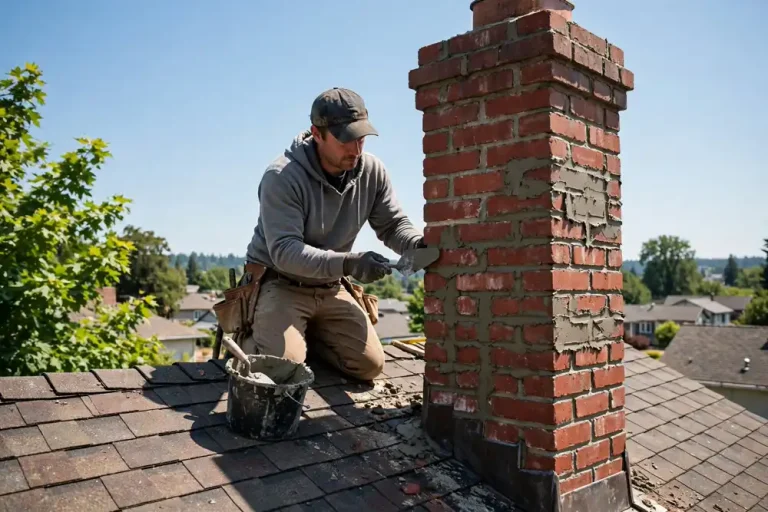
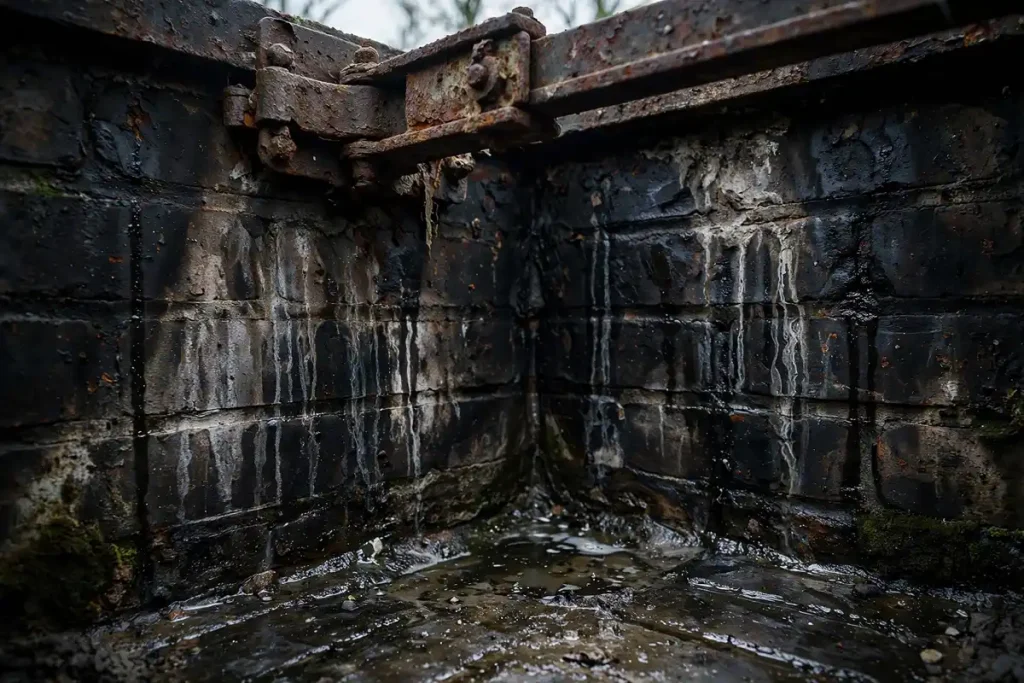
People mix the cap and the crown up, because they sit in the same place and both deal with water. The crown is the concrete slab across the top of the masonry: it seals the gap between the brick and the flue liner, and its slope carries rainwater off the brick. Read our guide on what a chimney crown is for the full picture. The cap is the metal cover over the flue opening itself. The short version: the crown covers everything around the hole, the cap covers the hole, and the flue is the hole. The two fail together more often than they fail alone — a cap that is missing lets water sit on the crown and work into every crack, and a cracked crown lets water in even with a good cap. When you find one problem at the top of the chimney, check the other one too.
When the Cap Is There but the Leak Continues
A cap that is present is not always a cap that works. It can be too small or too low-profile: a cap must overhang the flue so rain drips clear, and it must be tall enough that wind-driven rain cannot blow straight in under the lid. Portland storms drive rain sideways, so a cap that looks fine on a calm day can let water in on a windy one.
It can be loose — wind lifts a cap that was never fixed in place, or a falling branch knocks it sideways, and a lifted corner lets rain in at the gap. It can be rusted through: galvanized steel caps eventually rust, and the mesh sides often rust out while the top plate still looks fine. And the mesh screen can be clogged: on a wood-burning fireplace, soot and creosote build up on the screen until water overflows into the flue instead of draining off — and a screen full of soot does not draft properly either, so a clogged cap can cause smoky fires as well as leaks.
What to Do Next
Start from the ground with binoculars. Is there a cap at all? Is it straight and secured, or crooked and lifted at one corner? Is the mesh torn, bent, or clogged? After a windstorm, look up first — a cap that blew off is the simplest problem to find and the most urgent to fix.
Then check inside. Standing water or wet ash in the firebox after rain, a rusted damper, or a musty smell from the fireplace all point to the top of the chimney. Check the attic on a rainy day if you can get up there safely: damp wood or dark staining on the sheathing near the chimney tells you how far the water has travelled. Do not smear sealant everywhere — a bead of sealant over a failed joint is a patch, not a repair, and it can hide damage while water keeps getting in. If the water is showing up in the firebox, the cap and the crown are the suspects. If it is showing up on the ceiling or in the attic, the flashing is the prime suspect. Our guide on why chimneys leak walks through all five entry points in order, from the top down.
Why Portland Rain Makes This Worse
Portland gets roughly 40 inches of rain a year, spread across about 150 rainy days, mostly between October and April. A chimney here spends months at a time wet, with barely a dry stretch to recover. In a dry climate a missing chimney cap might let in a little water a few times a year. Here it lets in water for months, every single year, and every cold snap freezes the water sitting in the liner and the mortar, widening every small crack it finds.
The Bottom Line
A missing cap is the simplest leak a chimney can have, and one of the most damaging if it is left alone. Rain falls straight down the flue, rusts the damper, soaks the liner, weakens the mortar, and invites animals and leaves in on top of it. The fix is small — a properly sized, properly fitted cap — but the crown, the flashing, and the liner should be checked at the same time, because water that has been getting in for a while rarely damages just one part.
If you have water in the firebox, a rusted damper, or you simply do not know whether your chimney has a cap, call Portland Chimney Care at +1 (503) 433-7104. We serve Portland, OR, and we can tell you plainly whether it is the cap, the crown, or something else — and whether it needs a repair, a replacement, or nothing at all.
Frequently Asked Questions
Sources
- Grit and Home
- Chimney Champions
- Priddy Chimney
- Chimney Monkey
- Mid-Valley Chimney.