Chimney Liner Repair vs Replacement
You already know the signs. Tile pieces in the firebox, smoke coming back, rust on the damper — the warning signs your chimney liner needs repair are covered in our earlier post, and they point at one question: is this liner worth fixing, or is it done? The question behind chimney liner repair vs replacement is not which option sounds cheaper. It is whether the damage is local or systemic, and only a look inside the flue can answer that.
A liner is not one thing that is either good or broken. It is a tube of sections and joints running the full height of the chimney, and it can fail in one place while the rest is sound — or fail at five heights at once while looking fine from the firebox. This post walks through what a repair means, what a replacement means, and how the camera inspection settles the question.
Key Takeaways
- Repair and replacement are not two prices for the same job: a repair fixes a local fault, a replacement rebuilds the whole venting path.
- A repair is enough when the damage is isolated — one or two tiles, a short run of eroded joints, the rest of the lining sound.
- Replacement is the honest answer when damage shows up at several heights, when tiles are missing or crumbling, when a chimney fire has heat-checked the lining, or when the liner no longer matches the appliance.
- A repair that has already failed once is itself a replace signal — patching the same spot again does not fix what is wearing it out.
- Changing fuels or installing a new insert or stove usually means a new liner — the flue must be sized to the appliance.
- The camera inspection is the decision-maker: it shows every tile and joint from bottom to top, and the recommendation follows what it finds.
In This Post
- The Short Answer
- What a Repair Actually Means
- What a Replacement Actually Means
- Five Signs It Is Time to Replace
- Three Signs a Repair Is Enough
- When a Repair Has Already Failed
- The Fuel-Change and New-Appliance Trigger
- What the Camera Inspection Decides
- Why Portland’s Freeze-Thaw Matters
- Frequently Asked Questions
The Short Answer
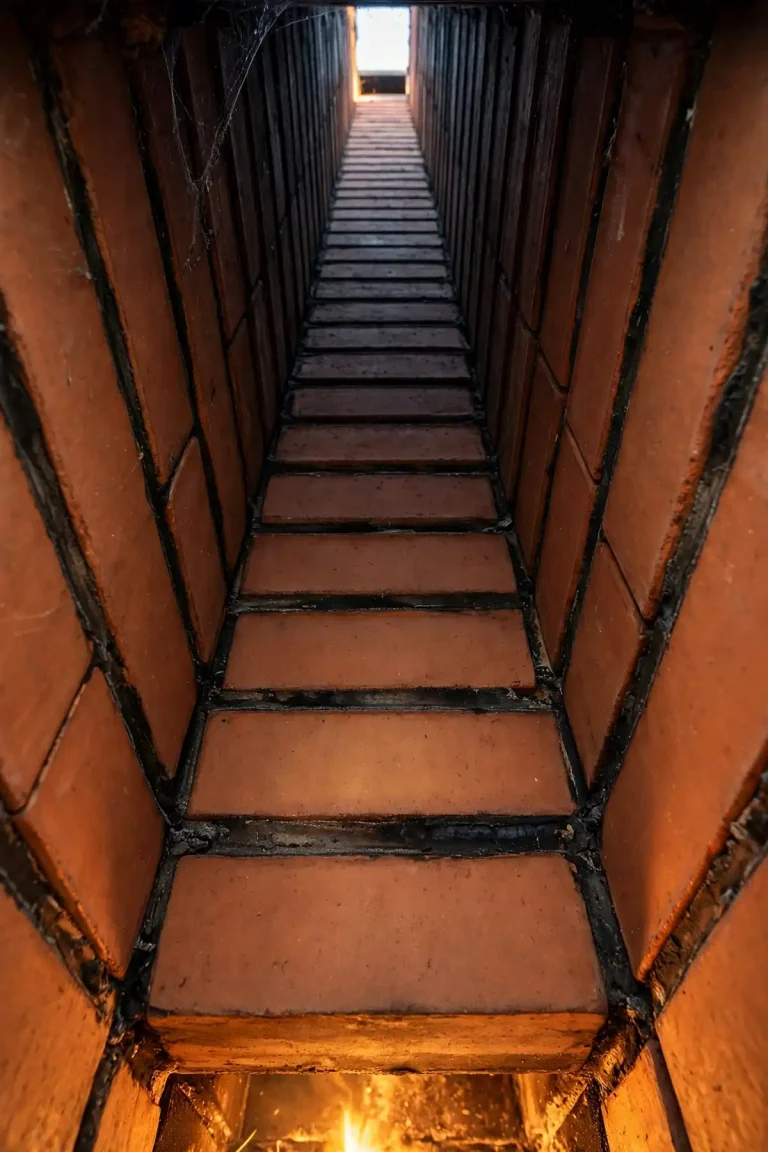
A chimney liner is a continuous tube inside the flue that contains heat, smoke, and combustion gases and carries them out of the house. Repair it when the damage is local and the rest of the lining is sound. Replace it — reline the flue — when the damage is widespread, sections are missing, a chimney fire has damaged it through its height, or it is the wrong size or material for the appliance.
The real split in chimney liner repair vs replacement comes down to three questions: how many places is it damaged, how bad is the worst of it, and does it still match the appliance? One cracked tile with solid joints around it is a repair. Cracks at three heights, missing tiles, or rust eaten through metal are a replacement — and so is a liner that is the wrong size for the stove, because no patch can fix a mismatch.
If you have not yet worked out whether your liner is damaged at all, start with the signs your chimney liner needs repair — the seven warning signs and how urgent each one is. This post picks up where that one ends.
What a Repair Actually Means
A repair fixes a specific fault and leaves the rest of the liner alone. It only makes sense when the rest of the lining is sound. There are three kinds worth knowing about.
Sealing a hairline crack. A short, isolated crack in an otherwise solid clay tile can sometimes be sealed with a heat-resistant coating applied from inside the flue. It hardens into a thin skin and buys the liner more years — but only if the crack is short, the tile around it is solid, and there are no other cracks nearby. Over a crumbling tile it simply peels off with the surface it was meant to save.
Replacing one or two tiles. When a single clay tile has cracked or shifted but the tiles above and below it are intact, that tile can be broken out and a new one set in its place. It is fiddly work from inside the flue, and it only works when the damage is genuinely limited to that spot — if the neighbours are cracked too, it is like replacing one board in a rotten fence.
Re-sealing eroded joints. The mortar joints between clay tiles erode over decades of heat and acidic condensation. When the tiles are whole but the joints have opened up, a specialised system can fill them from inside the flue without taking anything apart. It is the most common repair on older Portland chimneys, and the most worth doing early — open joints let gases and moisture reach the brick, and the longer they stay open, the more lining they take.
All three assume the liner is mostly fine — a repair buys time for a liner that still has years in it; it does not make a worn-out liner new.
What a Replacement Actually Means
Replacement means a new lining for the whole flue — a reline. The old liner stays where it is, unless it has collapsed and is blocking the flue, and the new one is built inside it. Which method fits depends on the flue’s shape, the appliance, and the condition of the old lining.
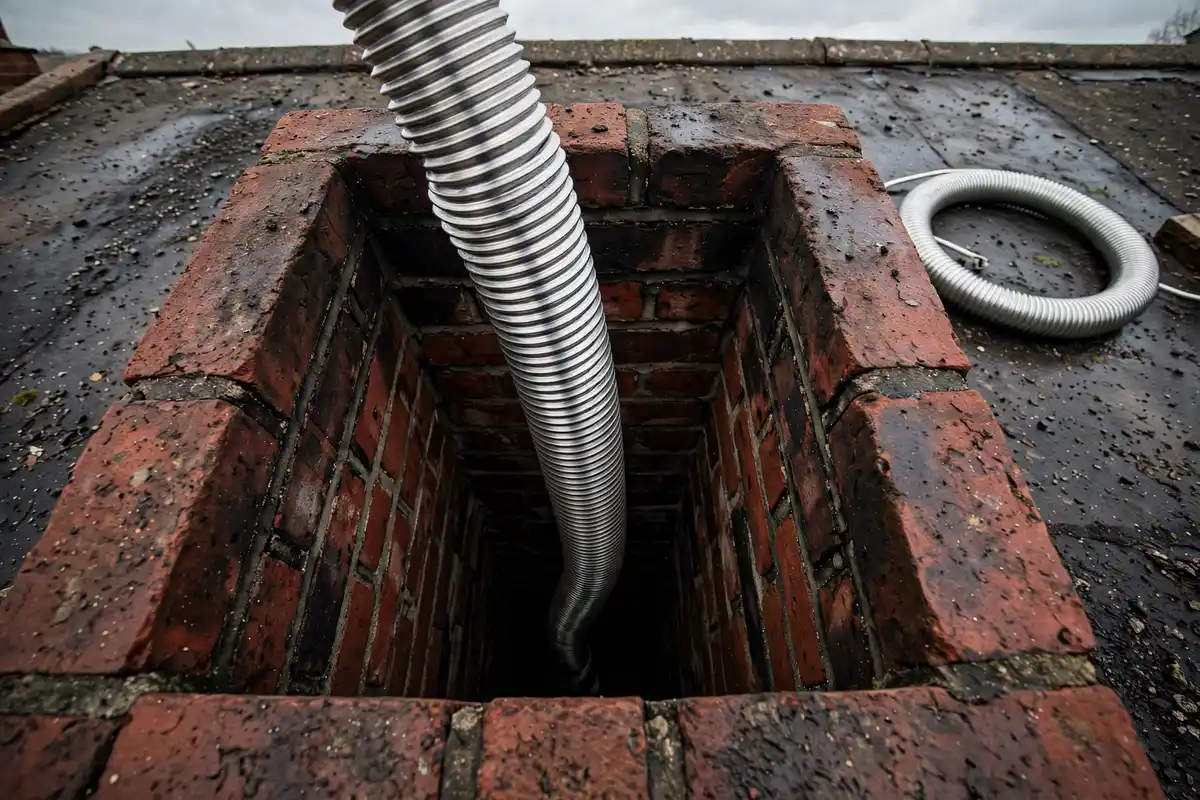
A flexible stainless steel tube. The most common reline. A continuous, seamless stainless steel tube is lowered down the flue from the top and connected to the appliance at the bottom. No joints for gases to escape through, it fits flues that bend or step, and it is the standard answer when a clay tile system is past saving. Our comparison of clay vs stainless steel chimney liners walks through how the two materials fail differently and how to decide between them.
Rigid stainless steel sections. Straight lengths of stainless steel pipe, joined as they are lowered down the flue. They suit straight, tall flues and some gas appliances, with a smooth, easy-to-clean interior — but they do not bend, so they are not the answer for a flue with offsets.
A cast-in-place lining. A cement-like mixture is pumped into the flue around an inflatable form, then the form is removed, leaving a smooth lining cast to the flue’s exact shape. It suits flues where a tube will not fit, or where the old lining needs structural support as well as a new surface. It is the slowest of the three and needs drying time before the fireplace is used again.
None of the three is a patch. All three rebuild the venting path from the appliance to the top of the chimney, sized to the appliance they serve — that sizing is part of the job, not an afterthought.
Five Signs It Is Time to Replace
| Sign | What it means |
|---|---|
| Damage at several heights | Cracks at the bottom, middle, and top mean the lining is failing as a system, not at one weak point — the clearest replace signal. |
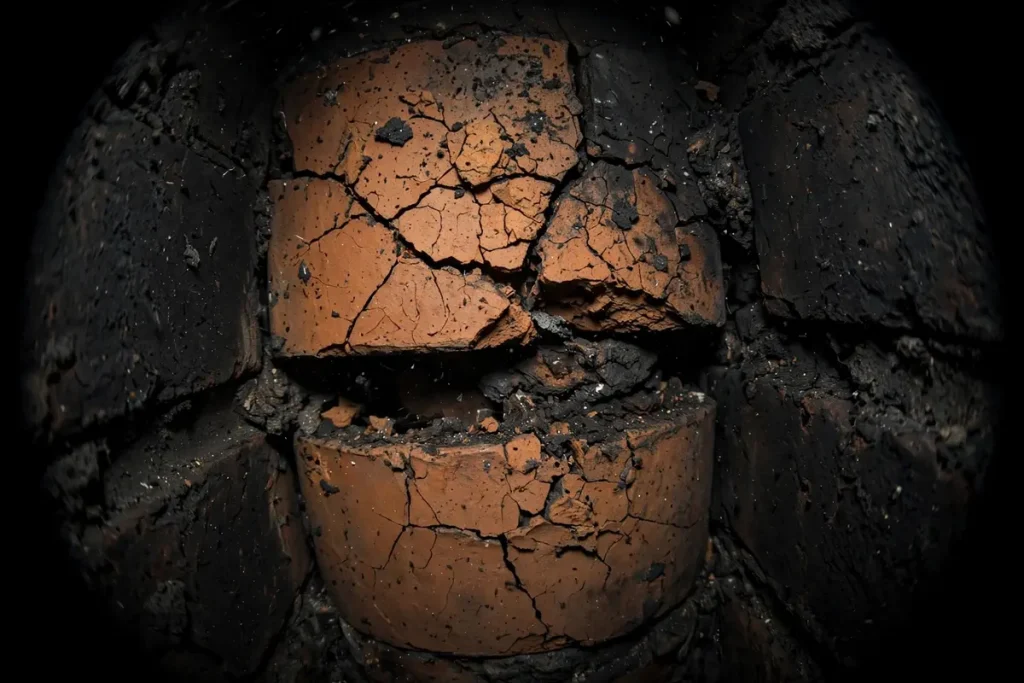
| Tiles missing, crumbling, or falling | Flaky, tile-coloured fragments in the firebox (sometimes called shaling) mean the lining is actively breaking down, with open gaps where heat and gases reach the brick. |
| A chimney fire in the past | Even a brief fire can crack clay tiles from top to bottom and distort a metal liner along its length. After a suspected fire, the flue is checked before anything is relit. |
| Rust eaten through a metal liner | Surface rust can sometimes be cleaned and monitored. Rust that has eaten holes through the metal, or a section that has sagged or split, cannot be sealed back to soundness. |
| The liner no longer matches the appliance | A flue too large lets gases cool and condense, leaving creosote and acidic moisture; a flue too small chokes the draft. Patching cannot fix a mismatch. |
The first two rows are the ones the camera inspection proves most often. Either one on its own is enough to call it a replacement.
Three Signs a Repair Is Enough
| Sign | What it means |
|---|---|
| One or two tiles, rest sound | A single cracked tile, or a short run of eroded joints, with solid tiles above and below and a camera inspection that finds nothing else wrong. |
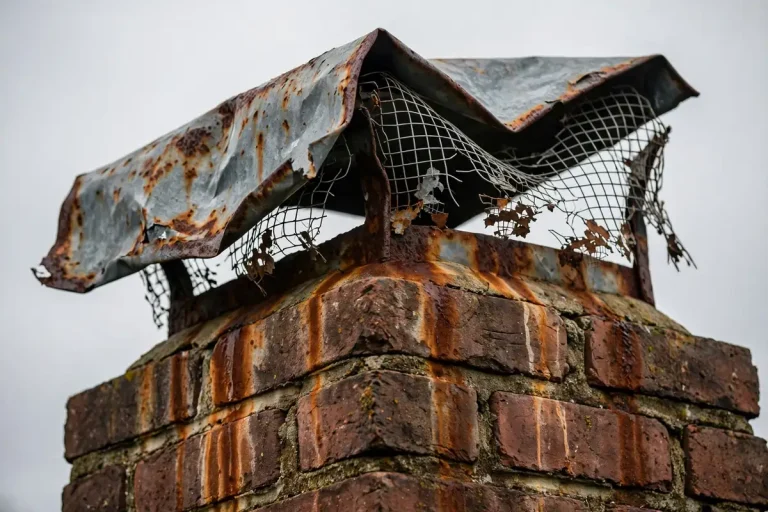
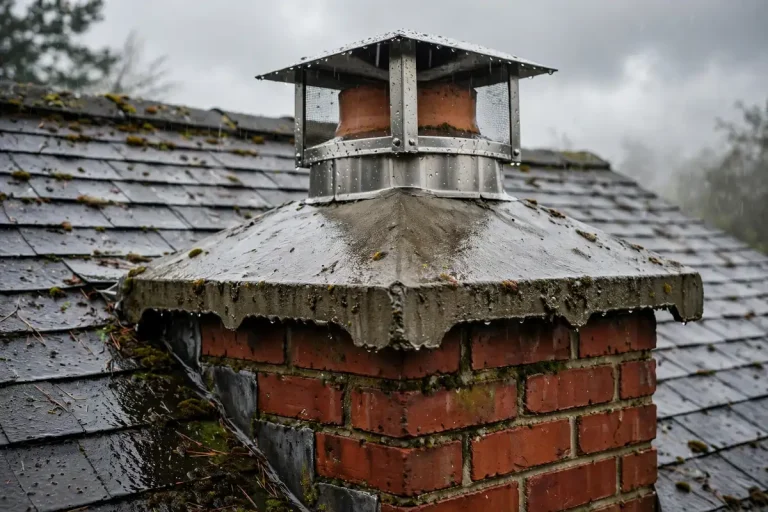
| The chimney is otherwise watertight | A repair holds when the water that damaged the liner has been stopped: a sound cap, a sound crown, and flashing that sheds water properly. |
| The liner is well within its expected life | Clay tile and stainless steel liners typically last 30–50 years. A twenty-year-old liner with one cracked tile is a repair; a fifty-year-old liner with cracks at several heights is a replacement. |
All three have to be true together. One cracked tile in a fifty-year-old liner under a missing cap is not a repair — it is a replacement waiting for its paperwork.
When a Repair Has Already Failed
This is the sign homeowners miss, because it feels like the repair should have worked: a crack sealed and opened again, a joint filled and eroded out, a tile replaced and the neighbours now cracking.
A repair that fails once can be bad luck or a bad application. A repair that fails twice in the same place is telling you something about the liner, not the repair: the material around it is worn out, the water getting in has not been stopped, or the heat and condensation are more than that spot can take. Patching it a third time does not fix what is wearing it out — it spends the reline’s money in instalments while the damage spreads. If you are on your second repair in the same part of the flue, ask for a full camera inspection and a straight answer about whether the lining has years left in it or whether you are maintaining a liner that is already done.
The Fuel-Change and New-Appliance Trigger
Some replacements have nothing to do with damage. The flue has to be sized to the appliance it serves, and when the appliance changes, the liner often has to change with it.
Switching fuels — wood to gas, or gas to wood — changes the temperature and chemistry of what goes up the flue. Gas appliances produce cooler, wetter exhaust that condenses in a flue sized for wood; wood in a flue sized for gas can overheat it. A new insert or stove changes the flue size the appliance needs, and an insert dropped into an old fireplace usually needs its own correctly sized liner to draft properly.
This is also the moment to deal with an unlined chimney. Many Portland homes built before the middle of the last century have no liner at all — just brick and mortar carrying smoke and gases straight up. An unlined flue is not a repair job; it needs a liner, and the same three methods above are how it gets one.
What the Camera Inspection Decides
Everything in this post comes back to one step: a camera passed up the full height of the flue, looking at every joint and tile face. It is the Level 2 inspection level in NFPA 211, and it is the standard step after any chimney fire, before a liner is replaced, and when a home changes hands.
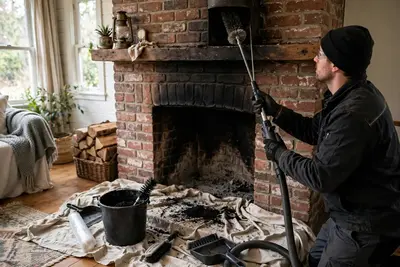
What the camera finds is specific: whether the damage is at one height or at five, whether the tiles are whole, cracked, shifted, or missing, whether metal has rusted through, and whether creosote has built up where a brush cannot reach. It also shows what is not wrong — a liner that looks rough from the firebox but is sound all the way up — which matters just as much, because it means the problem is somewhere else entirely.
The inspection report turns this post’s general guidance into a decision about your chimney. “One cracked tile at twelve feet, joints sound above and below” is a repair. “Cracks at four heights, two tiles missing, joints open throughout” is a replacement. Ask for the report in writing, with the camera footage or stills, before agreeing to either — and if a recommendation does not match what the report shows, ask why.
Why Portland’s Freeze-Thaw Matters
Portland’s brick chimneys are often decades old, and their liners are original — clay tile, fitted when the house was built, now working through its fourth or fifth decade. Two things here wear them out faster than in a dry climate, and both push the decision toward replacement sooner.
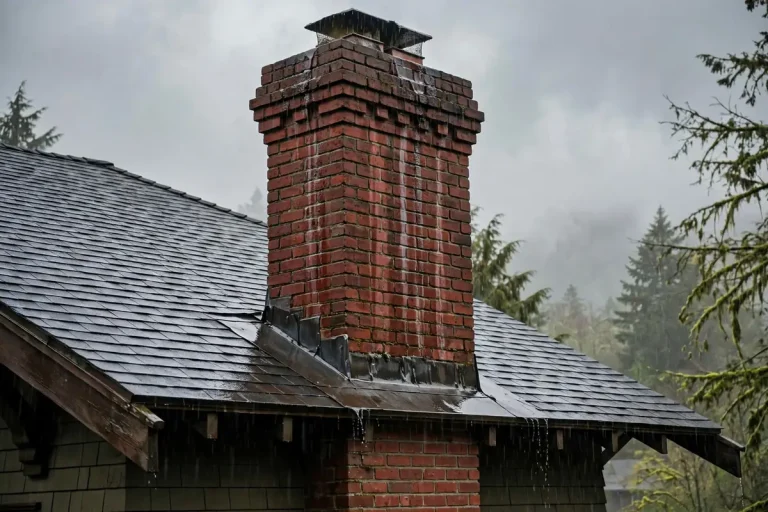
The first is water from above. Rain gets into the flue, soaks the liner, and then freezes — and ice expands by about 9%, prying at every small crack it finds. A sealed crack that would hold for years in a dry climate opens again here after a few winters of freeze and thaw, which is why a repair made under a missing cap so often fails. Portland gets roughly 40 inches of rain a year across about 150 rainy days, mostly between October and April.
The second is creosote. Wood smoke leaves acidic, tarry deposits on the liner, and in a flue that is not swept regularly those deposits build up, corrode the surface, and raise the fire risk. An annual chimney cleaning (typically $150–$350, 45–90 minutes) removes the deposits before they do damage and spots the early signs of liner failure while they are still small jobs. Burning dry, seasoned wood helps too: wet wood leaves far more creosote and acidic condensate, which attack the liner from the inside.
One more thing about older homes: houses from the 1950s through the 1980s sometimes have asbestos insulating boards or wrapping around the flue. If asbestos is suspected, work stops and a specialist survey comes first — it is rare, but it is why a careful inspection matters before any relining work begins.
The Bottom Line
Repair and replacement are not two prices for the same job. A repair fixes a local fault in a liner that still has years in it. A replacement rebuilds the venting path when the damage is widespread, when pieces are missing, when a fire has damaged it through its height, or when it no longer matches the appliance. The camera inspection is what tells you which one you are looking at — and the honest answer follows what it finds.
If you have seen the signs and you are weighing the two options, do not guess from the firebox. Get the flue looked at from the inside, get the report in writing, and then decide. Waiting is what turns a small repair into a full reline.
Call Portland Chimney Care at +1 (503) 433-7104. We serve Portland, OR, and we can tell you plainly whether your liner can be repaired, whether it needs replacing, or whether it needs nothing at all — and the scope is assessed on inspection.
FAQ
Sources
- Grand Chimney Sweepers
- One Chimney Services
- ChimneySweepCT
- Blackburn Chimney Co.
- Certified Chimney Experts
- Royalty Chimney
- HeatSafe Installations
- Cooley Mechanical