Signs Your Chimney Liner Needs Repair
The liner is the one part of your chimney you never see — and the signs your chimney liner needs repair are easy to miss, because most of them show up somewhere else: in the firebox, on the damper, or on the outside brick. The liner itself is out of sight, running the full height of the flue, so it fails quietly. What you notice instead are the side effects: smoke where it should not be, pieces of tile where they should not be, a smell that was not there last winter.
That is what makes a failing liner dangerous: the heat and the gases find their way out through cracks you cannot see, into the walls of your house. This post walks through the seven warning signs, what each one means, how urgent it is, and how a camera inspection settles the question for good.
Key Takeaways
- A failing liner rarely announces itself directly. The warnings show up in the firebox, on the damper, and on the outside brick — not in the flue, which you cannot see.
- Pieces of clay tile in the firebox are the clearest sign — the lining is actively breaking down when its own material starts falling.
- Smoke coming back into the room, a smoky smell when the fire is out, and rust on the damper all point the same way: gases and moisture are escaping through cracks instead of going up the flue.
- White powdery staining on the outside brick means water is moving through the masonry because the liner is no longer keeping it out.
- No warning sign proves the liner is the problem on its own. A camera inspection is the only reliable check, and it is the standard step after any chimney fire.
- Small, isolated damage can sometimes be repaired. Widespread damage usually means relining, and the scope is assessed on inspection.
In This Post
- The Short Answer
- Seven Warning Signs
- What a Camera Inspection Shows
- Repair or Reline?
- Why Portland’s Climate Wears Liners Out
- Frequently Asked Questions
The Short Answer
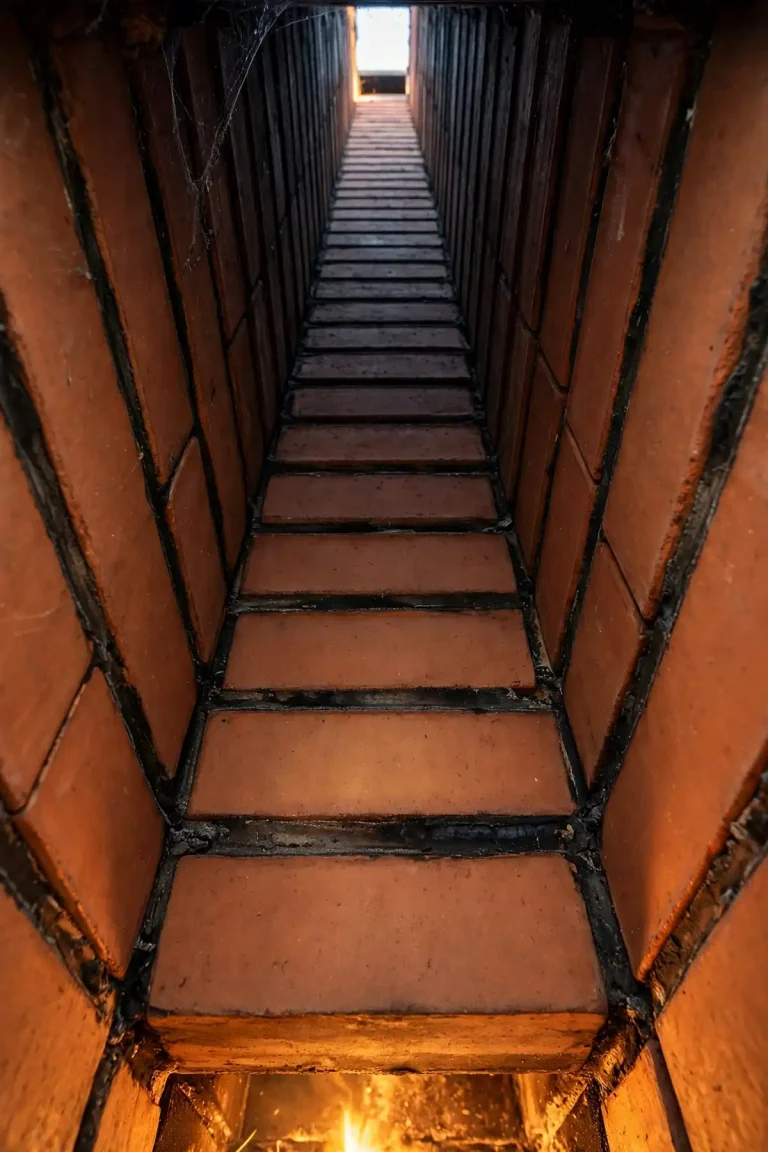
A chimney liner is a continuous tube that runs the full length of the flue, from the fireplace or appliance at the bottom to the top of the chimney. It does three jobs: it contains the heat, smoke, and combustion gases and carries them safely out of the house; it protects the brick and mortar from heat and corrosive gases; and it keeps the gases hot and moving so the chimney drafts properly. When it fails, all three jobs fail quietly — the heat and the gases find their own way out, through the walls and into the structure.
A liner needs repair when it can no longer do those three jobs — cracks, gaps between tiles, separated sections, or rusted-through metal that let gases, moisture, and heat escape the flue. The damage is almost always invisible from the firebox, which is why the warning signs below matter: they are the only evidence you get before a camera goes up the flue.
Seven Warning Signs
Each sign below says something different about what is happening inside the flue — and each one carries a different level of urgency. One sign on its own is a reason to get the liner checked. Two or more together mean it should not wait.
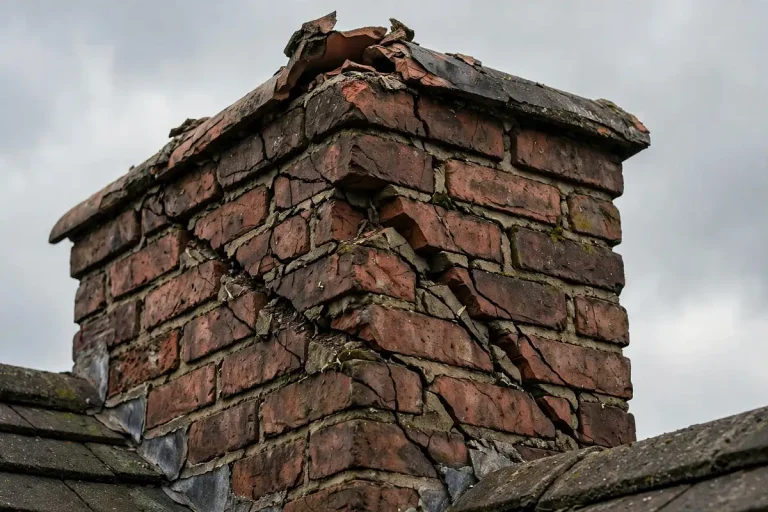
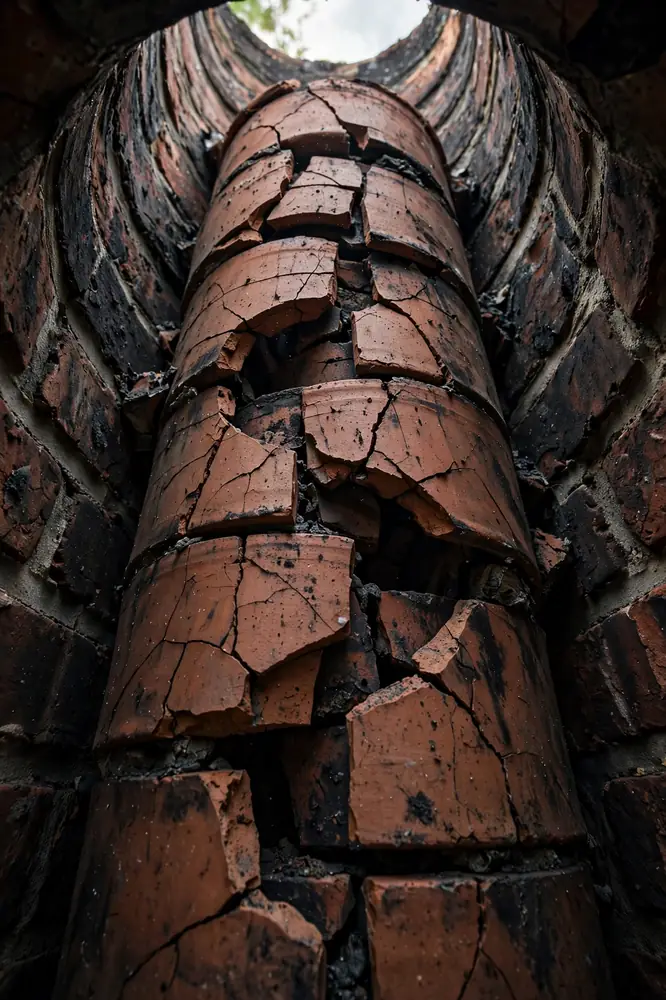
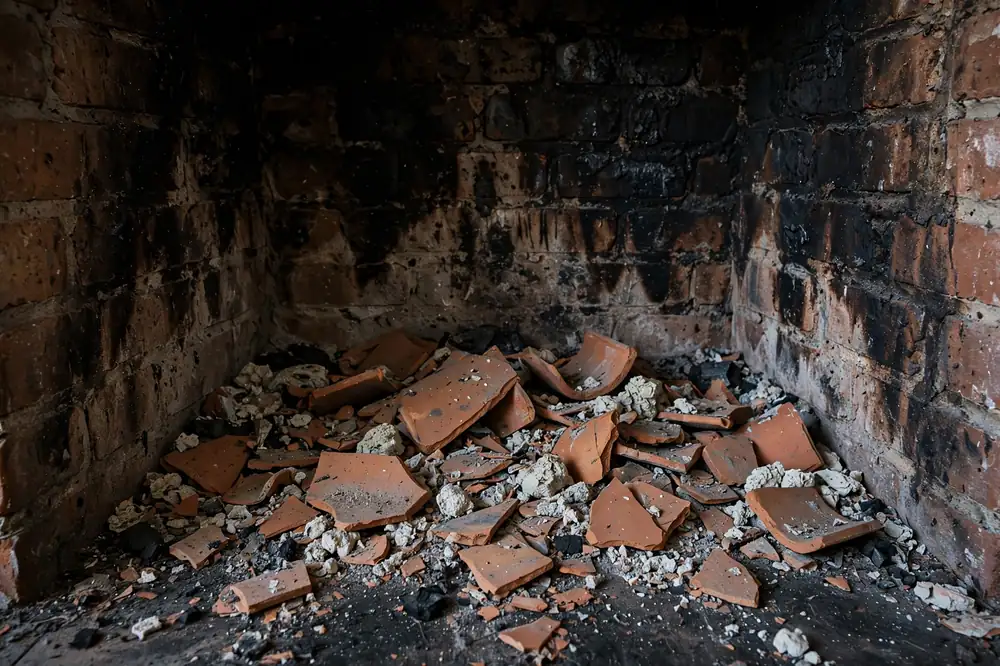
1. Pieces of clay tile in the firebox. This is the clearest sign of all. If chunks of terracotta tile or mortar fragments are collecting in the firebox, on the smoke shelf, or in the cleanout, the lining is actively shedding its own material. Tiles break down from thermal shock and freeze-thaw, and once pieces start falling, the flue has open gaps where gases escape. Do not light another fire until it has been checked.
2. Smoke coming back into the room. A fireplace that used to draw well and now spills smoke when you light it, or sends smoke back when the door is opened, is telling you the flue path has changed. A cracked, blocked, or wrongly sized liner is one cause — but so are a cold flue, a blocked terminal, or a change in the house ventilation. If the problem keeps coming back after the stove has warmed up and the chimney has been swept, the liner and its connections need a professional inspection.
3. A smoky or chemical smell when the fire is out. A faint smell after lighting is normal enough. A continuing odour of soot, tar, or smoke — especially when the fireplace has not been used, or in damp weather — is not. It means gases or condensate are escaping from the flue system, usually where a liner has corroded, split, or come apart at a joint, and the smell often gets worse after rain, when moisture mixes with soot deposits inside the chimney. Keep the room ventilated, and make sure your carbon monoxide alarm is working — an alarm is essential protection, but it cannot diagnose the source of a flue fault.
4. Rust on the damper or the firebox metal. Rust-coloured flakes in the fireplace opening, on the damper, or around the connector pipe point to corrosion in a metal liner or a connecting flue section — or to moisture and corrosive gases escaping through cracks in a clay liner. The same warning shows up at a furnace or water-heater flue connection, where rust, moisture streaks, or white powder mean acidic condensation is eating the liner from the inside. A little debris after sweeping does not automatically mean failure, but rust that keeps spreading does.
5. Soot stains or damp patches near the chimney breast. Dark staining on the walls or ceiling beside the chimney, or damp patches that appear after rain, mean combustion byproducts or moisture are getting out of the flue and into the structure. If the dampness sits close to the chimney and darkens after rain, the chimney is the likely source — and the liner is on the suspect list.
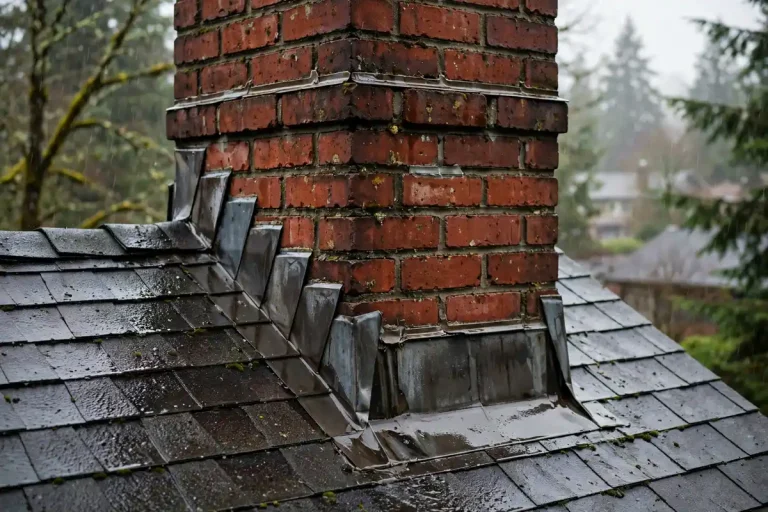
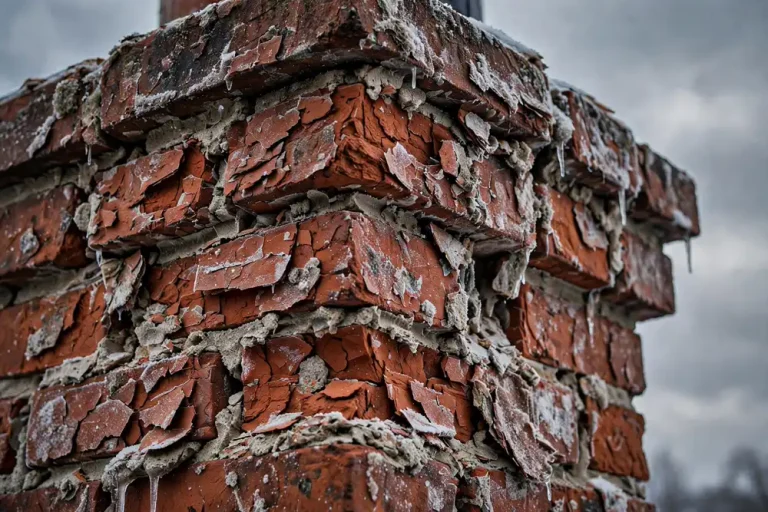
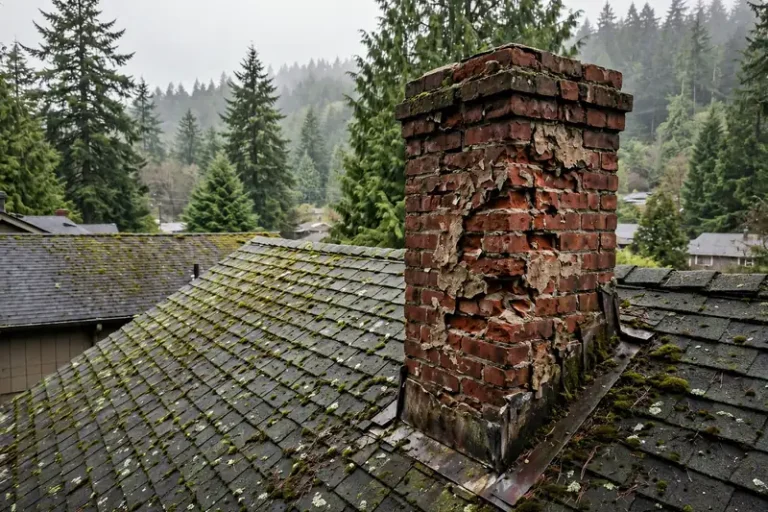
6. White powdery staining on the outside brick. The white, powdery bloom on the outside of a chimney is called efflorescence: water moving through the masonry and carrying salts to the surface. It is often a water problem first — but it is also a liner problem, because a sound liner keeps water out of the masonry in the first place. If the dampness is showing up as a stain and you cannot tell where the water comes from, our guide on why chimneys leak walks through the five entry points in order.
7. A chimney fire in the past — or a sweep who cannot get the brush through. A chimney fire exposes the liner to temperatures far beyond what it was designed to manage. Even a brief one can distort a metal liner, crack clay tiles, and damage joints — and the damage is usually invisible from the firebox. After any suspected chimney fire, stop using the appliance and have the flue checked before relighting. The other version of this sign comes from your sweep: if the brush will not pass the full route, or the sweep reports heavy tar, a restriction, or corrosion that was not there last time, take it seriously — a change from previous visits is the most reliable early warning there is.
What a Camera Inspection Shows
No warning sign on its own proves the liner is the problem, and you cannot confirm it from the firebox or from the roof. The reliable check is a camera inspection: a small camera passed up the full height of the flue, looking at every joint and tile face. It is the standard step — the Level 2 inspection level in NFPA 211, the standard that covers chimney inspections — after any chimney fire, before a liner is replaced, and when a home changes hands.
What the camera finds is specific, and that is the point. It shows cracked, gapped, or missing mortar between clay tile sections; tiles that have shifted or separated; sections that have collapsed or gone missing; rusted-through metal; and creosote buildup in places a brush cannot reach. It also shows what is not wrong — a liner that looks rough from the firebox but is sound all the way up — which matters just as much, because it means the problem is somewhere else.
Repair or Reline?
Once you know the signs your chimney liner needs repair, the next question is what to do about them — and the answer depends on how bad the damage is and where it sits.
| Damage | What it usually means | Next step |
|---|---|---|
| A few hairline cracks, rest of the lining sound | Early wear, contained | Seal with a heat-resistant coating, or replace the affected tile |
| Multiple cracks, shifted or missing tiles | Lining is breaking down | Reline — a new stainless steel tube, or a cast-in-place lining |
| Rusted-through metal sections | Corrosion has eaten through | Replace the section, or reline if the damage is widespread |
| Wrong size or wrong material for the appliance | A mismatch, not damage | Replace with a correctly sized liner for the appliance |
| Collapsed or blocked section | The flue is not venting | Clear the blockage, then reline |
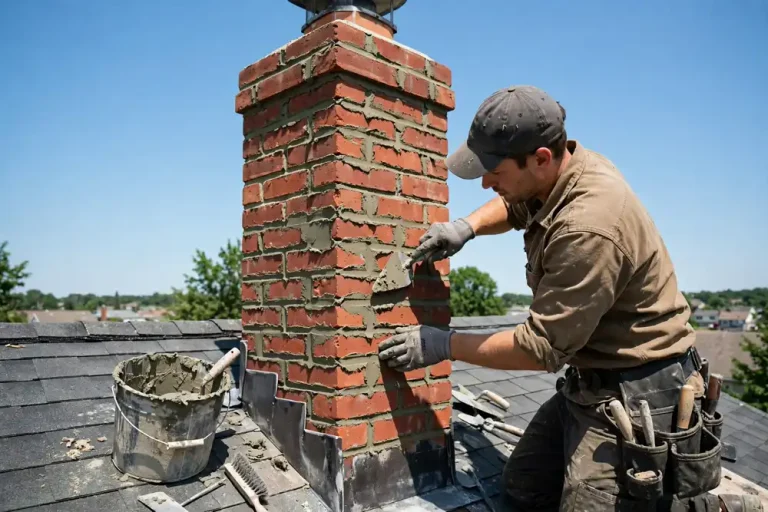
A short, isolated crack in an otherwise sound clay tile liner can sometimes be sealed, or a single damaged tile replaced — but only when the rest of the lining is solid. Multiple cracks, shifted tiles, large gaps, or severe spalling usually point the other way: relining. A flexible stainless steel tube dropped down the existing flue creates a new, seamless venting system inside the old one, and a cast-in-place lining does the same job where a tube will not fit. A liner that is the wrong size or the wrong material for the appliance is replaced for the same reason — patching cannot fix a mismatch.
If you are weighing the two materials, our comparison of clay vs stainless steel chimney liners walks through how each one fails, what relining involves, and how to decide. One warning: do not assume a surface sealant makes a damaged liner safe, and do not try to patch an internal liner from the fireplace opening. The repair has to suit the appliance, the temperatures, the fuel, and the flue dimensions, and that is a judgment for an inspection.
One more thing to know about older homes: houses from the 1950s through the 1980s sometimes have asbestos insulating boards or wrapping around the flue. If asbestos is suspected, work stops and a specialist survey comes first. It is rare, but it is the reason a careful inspection matters before any relining work begins.
Why Portland’s Climate Wears Liners Out
Portland’s brick chimneys are often decades old, and their liners are original — clay tile, fitted when the house was built, now working through its fourth or fifth decade. Two things here wear them out faster than in a dry climate.
The first is water from above. Rain gets into the flue, soaks the liner, and then freezes — and ice expands by about 9%, prying at every small crack it finds. The water often enters through a missing cap, which is why the cap and the liner are connected problems: a missing cap lets months of rain run straight down the flue and soak the lining from the inside. Portland gets roughly 40 inches of rain a year, spread across about 150 rainy days, mostly between October and April.
The second is creosote. Wood smoke leaves acidic, tarry deposits on the liner, and in a flue that is not swept regularly those deposits build up, corrode the surface, and raise the fire risk. An annual chimney cleaning (typically $150–$350, 45–90 minutes) removes the deposits before they do damage, and spots the early signs of liner failure — tile pieces, rust, heavy tar — while they are still small jobs. Burning dry, seasoned wood helps too: wet wood leaves far more creosote and acidic condensate, which attack the liner from the inside.
The Bottom Line
The liner is the part of your chimney you never see, and the part that does the most to keep your house safe. It holds the heat and the gases inside the flue, protects the brick from the inside out, and keeps the chimney drawing the way it should. When it cracks, the heat and the gases find their own way out — and the only evidence you get is in the firebox, on the damper, and on the outside brick. If you have seen tile pieces in the firebox, smoke coming back, a smell from the fireplace when it is cold, or rust where there was none last year, do not wait for the next winter to find out what it is. Waiting is what turns a small repair into a full reline.
Call Portland Chimney Care at +1 (503) 433-7104. We serve Portland, OR, and we can tell you plainly whether it is the liner, the cap, or something else — and whether it needs a repair, a relining, or nothing at all.
FAQ
Sources
- ChimneySweepCT
- Blackburn Chimney Co.
- Certified Chimney Experts
- Royalty Chimney
- HeatSafe Installations
- Cooley Mechanical