Roof Leak or Chimney Leak? How to Tell
There is a brown stain on your ceiling, and it sits near the chimney. So is it the roof, or is it the chimney? Telling a roof leak or chimney leak apart starts with the stain itself — where it sits, when it shows up, and what it looks like — because the stain is the only evidence you get from inside the house, and it lies about where the water got in.
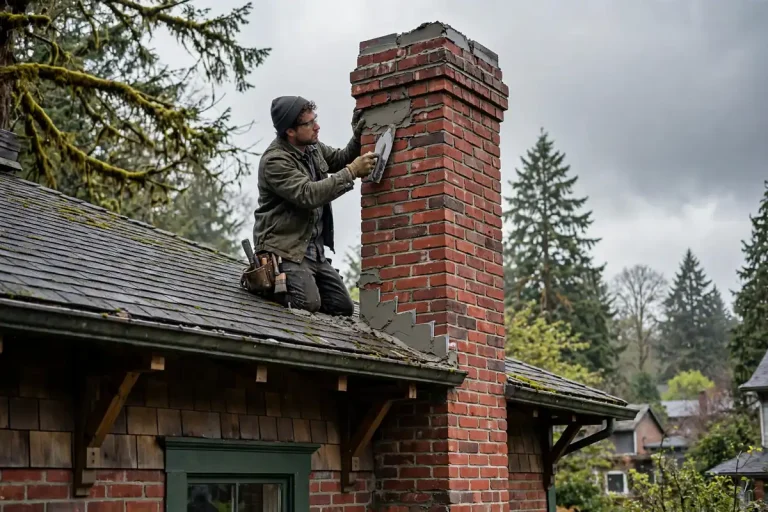
That matters because the answer decides who you call. A roofer fixes roofs. A chimney professional fixes chimneys. The flashing between them sits on the seam between the two trades, and it is where homeowners lose the most time: the wrong call means the wrong repair, and the stain comes back with the next storm. This post gives you four tests you can do yourself — three from inside the house and one from the ground — and a clear rule for who to call at the end of them.
Key Takeaways
- The stain rarely sits under the entry point. Water travels along rafters, joists, and the back of drywall before it drops — sometimes several feet sideways.
- Where the stain sits is the strongest clue: hugging the chimney means chimney; spread across the open ceiling, away from the chimney, means roof.
- When it appears is the second clue: only after rain means a rain leak; wet in dry weather means it is not rain at all.
- The rainy-day attic check settles most cases — look at the decking and rafters where the chimney passes through the roof, while it rains.
- Flashing sits between the two trades. When the stain is at the chimney-roof joint, both may be needed, and the inspection decides who leads.
- Do not seal the stain, and do not climb a wet roof. Both hide the problem instead of finding it.
In This Post
- The Short Answer
- Why the Stain Lies
- Test 1: Where the Stain Sits
- Test 2: When It Appears
- Test 3: The Rainy-Day Attic Check
- Test 4: What You Can See from the Ground
- The Water Test
- Who to Call: Roofer or Chimney Sweep?
- Portland Rain: Why It Matters Here
- What Not to Do
- Frequently Asked Questions
The Short Answer
A roof leak or chimney leak can look identical from the living room, but the two leave different signatures. A chimney leak sits close to the chimney: on the ceiling beside it, on the wall the chimney passes through, on the attic wood around it, or inside the firebox — and it darkens during or right after rain. A roof leak spreads: dampness across the open roof deck, stains far from any chimney, or a stain following a valley, a skylight, or an exterior wall.
If the wet decking runs only where the roof meets the chimney, the chimney is the likely source. If it runs along the roof slope away from the chimney, the roof is. And if the stain is wet when it has not rained at all, neither is the first suspect — that is condensation or plumbing, and it needs a different call. The four tests below work through those signatures in order, and the last section says who to call for each result.
Why the Stain Lies
Water does not fall straight down inside a house. It follows the path of least resistance — usually along a surface: the outside of the flue tiles, a rafter, a joist, or the back of the drywall. By the time it soaks through and shows as a stain, it may have travelled several feet sideways and a full storey down from where it entered. That is why sealing the stain never works: caulk over the damp patch or paint over the ceiling mark, and the leak comes back with the next storm, because the entry point was never touched. Our guide on why chimneys leak walks through the five entry points in order; this post is about the detective work before that — whether the water is coming from the chimney at all, or from the roof around it.
Test 1: Where the Stain Sits
Location is the strongest clue you can read from inside the house. Sketch the stain, mark where the chimney runs through the house, and compare the two.
Stain hugs the chimney. Water marks on the ceiling or wall within a couple of feet of the chimney, running down the chimney breast, or darkening the attic wood around the chimney chase — all point at the chimney system: the flashing, the crown, the cap, or the masonry. Flashing leaks often show up on the uphill side first, where the most roof water collects against the brick.
Stain is away from the chimney. A stain in the middle of a room, near an exterior wall, below a valley, or under a skylight or plumbing vent usually has nothing to do with the chimney, even if the chimney is the nearest tall object. Water travels along rafters and sheathing before it drops, so it can land several feet from its entry point — but it rarely travels toward a chimney.
Water inside the firebox. Water pooling in the firebox, a damp smell from the fireplace, rust on the damper, or white powdery staining on the bricks inside the flue is almost never a roof leak. That water is coming down the flue from the top: a missing chimney cap, a cracked chimney crown, or porous masonry soaking it up and releasing it inside.
Test 2: When It Appears
Timing is the second clue, and it separates a rain leak from everything else. Watch the stain through two or three storms.
Only during or right after rain. If the stain darkens during any ordinary soaking rain, gravity alone is getting water in — a roof defect, a failed flashing seam on the uphill side, or a crown or cap problem. The entry point is open to falling water.
Only in wind-driven rain. If the leak shows up only when storms blow hard from one direction, think about what faces that wind: a lifted flashing edge, a gap under the cap, or a masonry face absorbing water. A leak that strictly tracks wind direction at the chimney is a strong flashing or masonry signal — a leak that only ever appears in wind-driven storms and never in still rain is pointing at the chimney.
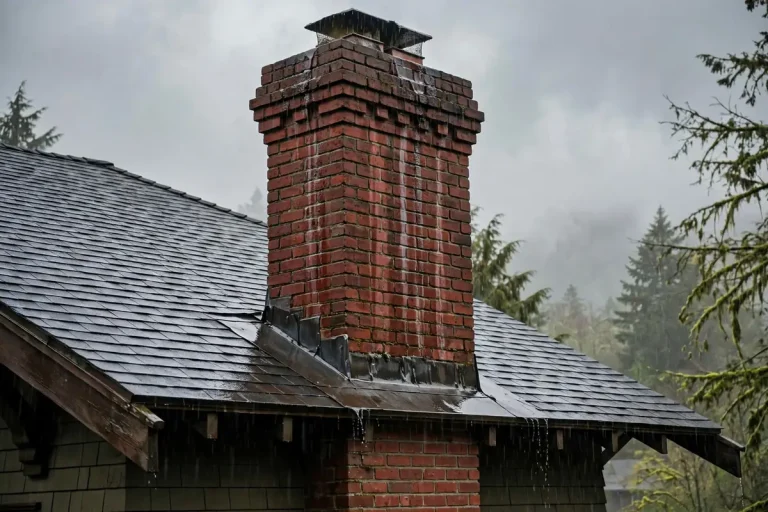
Keeps spreading a day after the rain stops. Masonry soaks up water like a sponge and releases it slowly. A stain that keeps growing a day after the weather clears often means the chimney brickwork absorbed water during the storm and is still letting it through — a crown, mortar joint, or flashing problem, not a shingle problem. Shingle leaks usually stop darkening once the rain stops.
Wet when it has not rained. A stain that stays damp through dry weather is not a rain leak at all. The usual causes are condensation — warm, moist air from the house condensing on cold flue or duct surfaces in the attic — or a plumbing leak above the stain. If the dampness appears after showers or cooking rather than after rain, or is worst on cold mornings, condensation is the first suspect, and it needs a different fix entirely.
Test 3: The Rainy-Day Attic Check
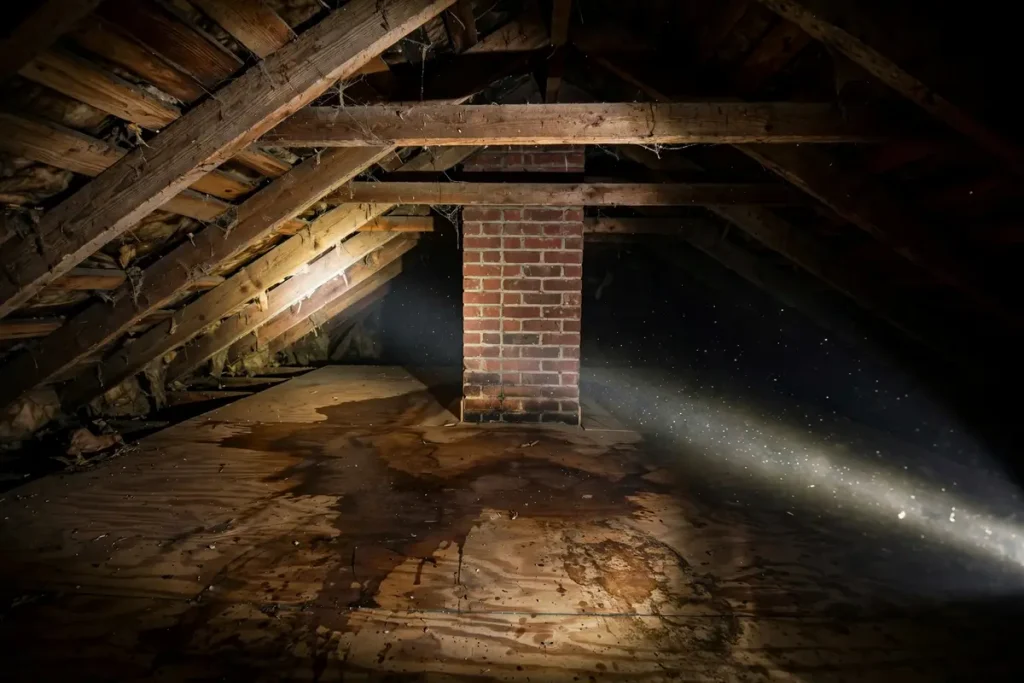
This is the test that settles most cases, and it costs nothing but a torch and a dry pair of shoes. Go into the attic during rain — not in a lightning storm, and not if the attic has no safe footing — and look where the chimney passes through the roof.
What to look for. Shine the torch along the decking and rafters around the chimney penetration. Wet or darkened wood on the chimney side, drips down the outside of the chimney chase, or water beading on the underside of the decking where it meets the brick all say chimney. Wet decking spread across the open roof field, away from the chimney, says roof. Look for daylight, too: a pinhole of light through the decking away from the chimney is a roof defect, not a chimney one.
Follow the wet wood, not the stain. The ceiling stain below is the end of the water’s journey, not the start. In the attic, the wettest wood is closest to the entry point. Trace the dampness uphill along the rafters until it stops — that is roughly where the water is getting in. If the trail leads to the chimney, the chimney is the source. If it leads to a valley, a vent, or open decking, the roof is.
If the attic is not safely accessible, skip this test. It is the most useful of the four, but it is not worth a fall — the inspection covers the same ground.
Test 4: What You Can See from the Ground
You do not need to climb the roof. Binoculars from the ground, or a photo zoomed in on a phone, show most of what matters — and the roof and the chimney give different answers.
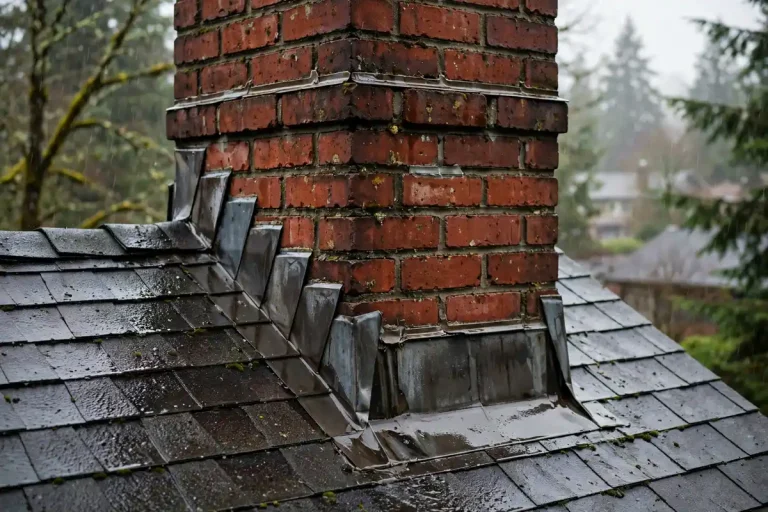
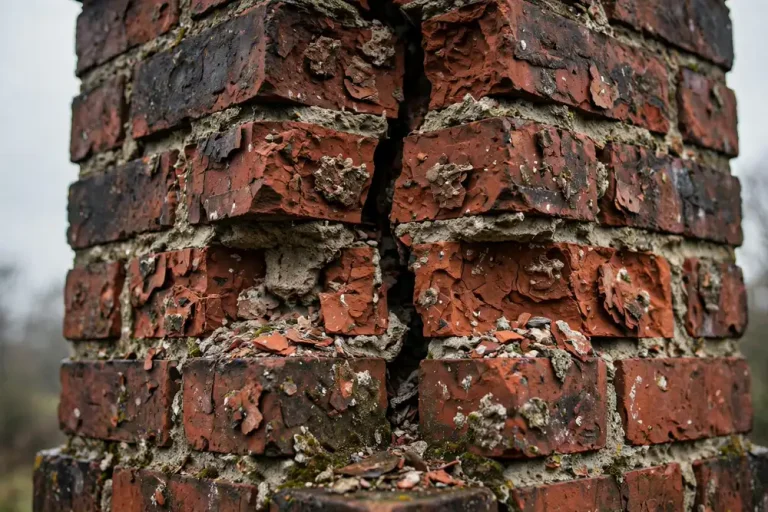
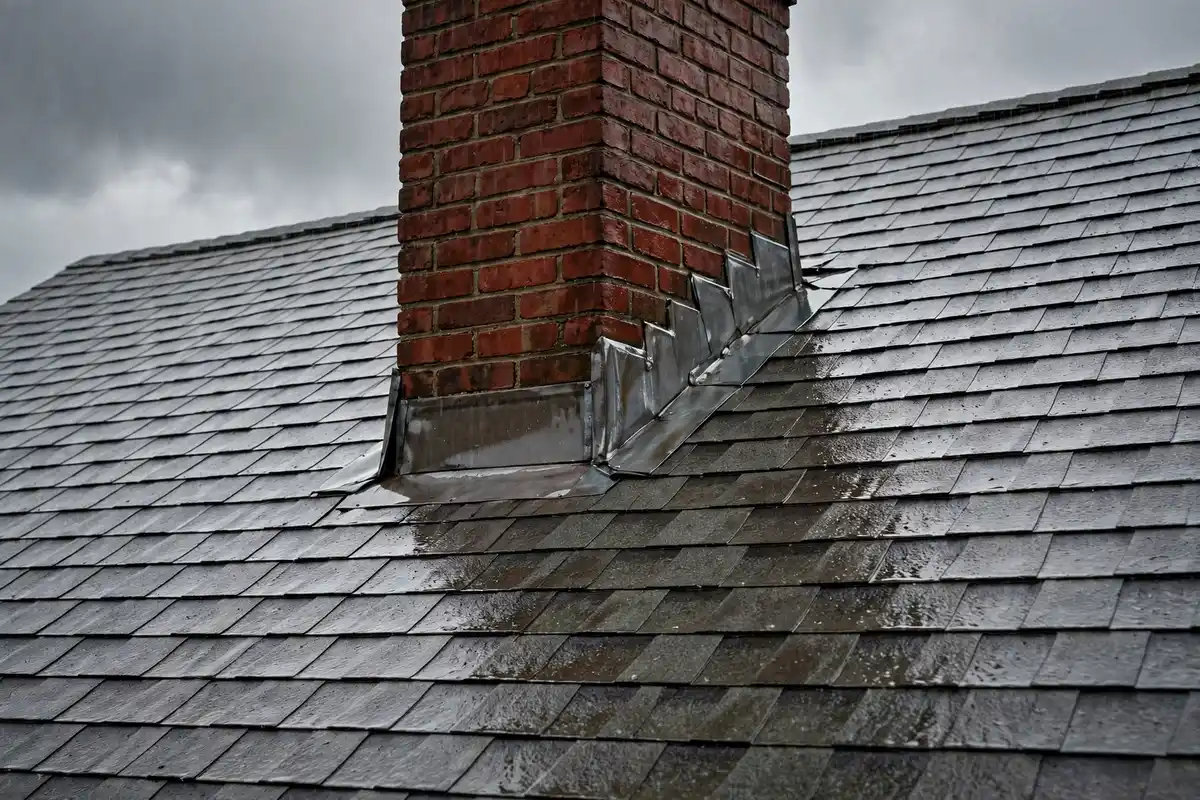
Chimney-side signs. Gaps or separation in the flashing where it meets the brick, a counter-flashing edge lifted away from the mortar joint, cracks across the crown or in the mortar joints, a missing or tilted cap, rust stains running down the brick, and white powdery staining (efflorescence) on the outside brick. Any of these point at the chimney. The chimney flashing is the metal system that seals the joint where the chimney meets the roof — step flashing tucked under the shingles and counter flashing set into a mortar joint — and when either part lifts or separates, water runs straight into the attic.
Roof-side signs. Missing, cracked, or curled shingles away from the chimney, nail pops, a valley full of debris, worn shingles below a skylight or vent, or gutters overflowing and backing water up under the eaves. If the roof field looks tired and the chimney looks sound, the roof is the likelier source.
The flue height check. The top of the flue should sit at least 3 feet above the roof surface and at least 2 feet above anything within 10 feet of it — the 3-2-10 rule. A flue that falls short catches wind-driven rain and downdrafts that a proper height would shed, and it is a chimney-side fix, not a roofing one.
Do this check in dry weather, from the ground, with binoculars. A wet roof is not a place to climb, and the ground view is enough for this test.
The Water Test
If the four tests still do not settle it, there is one more: a controlled water test, done by a professional — not by a homeowner with a garden hose. One component is wetted at a time, from the lowest to the highest — flashing first, then crown, then cap — while someone watches inside for the drip. The first zone that reproduces the drip is the confirmed entry point.
Do not run this test yourself — wetting the wrong area first, or soaking the whole chimney at once, tells you nothing, and water forced in under pressure can push through places rain never would. Our guide on how to find the source of a chimney leak walks through the full tracing method, including this test.
Who to Call: Roofer or Chimney Sweep?
| What you found | Who to call |
|---|---|
| Stain hugs the chimney; flashing gaps, crown cracks, or a missing cap visible | Chimney professional first |
| Stain far from the chimney; worn shingles, valley, or vent problems visible | Roofer first |
| Stain at the chimney-roof joint; flashing lifted or separated | Both — the flashing sits on the seam between the trades, and the inspection decides who leads |
| Water inside the firebox, or rust on the damper | Chimney professional — that water came down the flue |
| Wet in dry weather, or worst on cold mornings | Neither yet — check condensation and plumbing first |
| Tests disagree, or you cannot tell | Chimney inspection first — it covers the chimney side and the roofline around it, and it says plainly if the roof is the problem |
The flashing between them is the one place where the answer is genuinely both — and the honest way to handle it is an inspection that looks at the chimney and the roofline around it together, not a repair booked on a guess.
Portland Rain: Why It Matters Here
Portland gets roughly 40 inches of rain a year across about 150 rainy days, mostly between October and April — and most of it arrives as wind-driven winter rain, not still, vertical rain. That is why the wind test in this post matters more here than in a dry climate: a flashing edge or a hairline crack that sheds vertical rain fine will let wind-driven rain straight in, all winter.
The same rain, freezing and thawing, works on the crown and the mortar joints — water gets into a small crack, ice expands by about 9%, and the crack opens a little wider each winter. In Portland the usual suspect is wind-driven rain, not the thaw-cycle ice dams colder cities deal with — and the fix follows the same logic: find the entry point, fix that, and do not seal the stain.
What Not to Do
Do not seal the stain. Caulk over the damp patch or paint over the ceiling mark, and the leak comes back with the next storm — the entry point was never touched, and the water is still getting in. The stain is a symptom, not the problem.
Do not climb a wet roof. A wet roof is slippery, and a fall from a roofline is not worth risking to look at flashing. The ground check with binoculars and the attic check cover the same ground safely.
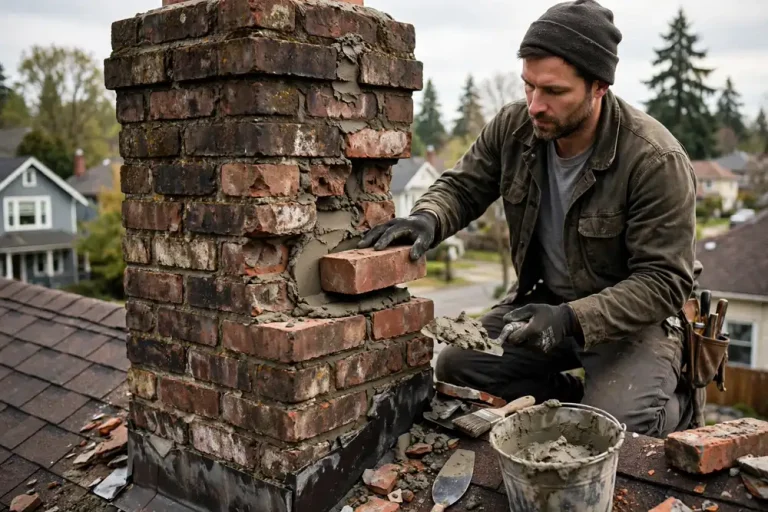
Do not re-point the brick nearest the stain. The stain sits where the water landed, not where it got in. Re-pointing that brick fixes the masonry you can see and leaves the entry point — usually the flashing, the crown, or the cap — untouched.
Do not book a repair on a guess. A roof repair for a chimney leak, or a chimney repair for a roof leak, costs the same as the right repair and fixes nothing. The four tests in this post, or one inspection, cost far less than the wrong job.
The Bottom Line
A stain near the chimney is not automatically a chimney leak, and a stain on the ceiling is not automatically a roof leak. Where it sits, when it appears, what the attic looks like during rain, and what you can see from the ground — those four tests tell you which one it is, and the table above tells you who to call. Once you know it is the chimney, our chimney leak repair guide walks through the fixes in order: crown, cap, flashing, masonry, liner.
If you have worked through the tests and still cannot tell, that is what the inspection is for. Call Portland Chimney Care at +1 (503) 433-7104. We serve Portland, OR, and we can tell you plainly whether it is the flashing, the roof, or something else — and whether it needs a repair, a replacement, or nothing at all.
FAQ
Sources
- Silver Castle Masonry
- James Chimney Sweep
- Roof With Integrity
- Mad Hatter Services
- ChimneySweepCT
- Blackburn Chimney Co.