How Cracked Flue Liners Become Dangerous
A cracked clay tile inside a flue does not look like an emergency. From the firebox you see a hairline crack, or a tile edge that has shifted a fraction, and the fireplace still draws fine. Nothing smells wrong, nothing looks burnt, and the fire lights the way it always has. That is exactly what makes a cracked liner dangerous: the damage is hidden inside the chimney, and the things it lets through — heat, gas, sparks — are hidden too, until they are not.
This post explains how cracked flue liners become dangerous — not through one dramatic failure, but through four separate pathways that run quietly at the same time. Heat reaches wood it was never meant to touch. Carbon monoxide slips through gaps into rooms. Creosote collects where it should not. And the masonry around the flue slowly loses its strength. Each pathway on its own is a problem; together, they are the reason a cracked liner is never a “watch it and see” job.
Key Takeaways
- A cracked liner is dangerous because the liner is the only barrier between flue gases and the house — once it is breached, heat, gas, and sparks have a path out.
- Heat is the first pathway: flue gases reach framing and wood around the chimney, and repeated heating lowers the temperature at which that wood can catch fire.
- Carbon monoxide is the quietest pathway: it is odourless and colourless, and it can seep through cracks into living spaces while the fireplace seems to work normally.
- Creosote is the third pathway: a damaged flue lets deposits collect in irregular patterns and gives embers places to escape.
- The fourth pathway is structural: acidic condensation attacks mortar and brick, and Portland’s freeze-thaw widens every crack a little more each winter.
- If a cracked liner is suspected, do not use the fireplace until a camera inspection has looked at the full height of the flue.
In This Post
- The Short Answer
- What the Liner Is Protecting
- Pathway 1: Heat Reaches the Framing
- Pathway 2: Carbon Monoxide Slips Through
- Pathway 3: Creosote Finds New Places to Burn
- Pathway 4: The Structure Weakens
- What the Camera Inspection Actually Sees
- Why Portland’s Freeze-Thaw Opens Cracks Faster
- What Happens If You Keep Using It
- Frequently Asked Questions
The Short Answer
A what is a chimney liner is a continuous tube inside the flue that contains heat, smoke, and combustion gases and carries them out of the house. When that tube is whole, everything dangerous stays inside it. When it cracks, the containment fails — and the short answer to how cracked flue liners become dangerous is that the liner is the only thing standing between a firebox running at hundreds of degrees and the wood, plaster, and air of your home.
If you have not yet worked out whether your liner is damaged at all, start with the signs your chimney liner needs repair — the seven warning signs and how urgent each one is. This post picks up where that one ends: not what to look for, but what the damage does once it is there.
What the Liner Is Protecting
The liner’s job is containment. A wood fire sends three things up the flue: heat, smoke and soot, and combustion gases. The liner keeps all three inside the flue and out of the house. The brick and mortar around it are the second layer, not the first — they were never meant to carry hot gases on their own, and they are not airtight. Mortar joints open with age, brick is porous, and the gaps between the liner and the masonry are a path, not a seal.
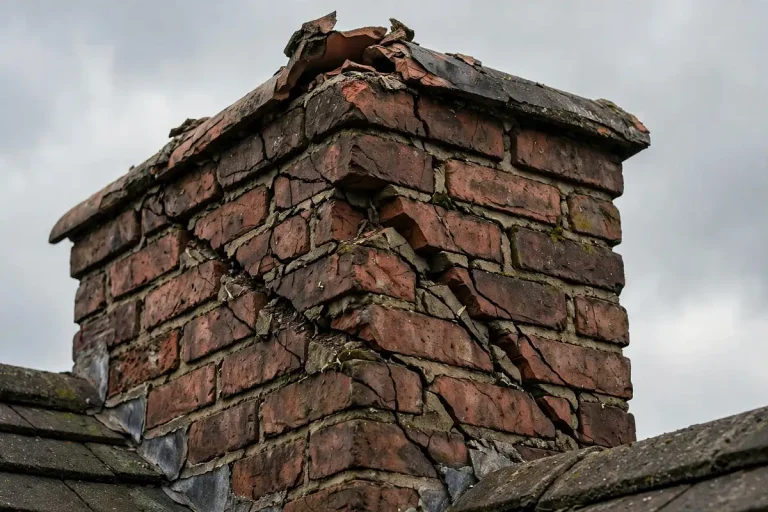
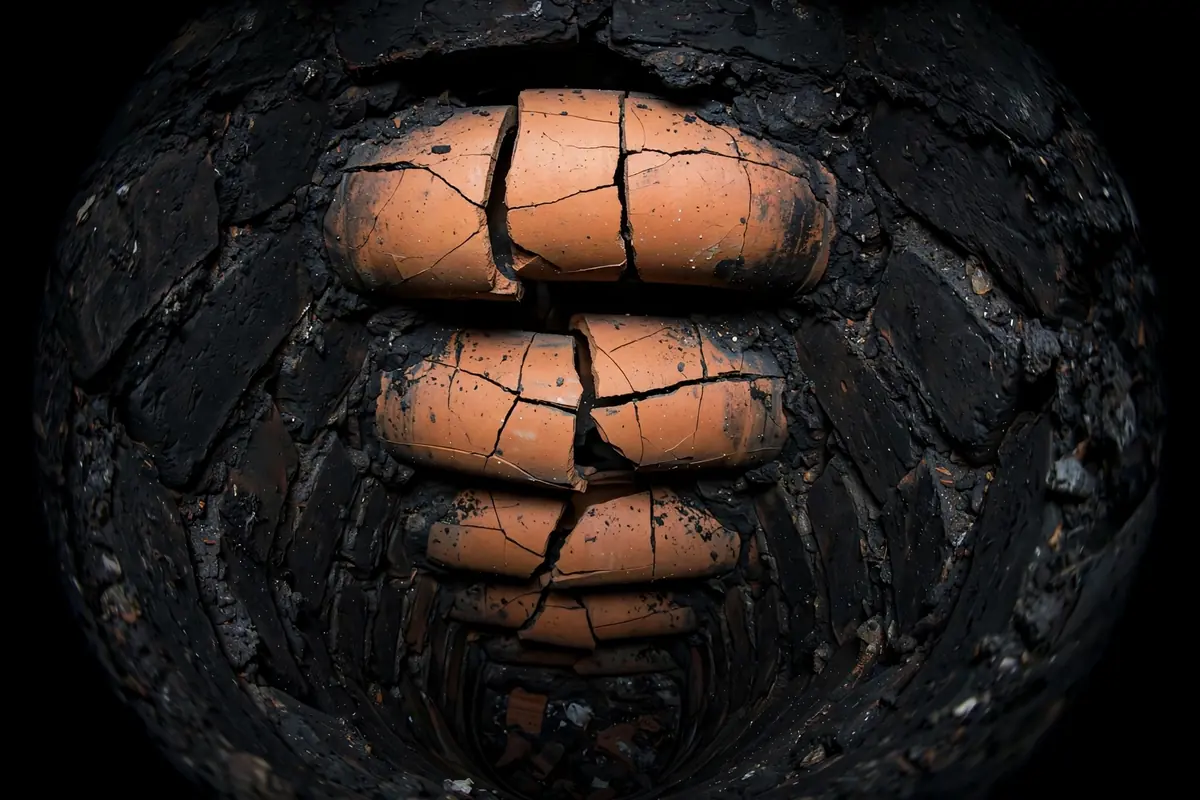
A clay tile liner is made of short sections stacked one on another, with mortar joints between them. A crack in a tile, a shifted section, or an open joint is a breach in that containment. It does not have to be wide. A hairline crack is enough for gas to pass through, and enough for heat to reach the brick directly instead of through the tile. The four pathways below are what happens after the breach — each one starts at a crack and ends somewhere it should never reach.
Pathway 1: Heat Reaches the Framing
Heat is the first pathway, and the hardest to see, because it does its work inside the wall. Flue gases in a wood fire can run well over 1,000°F, and the liner is what stands between that heat and the framing around the chimney. When the liner cracks, heat reaches the brick directly, and through gaps and open joints it reaches the wood framing, the sheathing, and the joists that sit against the chimney.
The mechanism is called pyrolysis, and it is slow. Wood that is heated again and again over months and years changes: its ignition temperature drops, so wood that would once have needed a direct flame can catch from sustained heat alone. Nothing has to be visibly burning for this to matter. The heat builds in the same spot fire after fire, and the wood around the flue gets a little closer to its ignition point each time.
What the homeowner sees of this pathway is usually nothing — that is the point. There is no smoke, no smell, and no stain on the living-room wall. The signs show up during an inspection: scorching or charring on framing near the flue, or brick that has changed colour from sustained heat. A wall that feels unusually warm beside the chimney breast is also worth an inspection. By the time any of that is visible from inside the house, the heat has been reaching wood it should never touch for a long time.
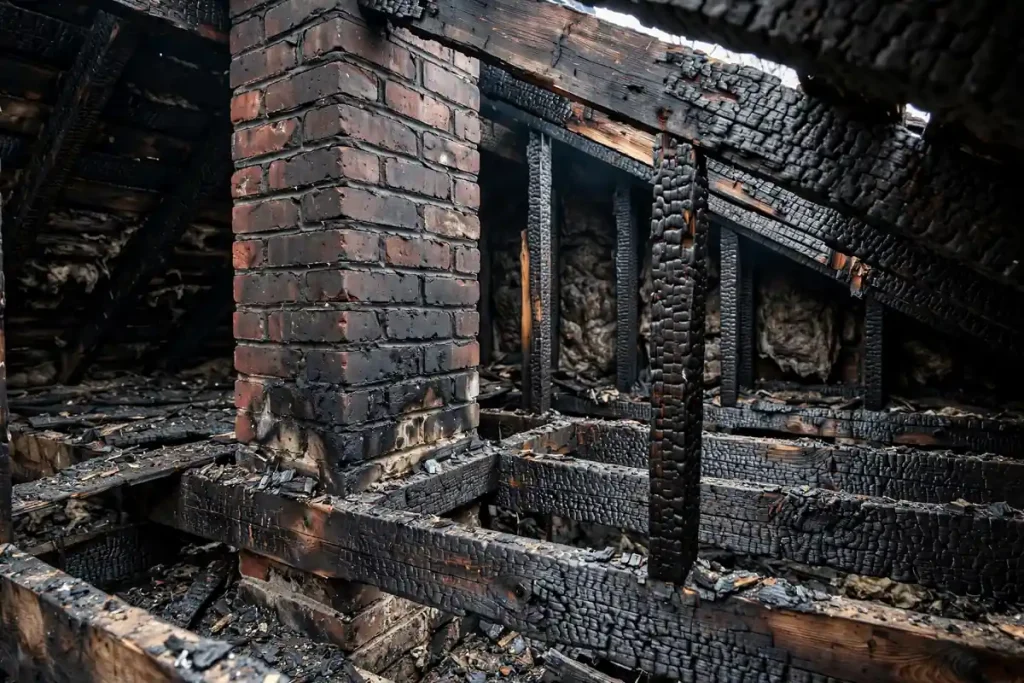
This pathway is also why a crack is not a cosmetic problem. The liner is not decoration inside the flue; it is the heat shield. A crack in it is a hole in the shield, and the fire does not care that the hole is small.
Pathway 2: Carbon Monoxide Slips Through
Carbon monoxide is the quietest of the four pathways, and the one that harms people rather than the house. It is odourless and colourless, and a fireplace with a cracked liner can seem to work normally while it is happening: the fire draws, the smoke goes up, and nothing looks wrong. The crack gives the gas a second path — through the liner and into the rooms around the chimney, instead of up and out of the house.
The symptoms are easy to mistake for something else: headache, dizziness, nausea, a flu-like feeling that eases when you leave the house and returns when you come back. That pattern — feeling worse at home and better away from it — is the one to take seriously. A fireplace that is used while the house is closed up for winter, with the heating running and the windows shut, is the setting where a cracked liner does the most harm, because the gas has nowhere to go but inside.
Working carbon monoxide alarms are the backstop, and they belong on every level of the house and near sleeping areas. An alarm sounding, or symptoms that appear when the fireplace is lit, means the same thing: stop using the fireplace, get fresh air, and do not light it again until the flue has been inspected. A cracked liner is not the only cause of carbon monoxide in a home, but it is one of the few that hides inside a wall while it happens.
Pathway 3: Creosote Finds New Places to Burn
Creosote is the tarry, acidic deposit wood smoke leaves on the inside of a flue, and a sound liner gives it one smooth surface to collect on — a surface a brush can clean. A cracked liner changes that. Deposits collect in irregular patterns: behind shifted tiles, inside gaps, in the rough edges of a crack where a brush cannot reach. Each of those pockets is an extra ignition point, and a chimney fire that starts in one of them burns against damaged lining instead of sound lining.
A crack also gives embers and sparks a way out of the flue. In a sound flue, sparks stay inside the liner and die. Through a gap between tiles, they can reach the brick and the spaces behind it — and a spark that lands on dry, creosote-coated wood behind the masonry does not need much to catch.
This pathway is the one regular sweeping controls best. An annual chimney cleaning (typically $150–$350, 45–90 minutes) removes the deposits before they build up and spots the early signs of liner failure while they are still small jobs. Burning dry, seasoned wood helps too: wet wood leaves far more creosote and acidic condensate, which attack the liner from the inside and widen the cracks they find.
Pathway 4: The Structure Weakens
The fourth pathway is the slowest, and the easiest to ignore: the structure around the flue weakens, a little at a time. Acidic flue gases condense as they cool, and through a crack that condensate reaches the mortar and brick directly. Mortar joints erode, brick faces soften and flake, and the tiles themselves lose their support. A tile that was cracked becomes a tile that has shifted; a shifted tile leaves a gap; a gap lets in more gas and more moisture.
The two materials in a Portland chimney fail differently, and our comparison of clay vs stainless steel chimney liners walks through how each one wears out. Clay tile cracks and shifts; stainless steel corrodes and, in the worst cases, rusts through. The pathway is the same either way: the lining stops containing what it should contain, and the masonry around it pays for it.
Structural weakening does not announce itself. There is no single day when the chimney becomes unsafe — there is a long stretch of months and years when it becomes a little less sound, and the crack that started it is still the crack that has to be dealt with. That is why this pathway matters most to homeowners who have known about a crack for a while and have been waiting to see whether it gets worse. It is getting worse. Slowly is still worse.
What the Camera Inspection Actually Sees
Everything in this post comes back to one step: a camera passed up the full height of the flue, looking at every joint and tile face. It is the Level 2 inspection level in NFPA 211, and it is the standard step after any chimney fire, before a liner is replaced, and when a home changes hands.
What the camera finds is specific: whether the damage is at one height or at five, whether the tiles are whole, cracked, shifted, or missing, whether the joints have opened up, and whether creosote has built up where a brush cannot reach. It also shows what is not wrong — a liner that looks rough from the firebox but is sound all the way up — which matters just as much, because it means the problem is somewhere else entirely.
What the camera finds is also what settles the question our guide to chimney liner repair vs replacement walks through — whether the damage is local or systemic, and whether a repair or a reline is the honest answer. Ask for the report in writing, with the camera footage or stills, before agreeing to either — and if a recommendation does not match what the report shows, ask why.
Why Portland’s Freeze-Thaw Opens Cracks Faster
Portland’s brick chimneys are often decades old, and their liners are original — clay tile, fitted when the house was built, now working through its fourth or fifth decade. Two things here wear them out faster than in a dry climate.
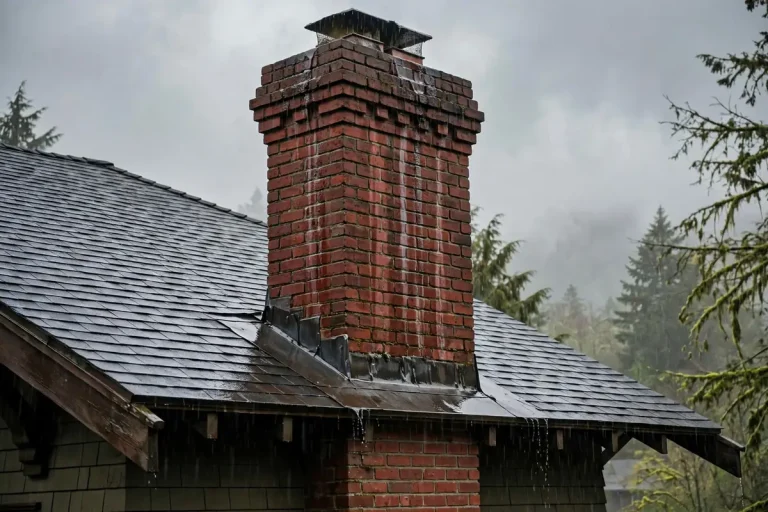
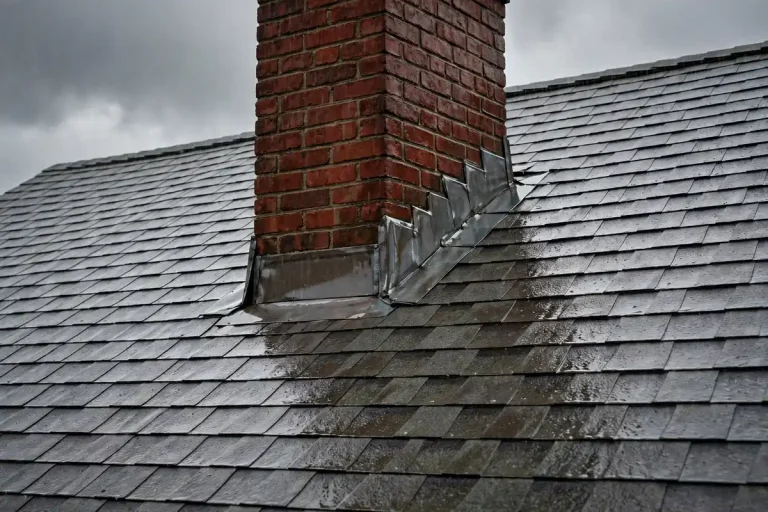
The first is water from above. Rain gets into the flue, soaks the liner, and then freezes — and ice expands by about 9%, prying at every small crack it finds. A sealed crack that would hold for years in a dry climate opens again here after a few winters of freeze and thaw. Portland gets roughly 40 inches of rain a year across about 150 rainy days, mostly between October and April, and most of it arrives as wind-driven winter rain that finds every gap.
The second is the creosote load. Wood smoke leaves acidic, tarry deposits on the liner, and in a flue that is not swept regularly those deposits build up, corrode the surface, and raise the fire risk. An annual sweep removes the deposits before they do damage and spots the early signs of liner failure while they are still small jobs — which is why the cleaning line above is not an upsell but the cheapest inspection a chimney gets.
What Happens If You Keep Using It
The question homeowners ask most is whether they can keep using the fireplace a little while longer — fewer fires, smaller fires, just until spring. The honest answer is that every fire pushes more heat and gas through the cracks, and the damage compounds: a small crack becomes a shifted tile, a shifted tile becomes a missing tile, and creosote keeps collecting in the gaps. Using it less slows the damage; it does not stop it.
If a cracked liner is suspected, the safe course is not to use the fireplace until the flue has been inspected from the inside. That is not a sales line — it is the same advice every chimney professional gives, because the four pathways in this post do not pause while you wait. The scope is assessed on inspection, and the inspection is what turns a suspicion into a decision.
The Bottom Line
That is how cracked flue liners become dangerous: not with a single dramatic failure, but through four quiet pathways running at once — heat reaching wood it should never touch, carbon monoxide slipping into rooms, creosote collecting where it should not, and the structure around the flue slowly giving way. None of them announces itself. The camera inspection is what finds them, and the inspection is what decides what happens next.
If a cracked liner is suspected in your chimney, do not use the fireplace until the flue has been looked at from the inside. Call Portland Chimney Care at +1 (503) 433-7104. We serve Portland, OR, and we can tell you plainly what the camera finds and what it means — and the scope is assessed on inspection.
Frequently Asked Questions
Sources
- EngineerFix
- Chimney Crickets
- Fredrickson Masonry
- NFPA 211