Why Is My Chimney Leaking?
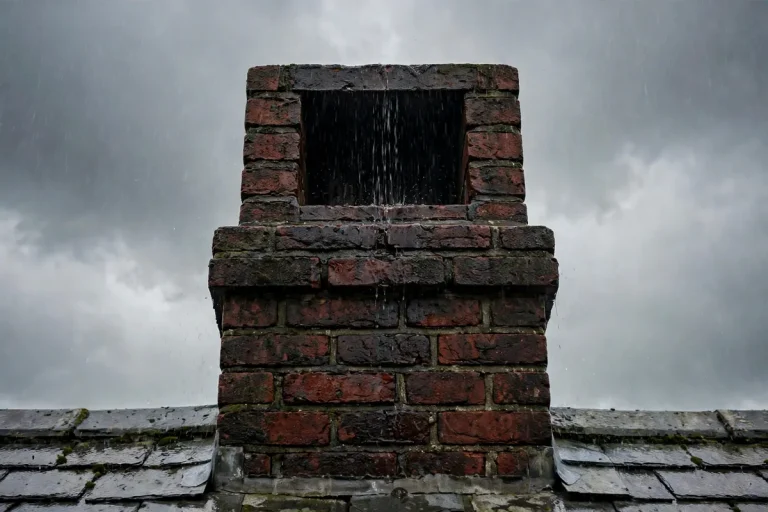
A brown stain spreading across the ceiling next to the chimney. A damp patch on the wall beside the fireplace. A drip you can hear inside the flue after a heavy rain. If you’ve been wondering why is my chimney leaking, the honest answer is that there is rarely a single reason. Water gets in from the top, the sides, and the base, and it often shows up far from where it entered. Most leaks come from a short list of familiar failures.
The five places water gets in
Here are the five entry points behind most leaks.
1. A cracked chimney crown
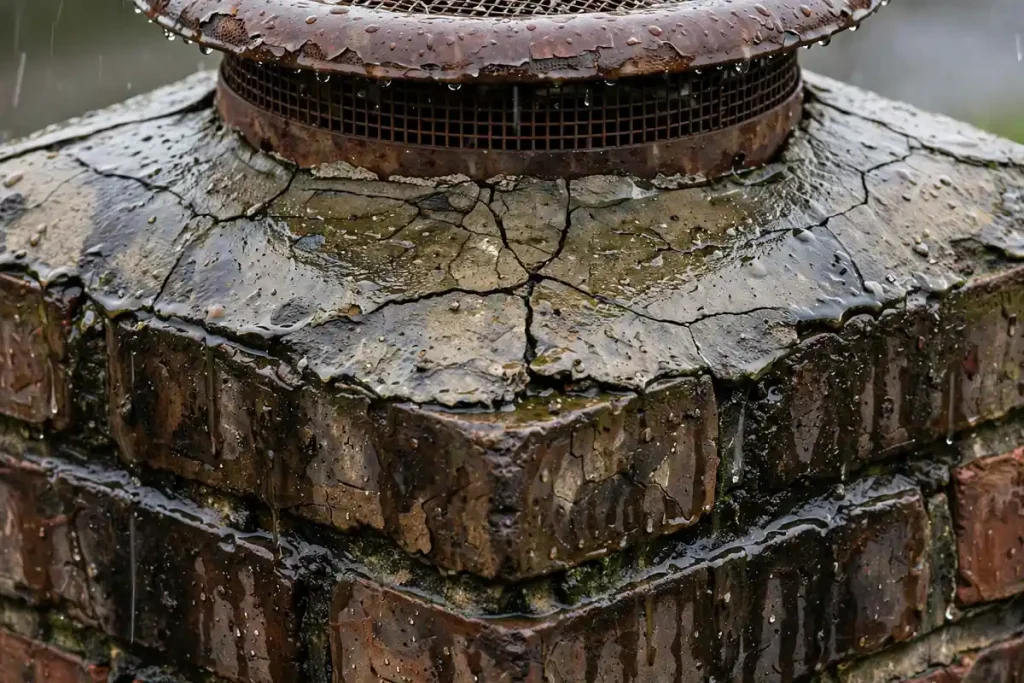
The chimney crown is the concrete slab at the top of the stack. When it cracks, water runs down into the flue walls and soaks the masonry from the inside out. Many older crowns were made of mortar instead of concrete, and they crack fast. Hairline cracks are the early warning — left alone, they widen with every freeze and thaw.
2. A missing or damaged chimney cap
The chimney cap sits over the flue opening and keeps rain from falling straight down the flue. Without one, or with one that is rusted, dented, or blown loose, every storm sends water onto the damper, the smoke shelf, and the firebox. If you hear dripping inside the fireplace after rain, check the cap first.
3. Failed flashing
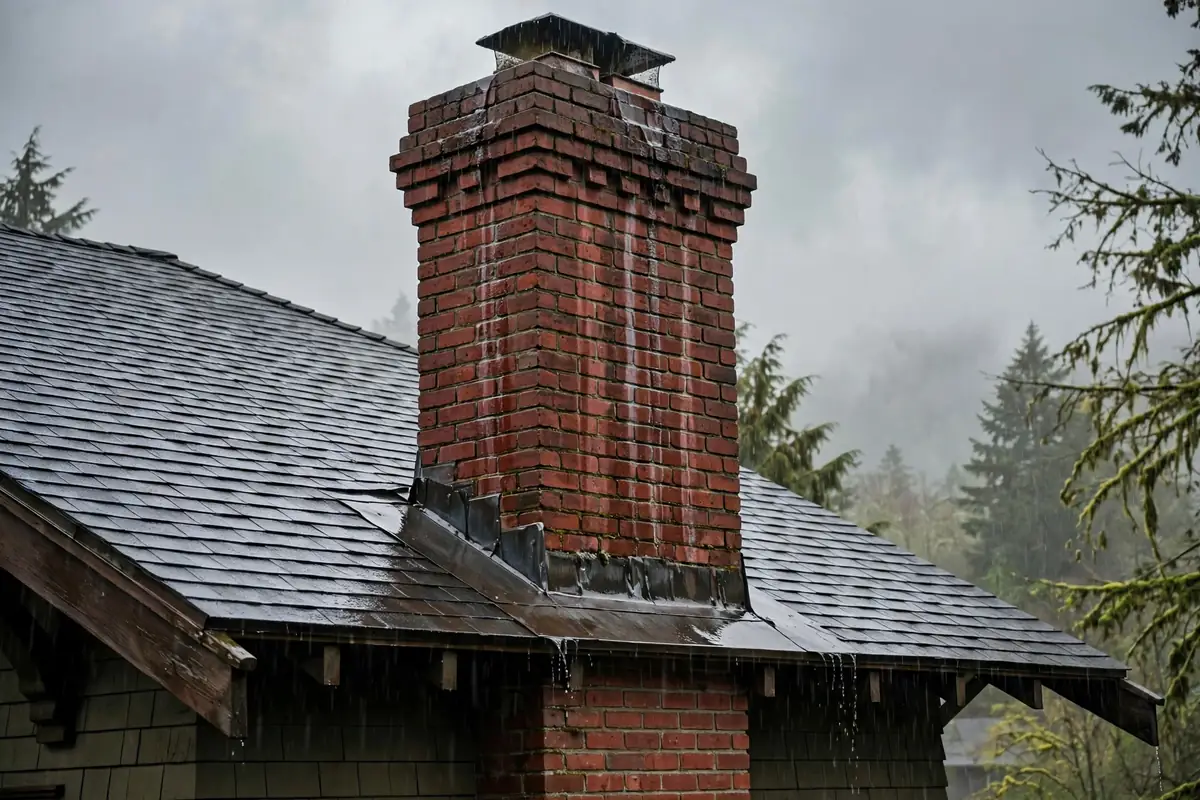
Flashing is the metal seal where the chimney meets the roof — step flashing up the sides, counter flashing set into the mortar joints above it. When it lifts, cracks, or pulls out of the mortar, water runs behind the metal and into the roof deck. Flashing failure is the most common cause of ceiling stains near a chimney — and the most often misdiagnosed, because it looks exactly like a roof leak.
4. Worn mortar joints and porous brick
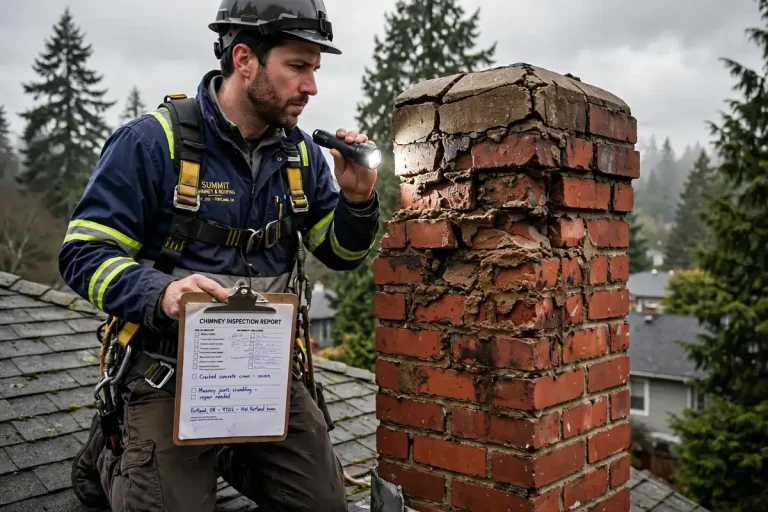
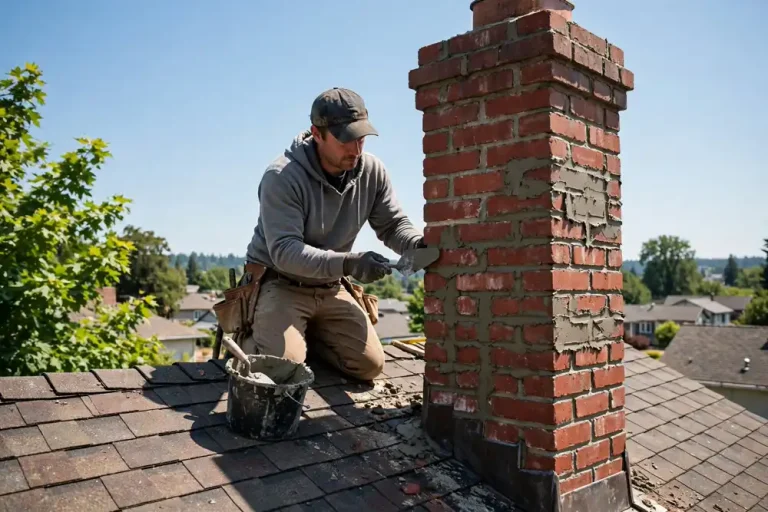
The mortar between the bricks is the weather seal of the whole stack. Over time it erodes back from the face of the brick, leaving open joints that let rain in sideways. The water soaks into the stack and shows up as a damp patch well below the entry point. In winter, trapped water freezes and widens the cracks. When the joints have opened up, tuckpointing — raking out the old mortar and packing in fresh mortar — closes the gaps. If the brick faces are already flaking apart, the choice becomes brick repair or a full rebuild.
5. A cracked flue liner
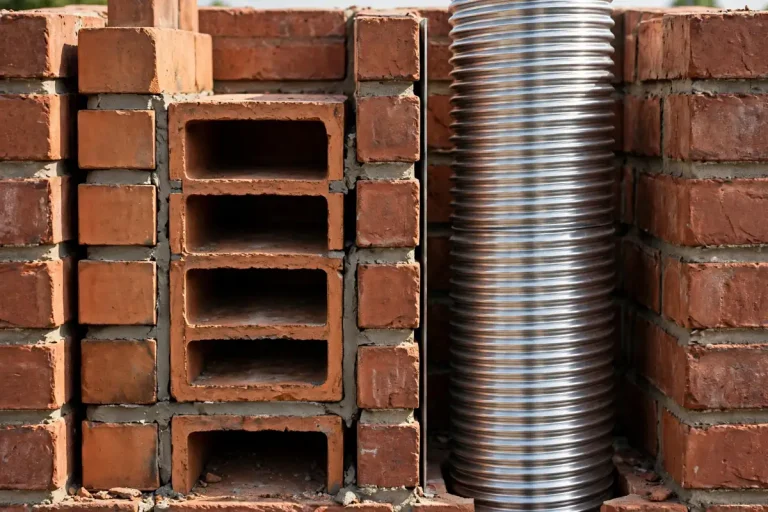
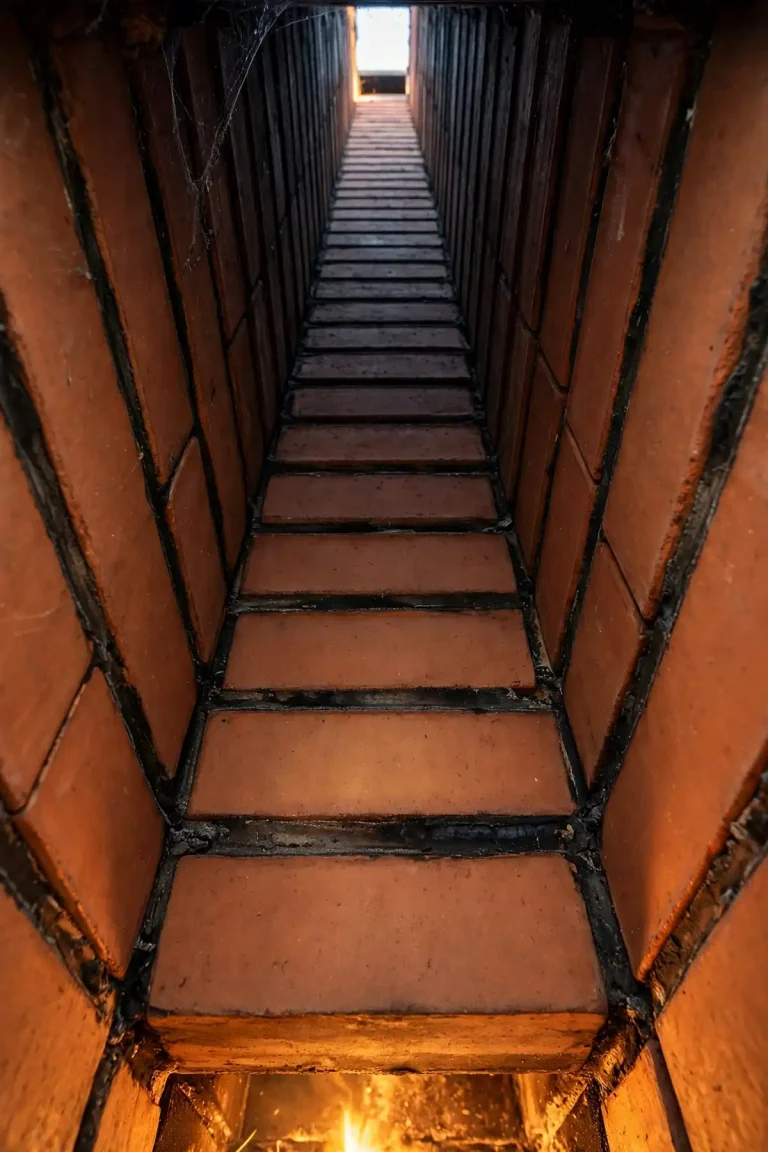
The flue liner is the clay or metal channel inside the chimney that carries smoke and heat up and out. When its tiles crack, water gets through the gaps into the masonry. If you suspect liner damage, do not use the fireplace until a pro has looked at it — a cracked liner is a safety problem as well as a leak — and if you are unsure whether it’s safe to use a damaged chimney, get an inspection before lighting another fire.
How to find the source
The fastest way to answer why is my chimney leaking is to work from the top down, in the same order the water travels.
- Start at the top. With binoculars, check the crown and cap for cracks, a crooked cap, or white staining on the brick.
- Check the flashing from the ground. Lifted edges, rust, or gaps where metal meets brick point to a flashing problem.
- Go into the attic. Look for stains on the roof deck around the chimney, damp insulation, or daylight where the chimney passes through the roof.
- Look inside the firebox — shine a flashlight up the flue for rust on the damper or staining on the smoke shelf.
- Note when it happens. A leak that appears only in heavy rain, or only when wind blows from one direction, points to the side the water enters.
Is it the chimney or the roof?
A chimney leak and a roof leak often leave the same brown stain on the ceiling, which is what trips up most homeowners. A chimney leak usually stays close to the chimney: the stain hugs the chimney breast or appears on the ceiling right beside it, shows up after wind-driven rain, and may come with damp in the firebox, dripping inside the flue, or a musty smell from the fireplace. A roof leak tends to spread: the stain grows away from the chimney, appears after any rain, and often traces back to damaged shingles or a gutter backing up. Check the attic when in doubt. If the roof deck is wet only where it meets the chimney, the chimney is the likely source. If the wet decking runs along the roof slope, the roof is the problem.
What water damage looks like inside your home
Water rarely announces itself loudly. Early signs are easy to miss: a faint brown stain on the ceiling, paint bubbling near the chimney breast, wallpaper peeling at the edges, a musty smell that comes and goes with wet weather. Later signs are harder to ignore — mold on the wall beside the chimney, plaster softening, rust on the damper or grate, and white, salty deposits on the brickwork. That white crust is efflorescence, mineral salts left behind when water moves through the masonry and dries. Water in the roof decking and joists softens the timber over time, and a leak left for a winter or two can turn a small repair into structural work.
What to do now — and when to call a pro
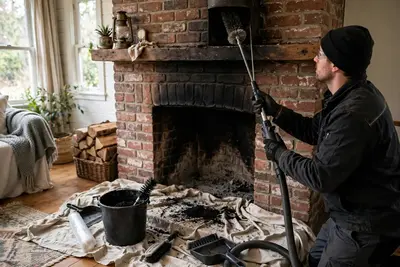
First, do not ignore it and hope it dries out. A chimney that leaks once will leak again. Start with the checks above, note when the leak appears, then book a chimney inspection. A standard chimney cleaning in Portland costs $150–$350 and takes 45–90 minutes. Call a pro sooner rather than later if the stain is growing, water is dripping inside the flue, bricks are flaking, or you suspect the flue liner is cracked. If you smell smoke inside the house when the fireplace is lit, stop using it and call right away. What a leak repair costs depends on the source and how far the damage has gone, so pricing is assessed on inspection.
Stopping the next leak
A chimney that has leaked once needs a little routine care. Get the chimney swept and inspected every year, so small problems get spotted early. Repair small mortar and crown cracks early — a hairline crack is a quick fix, while a crack left through a winter becomes a bigger job. Keep gutters clear, since a blocked gutter backs water up against the flashing.
Why Portland rain is so hard on chimneys
Portland does not get its rain in short, hard bursts. It gets months of steady, wind-driven rain, and that is harder on a chimney than a thunderstorm. Brick and mortar stay wet for weeks. Many Portland homes still have their original brick chimneys — Craftsman and bungalow-era stacks built with softer mortar and more porous brick than modern masonry. Winter freeze-thaw cycles widen every small crack, and the prevailing wind drives rain against the same side of the stack. That is why a chimney that looks fine in August can start leaking in November.
A dry chimney starts with finding the source
A chimney leak is almost never a mystery once you know the five entry points and work from the top down. Check them in that order and you will usually find the source before it does more damage. If you still can’t work out why is my chimney leaking, that’s the point to call in a pro. Portland Chimney Care serves Portland, OR. Call +1 (503) 433-7104 to book a chimney inspection and find out where the water is getting in.