What Causes Chimney Brick Spalling?
Water trapped inside porous brick is what causes chimney brick spalling, and freezing weather, acidic flue gases, weak mortar, and missing rain protection make it much worse. When that moisture can’t escape, it pushes the face of the brick off in flakes, chips, or whole chunks.
If you have noticed orange dust, flaking surfaces, or small pits on your chimney, you are looking at a problem that rarely fixes itself. Here is why it happens and what you can do about it.
What Chimney Spalling Actually Looks Like
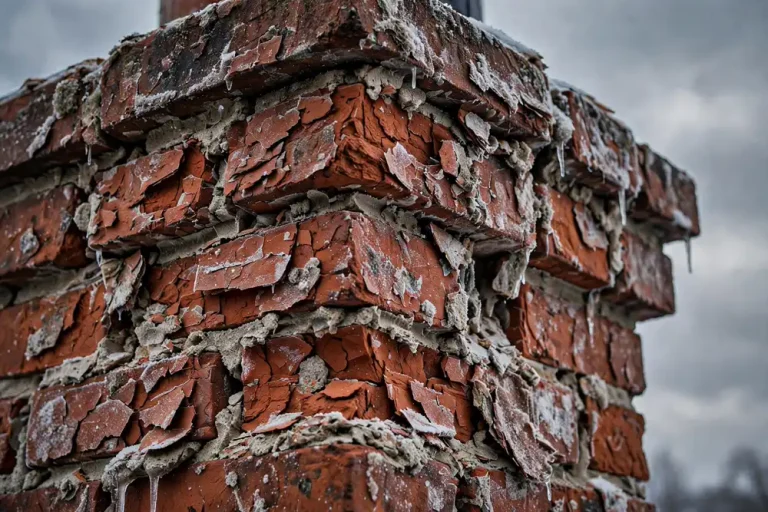
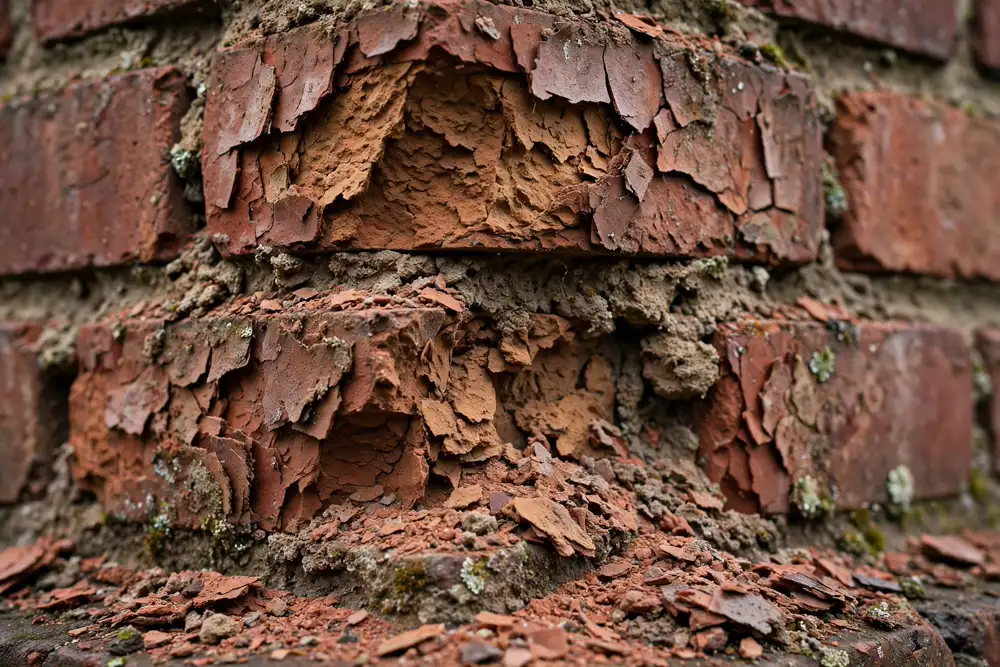
Spalling is the breaking away of a brick’s outer face. At first you may see a rough, sandy patch. Later, the surface peels away and exposes softer, darker brick underneath. You might find small brick fragments on your roof, in your gutters, or on the ground near the chimney base.
These cracked or flaking bricks are often the first visible sign of spalling.
It often appears with efflorescence, the white, chalky residue left when water carries salts to the brick surface and evaporates. Efflorescence is not the same as spalling, but it can indicate that moisture is moving through the masonry and carrying soluble salts to the surface.
Water Absorption Is the Root Cause
Brick is strong, but it is also porous. It soaks up water like a hard sponge. A healthy chimney absorbs some moisture during rain and then dries out. Trouble starts when brick stays wet for long periods or gets soaked from several directions at once.
Wet brick weakens at the surface. Dissolved salts crystallize just under the face and push outward, and the outer layer gradually lets go. This is why spalling usually spreads. Once one brick fails, it exposes softer material and lets more water in, which damages the bricks next to it.
Freeze and Thaw Cycles Add Pressure
Water expands by about nine percent when it freezes. If it freezes inside brick or mortar, it forces tiny cracks open. After it thaws, more water enters those cracks, and the next freeze widens them again. Repeating this cycle through a few winters can strip the face off a brick.
Portland does not see long hard freezes every year, but cold snaps after heavy rain do happen. When Portland’s wet weather leaves masonry saturated, a sudden freeze can increase the risk of brick and mortar damage.
This is how freeze and thaw weather damages chimneys in Portland, even without long hard freezes.
What Causes Chimney Brick Spalling in Portland Homes?
Our climate creates a particular set of problems. Portland chimneys deal with months of steady drizzle, high humidity, and heavy shade from tall evergreens. Brick on the north side of a house may stay damp for most of the year.
Moss, algae, and ivy hold moisture against the surface and keep it wet long after the rain stops. Wind driven rain on exposed rooflines pushes water into mortar joints. Even without hard freezes, constant dampness softens brick over time, and the face starts to flake.
Older homes with early twentieth century brick chimneys can be especially vulnerable, since brick from that era was often fired at lower temperatures and may be more porous than modern units.
A Damaged Crown, Missing Cap, or Bad Flashing
The top of the chimney takes the most abuse. Three parts protect it:
- The crown is the masonry surface that sheds water away from the chimney. If it is cracked or crumbling, rain can flow straight into the brick below.
- The chimney cap is typically a metal cover fitted over the flue opening to help keep out rain, animals, and debris. Without it, rain can fall directly into the flue and soak the masonry from the inside.
- The flashing is the metal seal where the chimney meets the roof. If it rusts, lifts, or loses its sealant, water can run behind the brick.
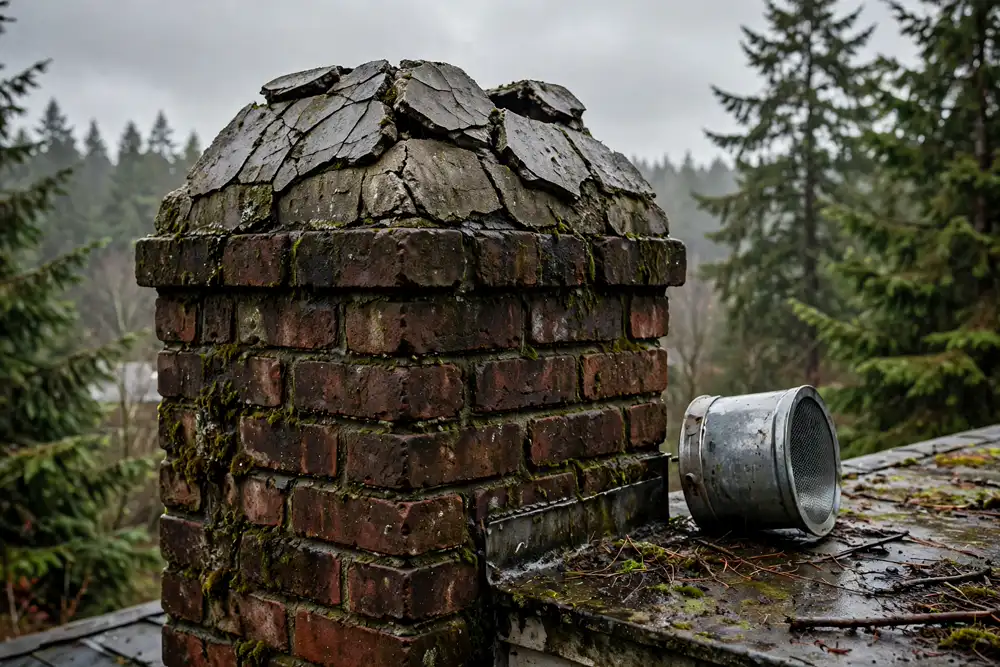
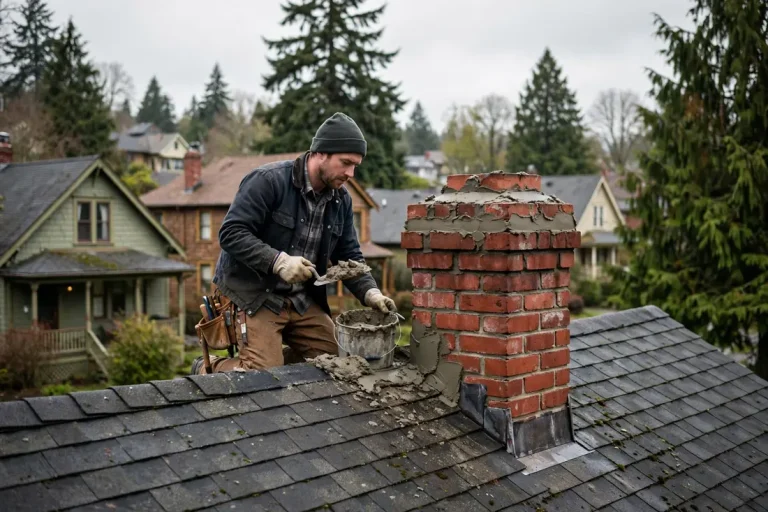
Spalling concentrated near the top of the chimney or just above the roofline can indicate problems with the crown, chimney cap, or flashing. A professional inspection can help identify the actual source of moisture.
Acidic Flue Gases and Condensation
Water does not only come from the sky. Exhaust from a furnace, boiler, or water heater contains a lot of water vapor and mild acids. In an unlined or oversized chimney, those gases can cool and condense on the inner walls. The acidic moisture then soaks into the masonry and breaks it down from the inside.
This can happen after a homeowner upgrades to a high efficiency gas appliance and keeps the old chimney, since cooler exhaust condenses more easily. If you see spalling inside the flue, or staining and efflorescence on the exterior that seem to come from the inside out, a qualified chimney professional should inspect the venting system and determine whether a correctly sized liner or another repair is needed.
Weak Bricks, Wrong Mortar, and Sealing Mistakes
Not every case comes from weather. Some spalling is baked into the construction or caused by well meaning repairs:
- Soft or damaged brick. If one brick spalls while neighboring bricks remain intact, the affected brick may be more porous, weaker, or exposed to a localized source of moisture.
- Mortar that is too hard. Modern Portland cement mortar can be stronger than old brick. Instead of flexing, the brick takes the stress and fails at its edges. Repairs should use a mortar that is softer than the brick.
- Paint, stucco, or the wrong sealer. Coatings that block vapor can trap moisture inside the brick, and the trapped water may then pop the surface off.
- Pressure washing. High pressure blasting can remove the protective outer skin and force water deep into the masonry.
Warning Signs to Watch For
- Flaking, sandy, or pitted brick faces
- Brick fragments on the roof or ground
- White powdery efflorescence
- Cracked or recessed mortar joints
- Water stains on ceilings near the fireplace
Can Spalling Be Repaired?
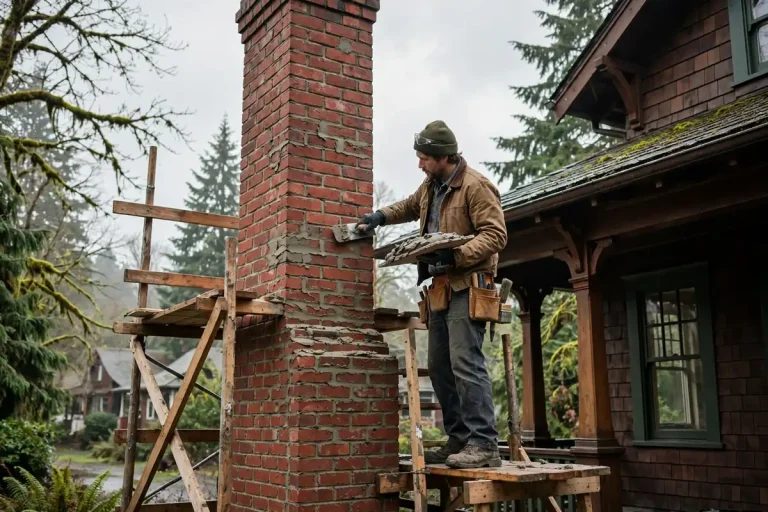
Yes, professional chimney repair can address spalling, but the cause of the moisture must be fixed first, or new brick can fail too. A qualified sweep or mason will usually:
- Find the moisture source, whether it is the crown, cap, flashing, or flue.
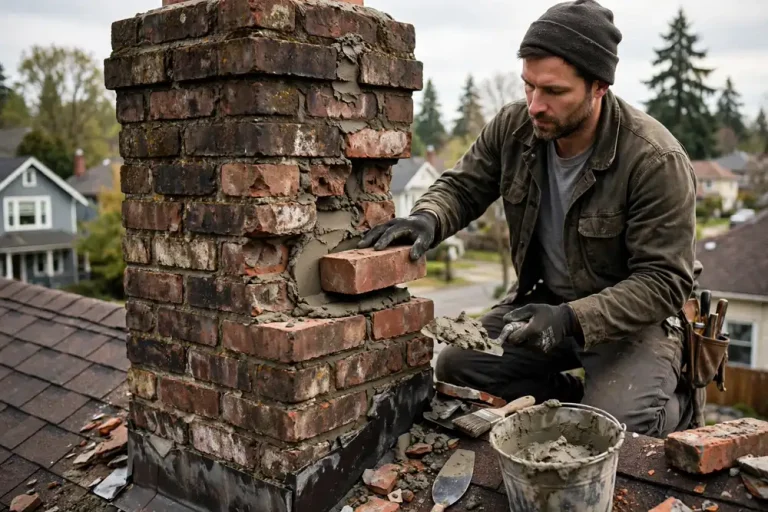
- Replace badly damaged bricks and repoint failed mortar joints (tuckpointing) with a compatible mix.
- Rebuild the crown, add a cap, and reseal the flashing where needed.
Covering spalled brick with a layer of parging is generally not recommended, because it can hold moisture inside and lead to cracking. Catching the problem early is usually far cheaper than rebuilding a chimney section.
See our brick chimney repair costs and fixes guide for what a repair usually involves.
For how long each fix holds up, read our guide on how long brick chimney repair lasts.
Frequently Asked Questions
Final Thoughts
So, what causes chimney brick spalling? In short, moisture that gets into the brick and cannot get out, helped along by freezing temperatures, failed crowns and flashing, flue condensation, and poor masonry choices. Portland’s wet climate makes regular checkups especially valuable.
Schedule a chimney inspection with Portland Chimney Care to identify the cause of brick spalling before the damage spreads.
Or contact our team to discuss your chimney.