Why Chimney Bricks Start Cracking (And What Portland Homeowners Can Do About It)
Why Chimney Bricks Start Cracking almost always comes down to moisture, heat or movement, and in Portland, moisture is the usual culprit. Rain soaks into porous brick and mortar. When a cold snap freezes that trapped water, it expands and can split the brick from the inside. A chimney fire or a shifting foundation can cause similar damage, just through a different route.
The good news is that most cracks give early warnings. If you know what to look for, you can fix a small problem before it turns into a rebuild.
The Quick Answer: Five Common Causes
- Water and freeze thaw cycles that expand inside the brick
- Deteriorated mortar joints that let moisture in
- A cracked crown, missing cap or failed flashing that lets rain reach the masonry
- Heat stress from chimney fires or a damaged flue liner
- Foundation settlement or ground movement that pulls the stack apart
Why Chimney Bricks Start Cracking in Portland Specifically
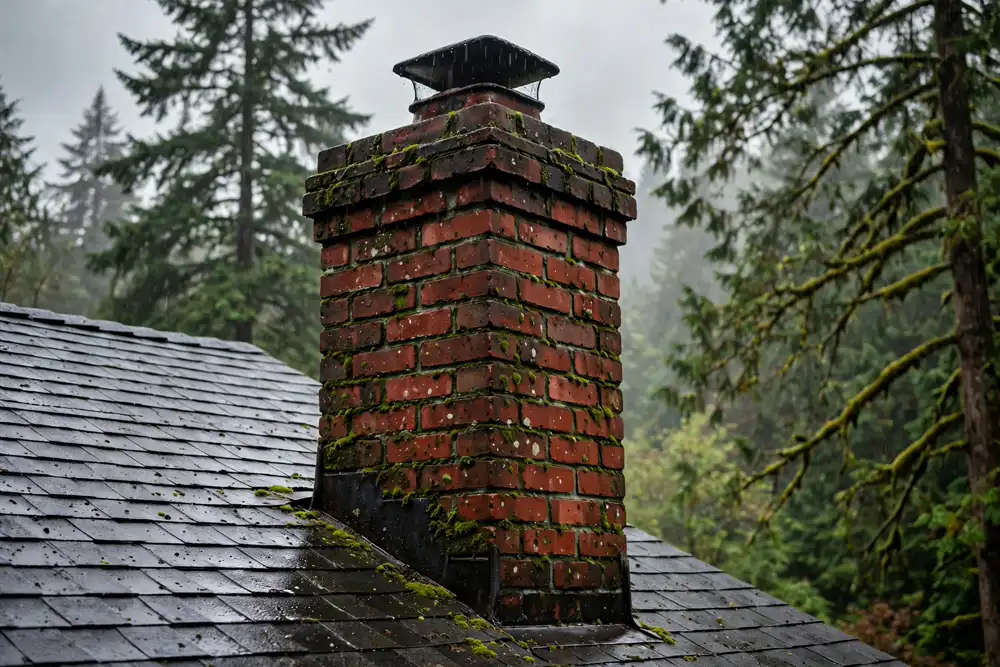
Portland sits in the wet Willamette Valley, with long rainy seasons, heavy moss growth and shaded lots under mature trees. A chimney is the tallest, most exposed part of your house, so it takes the full force of wind and rain. Brick is porous and absorbs water like a sponge.
Our winters rarely stay frozen, but temperatures do swing above and below 32 degrees Fahrenheit. That pattern can be particularly hard on masonry that is saturated with water. Water soaks in, freezes overnight, thaws by afternoon and repeats. Each cycle widens tiny flaws, and shaded chimneys stay damp longer, so the damage tends to speed up.
Water and Freeze Thaw Damage
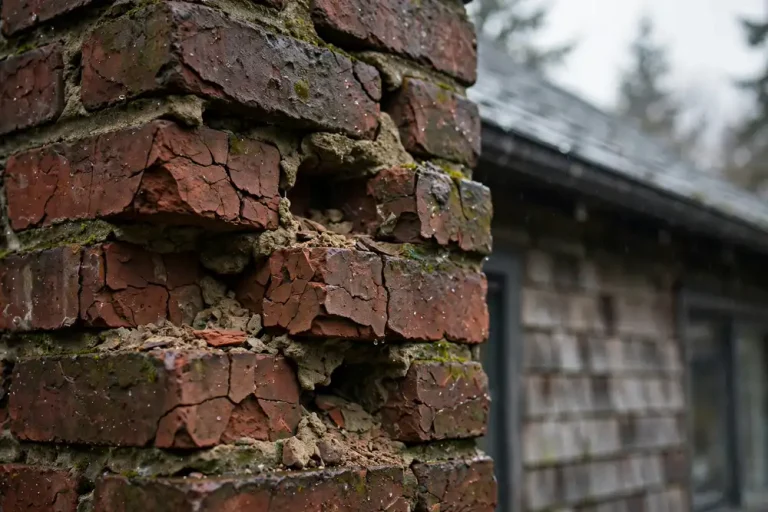
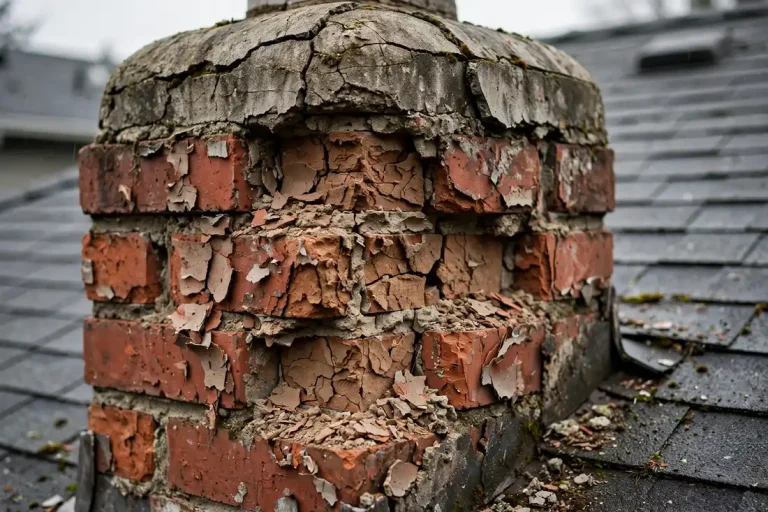
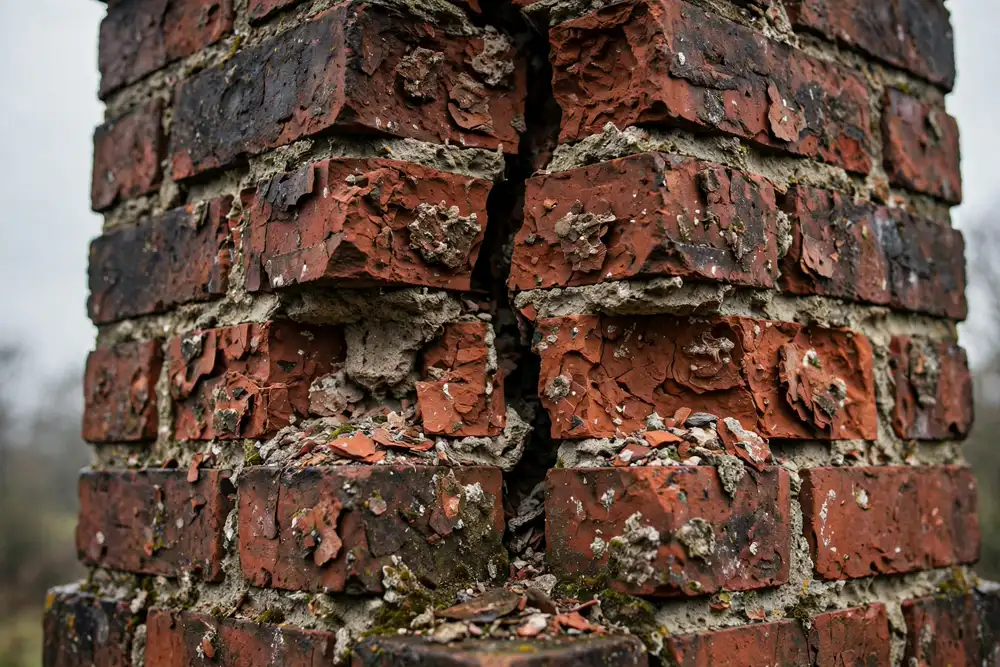
Water expands by roughly nine percent when it freezes. Inside a brick, that pressure has nowhere to go, so the surface flakes off in a process called spalling. You may see crumbling faces, pitted brick or a white, powdery stain called efflorescence. That stain is a sign that moisture is moving through the masonry and leaving salts behind.
Older, softer bricks are especially vulnerable. Once the protective outer skin is gone, the brick absorbs even more water, and the cracking accelerates.
Failing Mortar Joints
Mortar is meant to be the sacrificial part of a brick wall. It is softer than the brick and wears away first. When joints crack or crumble, water reaches the brick edges and the cracks spread.
The repair material matters too. Mortar that is harder than the original, such as a strong Portland cement mix on an old chimney, can trap stress inside the bricks and make them crack instead of the joints. A mason should match the mortar type to your chimney’s age and the properties of the original brick.
A Cracked Crown, Missing Cap or Bad Flashing
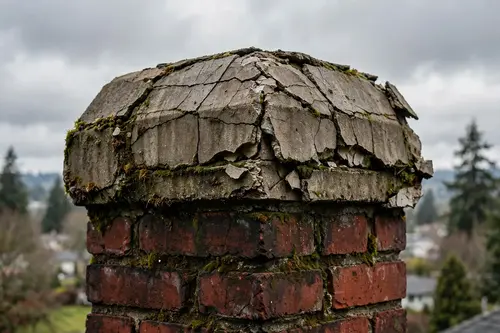
The crown is the cement slab on top of your chimney, and it is the main water barrier. A cracked crown lets rain pour straight into the masonry below. A chimney cap keeps rain, birds and debris out of the flue, and flashing seals the joint where the chimney meets the roof.
If any of these fail, the bricks below take the damage. Some older chimneys have a flat brick cover instead of a sloped crown. Water sits on it instead of running off, which is a common hidden cause of cracking.
Heat Stress and Chimney Fires
Creosote buildup can ignite and burn at temperatures well over 2,000 degrees Fahrenheit. That heat can crack clay flue tiles, which then push against the surrounding brick and split it, often with a long vertical crack. Even without a fire, a damaged flue liner lets heat and acidic gases reach the masonry.
After a chimney fire, stop using the fireplace and arrange an inspection by a qualified chimney professional. The appropriate inspection level depends on the suspected damage and whether concealed areas need to be examined.
Foundation Settlement and Earthquake Movement
Many chimneys sit on their own footing, separate from the house. If the soil underneath shifts, the chimney can lean, separate from the wall or crack in a stair step pattern. The Pacific Northwest also has seismic risk, and unreinforced masonry chimneys are often among the first parts of a house to be damaged in a quake. A gap between the chimney and your siding or roofline is a red flag.
What the Crack Pattern Tells You
- Hairline cracks in mortar: Usually age and weathering. Monitor and repoint.
- Flaking or crumbling brick faces: Moisture and freeze thaw spalling.
- A vertical crack running up the stack: Often heat or flue liner expansion.
- Stair step or diagonal cracks: Possible settlement or movement.
- Cracks that are widening, visibly separating bricks or appearing alongside a leaning chimney: Arrange a prompt professional evaluation.
If the brick face is peeling rather than splitting, find out what causes spalling and how it differs from cracking.
Are Cracked Chimney Bricks Dangerous?
They can be. Cracks let water in, weaken the structure and can allow heat or carbon monoxide to reach places they should not. A leaning or loose stack can also fall during high wind or an earthquake. If you see large gaps, missing bricks or a leaning chimney, stop using the fireplace until it has been inspected. Not sure whether a job is safe to handle yourself? Read about when to hire a chimney repair professional.
How Cracked Chimney Bricks Are Repaired
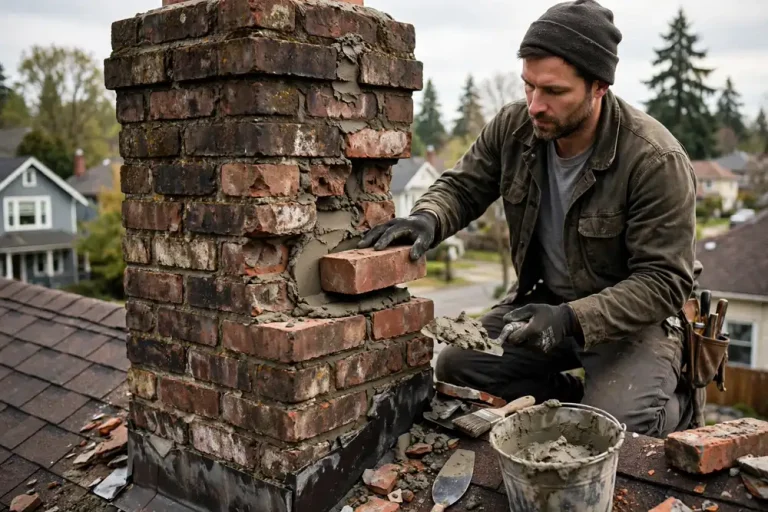
The fix depends on the cause. Small mortar cracks are repaired by repointing, which means grinding out the failed mortar and replacing it. Damaged bricks can be cut out and replaced. A cracked crown may need repair, resurfacing or replacement, depending on the extent of the damage, and a new cap or flashing stops the leaks. For a closer look at typical work, see our page on brick chimney repair.
Where appropriate, a masonry specialist will first identify and correct the source of moisture. Avoid impermeable paints and coatings that can trap moisture inside the brick. Severe leaning or heavy damage may call for a partial or full rebuild. For the bigger picture, our complete guide to chimney repairs explains each method in more detail.
How to Prevent It
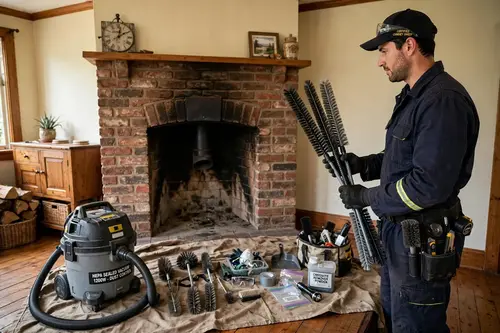
- Schedule a chimney inspection and cleaning every year, ideally in late summer or early fall.
- Install a properly sized chimney cap.
- Check the crown and flashing after storms.
- Remove moss and overhanging branches that keep the stack damp.
- Burn dry, seasoned wood to reduce creosote.
Quick FAQ
Final Thoughts
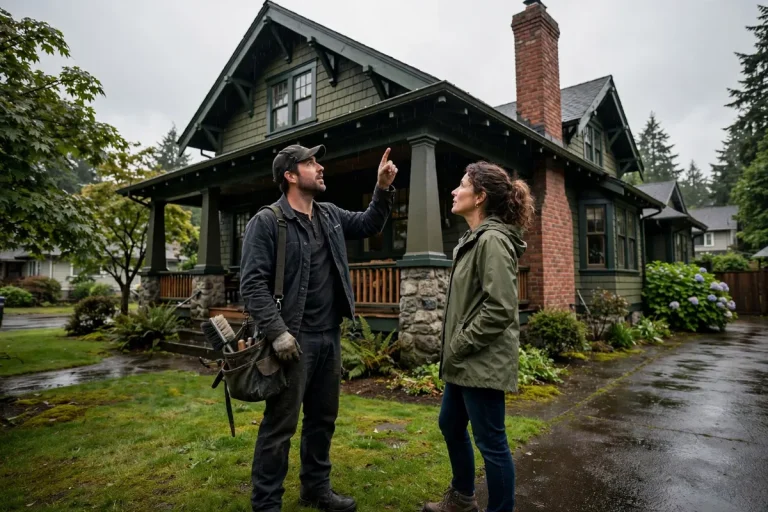
Understanding why chimney bricks start cracking is the first step to protecting your home, your fireplace and your budget. If you spot spalling, a leaning stack or cracks that keep widening, do not wait for the next storm.
Our technicians offer inspections across Portland through our chimney repair in Portland service. Call +1 (503) 433-7104 or request an estimate today.