DIY Chimney Repair vs Hiring a Professional: What Portland Homeowners Should Know
Hire a professional for any repair that involves masonry structure, the flue liner, leaks, or climbing onto the roof, and keep DIY for small, ground level jobs like clearing debris and checking for visible damage. That is the honest answer to DIY Chimney Repair vs Hiring a Professional, and the rest of this guide shows you where the line sits so you can protect your home and your budget.
Which Chimney Repairs Can You Safely Do Yourself?
Some tasks suit a careful homeowner with basic tools. They share one trait: none of them require you to stand on a steep roof, and none of them hide a safety problem if you do them slightly wrong.
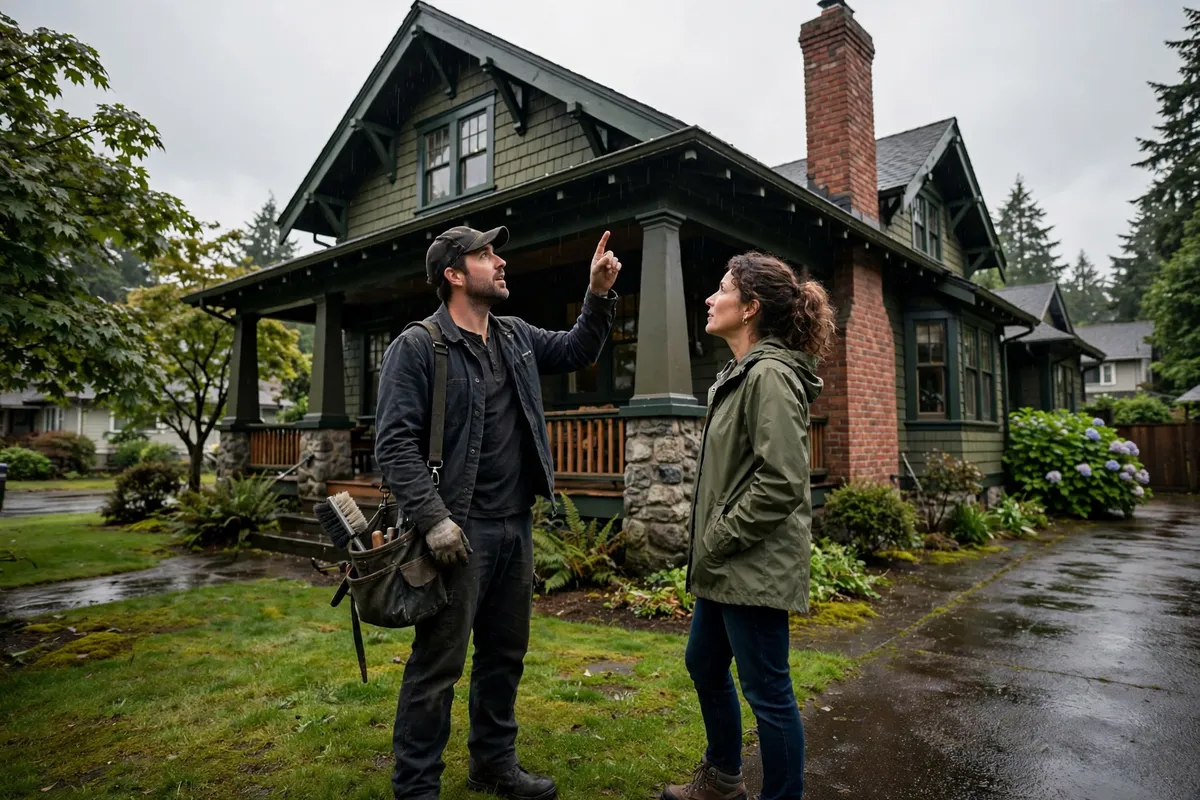
- Visual checks from the ground. Use binoculars to look for crumbling mortar, a tilted chimney cap, or white staining on the brick.
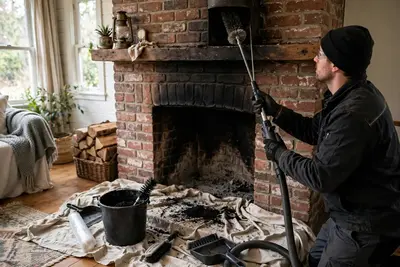
- Cleaning the firebox. Removing ash and loose debris once the fireplace is fully cool is simple housekeeping.
- Replacing a damper handle or door gasket. These small parts usually come with clear instructions.
- Cleaning prefab fireplace glass. Use a manufacturer approved cleaner and nothing abrasive.
If any of these checks turns up a crack, a leak stain, or a musty smell, stop there. That is a signal to call someone, not a project to push through.
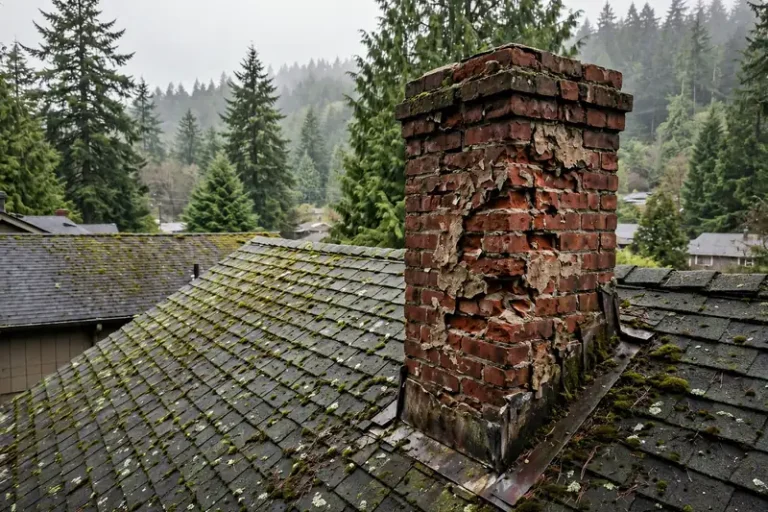
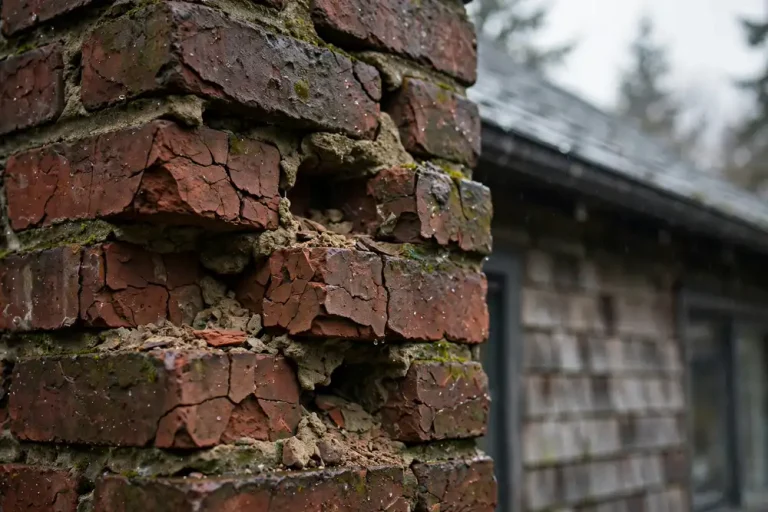
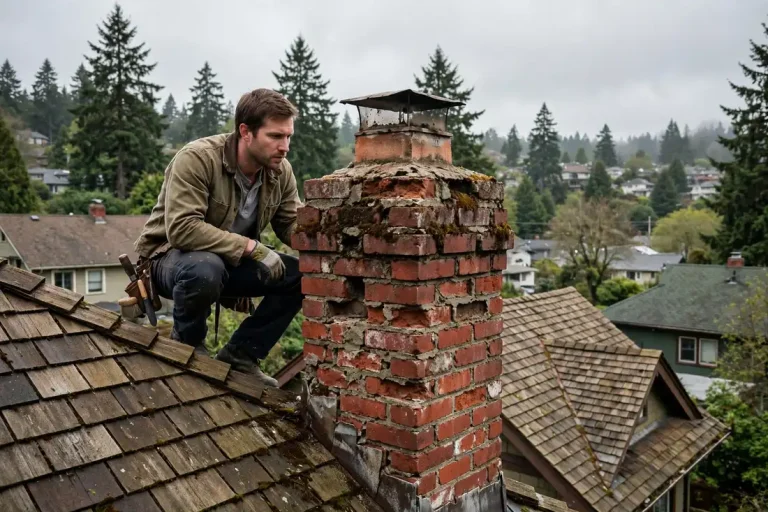
Before you decide, check for signs of freeze thaw damage such as flaking brick and crumbling mortar.
Which Repairs Should Always Go to a Professional?
A chimney is part of your home’s fire safety system. It carries heat, combustion gases and carbon monoxide out of the house, so a repair that looks fine from the outside can still fail in dangerous ways. These jobs belong to a trained technician who holds a current, relevant certification and carries proper insurance.
- Flue liner repair or replacement. A cracked clay tile liner can let heat reach the wood framing around the chimney. Installing a stainless steel liner means correct sizing, secure connections and proper clearances.
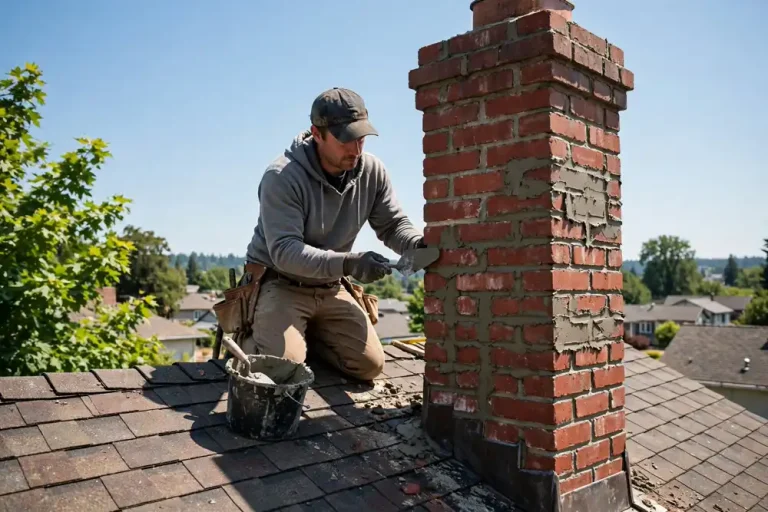
- Tuckpointing and brick replacement. Matching mortar strength, color and joint style is a craft. The wrong mortar can damage the brick by trapping moisture, which leads to spalling, where the brick face flakes off.
- Chimney crown repair. The concrete crown sheds water away from the flue. A small crack can look cosmetic yet point to a moisture problem underneath, so a professional should assess it before any chimney crown repair method is chosen.
- Flashing repair. Flashing is the metal seal where the chimney meets the roof. It is a common leak point, and working at that height on wet shingles is risky even for experienced roofers.
- Leaning chimneys and structural cracks. These need masonry skill and sometimes an engineer’s evaluation.
- Heavy creosote removal. Thick, glazed creosote is highly flammable and needs professional tools and techniques.
Why Portland’s Climate Raises the Stakes
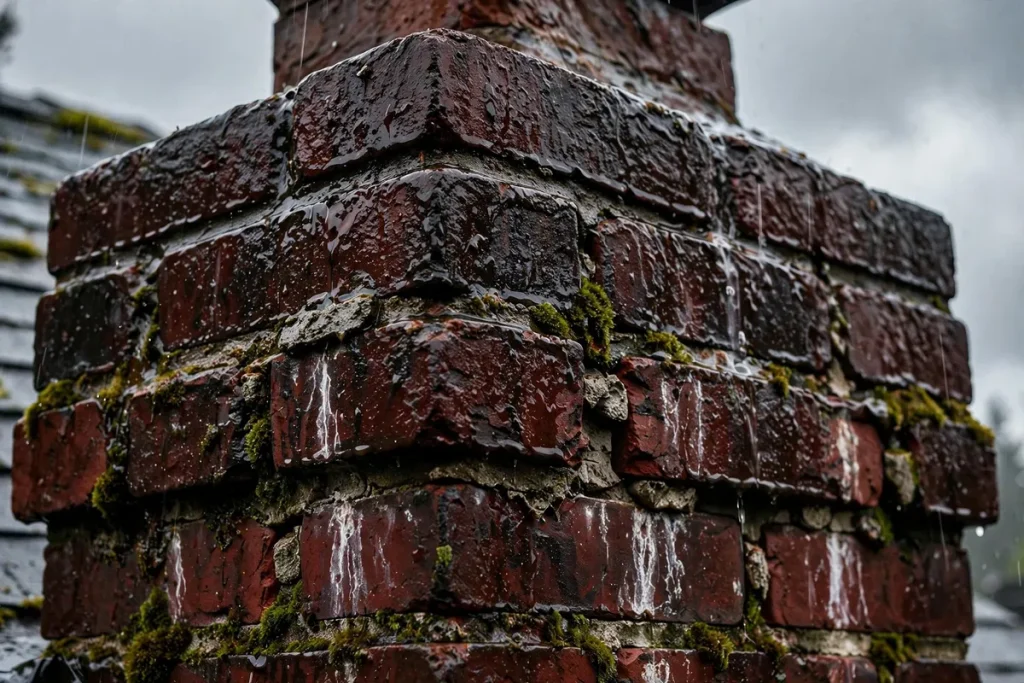
Portland, Oregon sees steady rain from fall through spring. Brick and mortar absorb water like a sponge, and when a Pacific Northwest cold snap follows a wet spell, trapped moisture expands and breaks masonry apart. Moss and algae also thrive on shaded chimneys, holding even more water against the surface.
This is why local homeowners run into the same handful of problems again and again:
- Rain related leaks that show up as ceiling stains or damp walls
- Damaged mortar joints and brick spalling
- Failing flashing at the roof intersection
- Moisture entering through a cracked crown
- Chimneys that go unchecked until the first fire of the season
A cosmetic patch over any of these can hide the real source of the water. Effective chimney leak repair starts with finding where the water enters, because by the time you notice a stain indoors, the damage may already reach the flue, the framing and the insulation.
The Real Cost Comparison
Before deciding between DIY and professional chimney repair, compare the full cost of materials, tools, access equipment and your time with a written contractor estimate. Ask whether the quote includes inspection, materials, cleanup and any follow up work. The cheapest initial repair is not always the least expensive option if the underlying moisture or structural problem remains unresolved.
DIY looks cheaper on paper, since a tube of sealant or a bag of mortar costs little. But people often forget these extras:
- Safety gear and tools. Roof harnesses, ladders, mixing equipment and trowels add up.
- Repeat repairs. A patch applied to the wrong problem often fails, and you pay twice.
- Hidden damage. Water that keeps entering during a failed repair can rot wood and ruin interior finishes.
- Your time. A masonry job a crew finishes in a morning can eat several weekends.
Professional work costs more at the start, but it often comes with a warranty, insurance and a documented inspection. Reputable sweeps and masons also work with NFPA 211, the standard covering the design, installation, maintenance and inspection of chimneys, fireplaces and venting systems. For a minor fix, DIY savings are real. For anything structural, they tend to disappear.
Safety, Insurance and Resale Concerns
A poorly repaired chimney is a fire and carbon monoxide risk for everyone in the house. It can also complicate an insurance claim, since an insurer may ask who did the work. A written inspection and invoice from a qualified professional help protect you.
When you sell, buyers and home inspectors often look closely at fireplaces. Documented professional repairs build confidence, while mystery patches raise red flags.
A Simple Test to Decide
When you are stuck choosing between DIY Chimney Repair vs Hiring a Professional, ask yourself these four questions:
- Do I have to go on the roof? If yes, hire a pro.
- Does the problem touch the flue, crown, flashing or structure? If yes, hire a pro.
- Do I know exactly what caused the damage? If not, get an inspection first, because treating a symptom can hide the cause.
- Could a mistake affect fire or air safety? If yes, hire a pro without further debate.
If you answered no to all four, a small, non critical task such as cleaning the firebox or checking the chimney from the ground may be reasonable. Safety critical parts of the system, including the flue liner, crown, flashing and structure, should never be repaired by the homeowner.
Start With the Right Inspection
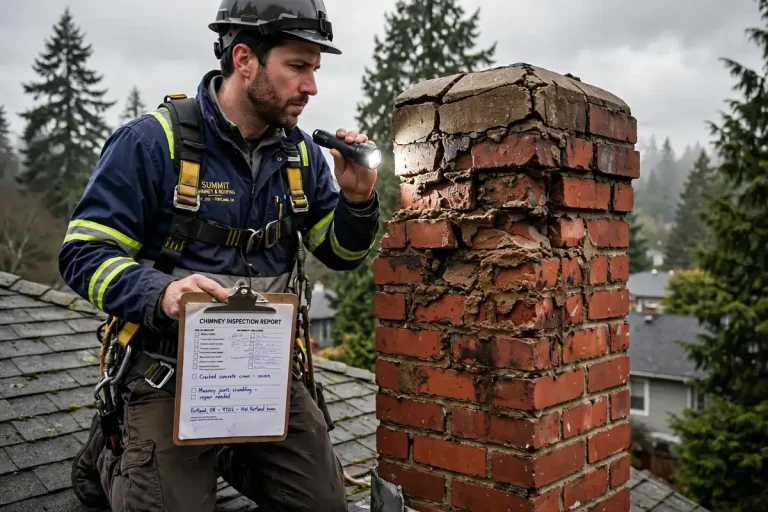
Many homeowners skip straight to repairs and never learn what is happening inside the flue. A Level 2 chimney inspection includes a more detailed examination of accessible chimney areas and the flue interior, with video scanning where appropriate. It is particularly important after certain changes, suspected damage or a chimney fire.
The National Fire Protection Association recommends that chimneys, fireplaces and vents be inspected at least once a year, with cleaning, maintenance or repairs carried out as needed. Booking that visit before the first fire of the season gives you time to fix problems before cold weather arrives.
How to Choose a Chimney Professional in Portland
Look for these signs before you book a professional chimney repair in Portland:
- A current, relevant certification or comparable credential
- Proof of liability insurance
- An applicable Oregon CCB license, which you can verify through the Oregon Construction Contractors Board
- Clear written estimates listing materials and labor
- A warranty on repairs
- Local reviews that mention punctuality, cleanliness and honest advice
Be cautious of anyone who pushes a full rebuild without showing photos or camera footage of the problem.
Frequently Asked Questions
Final Thoughts
The smartest approach is not all or nothing. Handle small, safe, ground level upkeep yourself, and bring in a certified expert for the parts that protect your family and your home’s structure. When you weigh DIY Chimney Repair vs Hiring a Professional, the deciding factors are safety, the cause of the damage and the weather your chimney faces every year.
Schedule a professional chimney inspection in Portland to identify the cause of leaks, cracks or flue damage before using your fireplace.