Why Every Chimney Needs a Chimney Cap
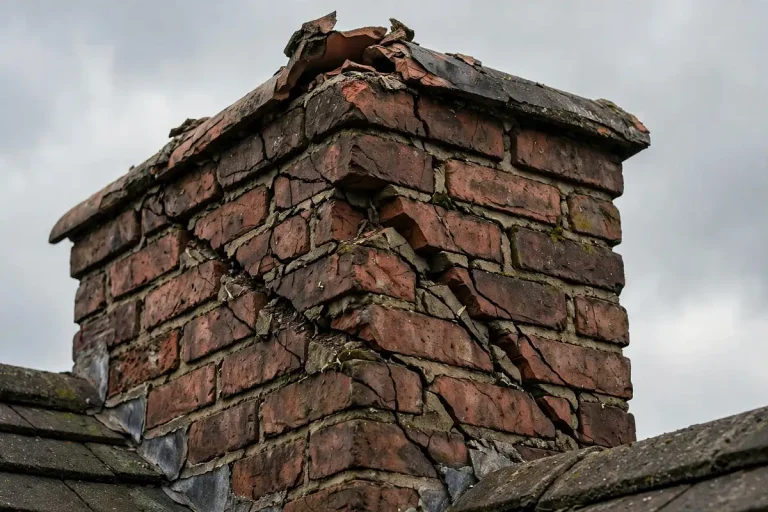
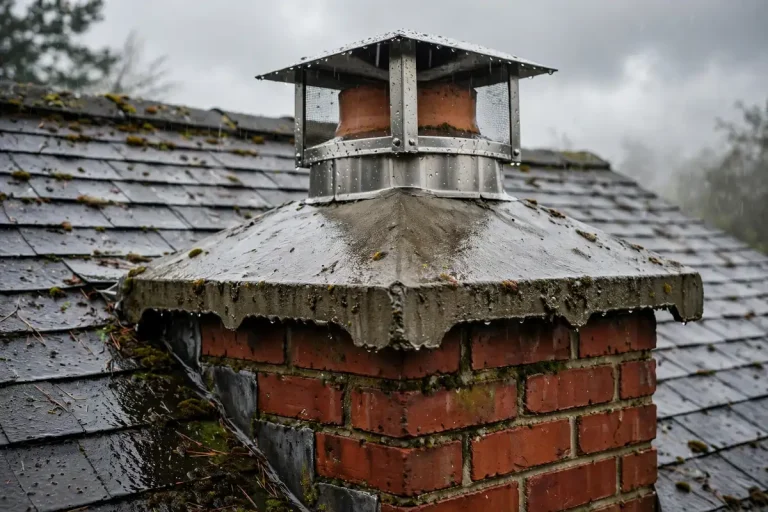
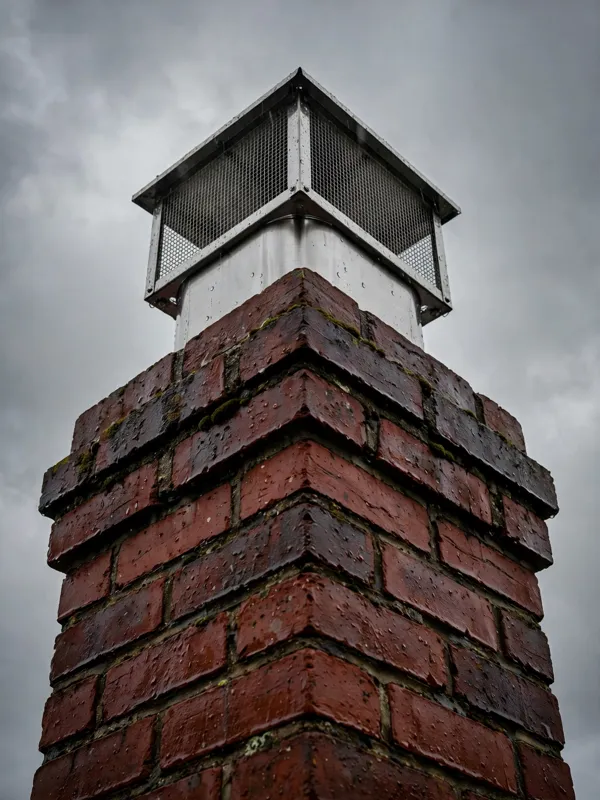
Look at the top of a brick chimney and you will see two things working together: a flat concrete slab, and a small metal cover above the flue pipe. The slab is the crown. The metal cover is the cap — and it decides whether rain, birds, and leaves get into your flue, or stay outside where they belong. Most homeowners never look at it. It is small, it sits high up, and when it is doing its job you never think about it. But a chimney without a cap is an open pipe into your house, and in a city that rains as much as Portland does, an open pipe is a problem waiting for the next storm.
The Short Answer
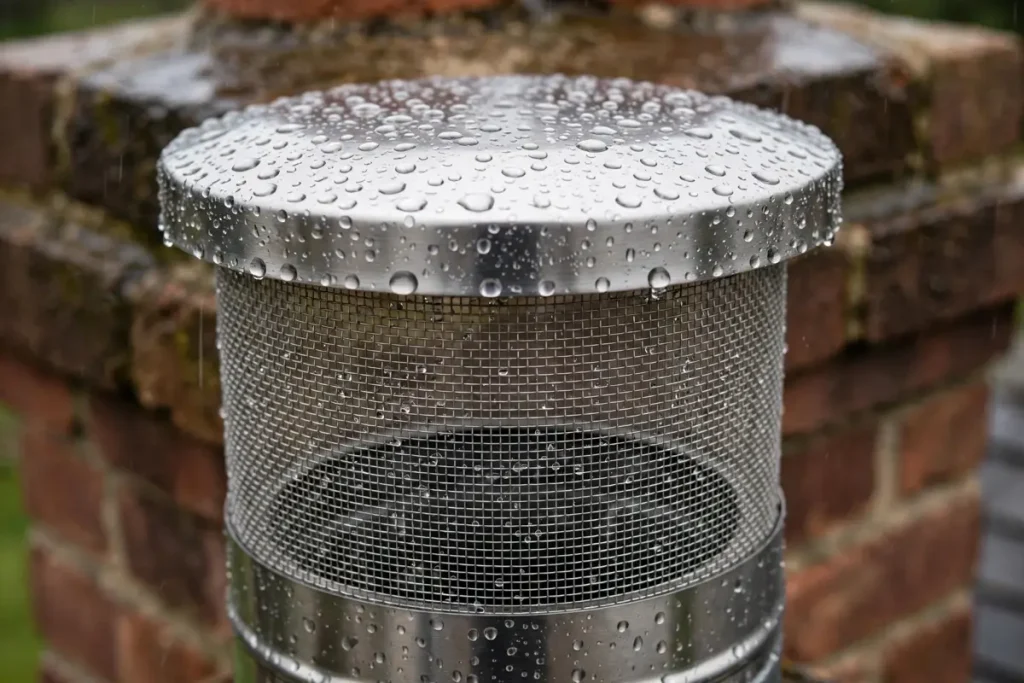
A chimney cap is a metal cover that sits over the flue opening at the top of the chimney. It has a solid lid that sheds rain, and mesh sides — a spark arrestor screen — that let smoke out while keeping rain, leaves, birds, and sparks in their proper places. It mounts on top of the crown, over the flue, and it is fixed in place so wind cannot lift it off. That is all it is: a lid with a screen. But that simple piece of metal is the only thing standing between the inside of your flue and everything falling out of the sky.
Cap vs. Crown: Two Parts, Two Jobs
People mix the cap and the crown up, because they sit in the same place and both deal with water. They do different jobs, and a chimney needs both.
The crown is the concrete slab across the top of the masonry. It seals the gap between the brick and the flue liner, and its slope carries rainwater off the brick. Read our guide on what a chimney crown is for the full picture.
The cap is the metal cover over the flue opening itself. It protects the inside of the flue: the hollow passage that carries smoke and gases out of your house. The short version: the crown covers everything around the hole, the cap covers the hole, and the flue is the hole. A good crown with no cap still leaves the flue open, and a good cap on a failed crown still lets water soak into the brick.
Six Things a Cap Does for Your Chimney
A cap earns its place by doing six jobs at once, and most of them are things you would only notice when they stop happening.
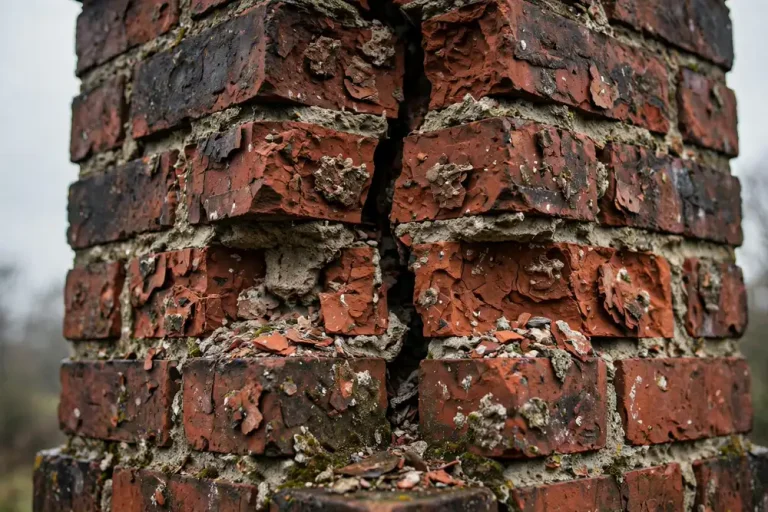
It keeps rain out of the flue — rain in an open flue runs down to the damper and firebox, rusting metal parts and soaking the liner. It keeps leaves and debris out — a flue is a sheltered shaft where wind-blown leaves collect, narrowing the passage so it does not draft properly. It keeps animals out — birds, squirrels, and raccoons all look for dry, sheltered nesting spots, and an open chimney is one of the best they will find. It stops downdrafts — wind across an open flue pushes smoke back down into the house, and the cap’s shape breaks up that wind. Its mesh screen is a spark arrestor — embers hit the screen instead of landing on the roof. And it makes the whole chimney last longer — water destroys masonry by soaking in, freezing, and cracking brick and mortar a little more each winter, and a cap slows that damage from the inside, where you cannot see it.
What Happens When a Chimney Has No Cap
When a chimney cap is missing, the problems start quietly. Rain falls straight down the flue and pools on the damper, and over a wet Portland winter that standing water rusts the damper until it sticks or will not close. Water also soaks into the flue liner from the inside, and a clay liner that stays wet and then freezes can crack — a much bigger repair than a cap. A missing cap is one of the five places water gets in; our guide on why chimneys leak covers the other four.
Animals move in next. A bird’s nest built inside a flue can block it almost completely, and a blocked flue does not just make fires smoky. It can push smoke and carbon monoxide back into the house instead of venting it outside. That is why a missing cap is a safety issue, not a cosmetic one.
Here is the point most people miss: an unused chimney still needs a cap. A fireplace you never light is still an open pipe into your house. Rain does not care whether the fireplace is lit. Neither do birds.
Cap Materials and Types
Most caps are made from stainless steel, copper, or galvanized steel. Stainless steel is the usual choice: it does not rust, it handles heat, and it lasts. Copper lasts even longer and develops a dark patina over time, but it costs more. Galvanized steel is the budget option, and it will eventually rust — when the coating wears through, the cap needs replacing.
Caps come in two shapes. A single-flue cap covers one flue pipe. A multi-flue cap covers the whole top of the chimney, spanning two or more flues under one lid, and it is often the better choice on a wide chimney because it also shelters the crown underneath. Whatever the shape, the lid must overhang the flue so rain drips clear, the mesh must be fine enough to stop sparks but open enough to let smoke out, and the cap must be fixed in place — screwed or clamped, not just resting there
Signs Your Cap Is Missing or Failing
You can spot most cap problems from the ground with binoculars. The cap is gone entirely — after a windstorm, look up; a missing cap is the simplest problem to find, and the most urgent to fix. Rust streaks run down the upper brick — orange stains below the top usually mean water is reaching metal up there. The mesh is torn, bent, or clogged — a screen full of soot does not draft properly, and a torn screen does not stop animals or sparks. You hear animals, or smell the fireplace in summer. Smoke comes back into the room on windy days. And water in the firebox after rain means checking the cap first, along with the crown and the flashing.
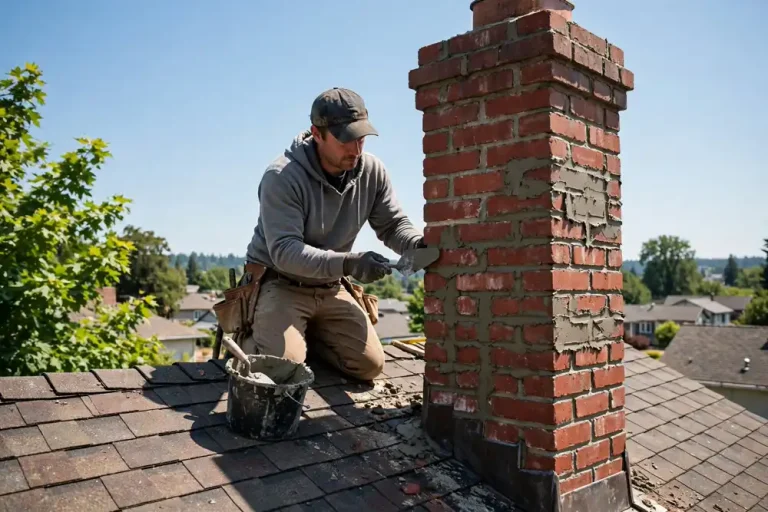
If the mortar joints below the cap are crumbling too, that is a separate job — tuckpointing — but a new cap on failing mortar will not last, so check both.
Keeping Your Cap in Shape
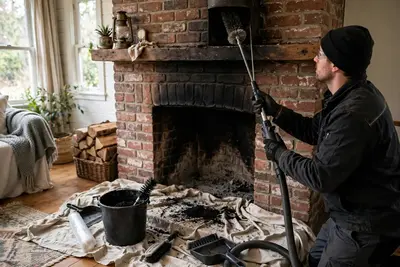
Have the chimney inspected once a year, ideally in the fall before the rainy season starts. An annual chimney cleaning (typically $150–$350, 45–90 minutes) is a good time to have the cap checked too, since the sweep is already looking down the flue. Check it from the ground after a storm — binoculars and five minutes are enough. Do not ignore a rusting cap: surface rust on a galvanized cap warns that the coating is failing, and replacing it before it rusts through is a small job.
Why Portland Rain Makes a Cap Essential
Portland gets roughly 40 inches of rain a year, spread across about 150 rainy days, mostly between October and April. A chimney here spends months at a time wet, with barely a dry stretch to recover. That is what makes a missing cap matter more here than in a dry climate: months of water running down the inside of the flue, every single year, freezing overnight in the cold snaps and widening every small crack it finds. The other Portland factor is trees. Older neighbourhoods have big trees overhanging roofs, and autumn fills gutters — and open flues — with leaves.
The Bottom Line
A chimney cap is a small piece of metal with an outsized job. It keeps rain, animals, leaves, and downdrafts out of the flue, it keeps sparks in, and it protects the liner and the damper from water damage you would not see until the repair was expensive.
If your cap is missing, rusted, or you simply do not know whether you have one, call Portland Chimney Care at +1 (503) 433-7104. We serve Portland, OR, and we can tell you plainly whether it needs replacing, repairing, or nothing at all.