Best Time of Year for Brick Chimney Repairs in Portland, Oregon
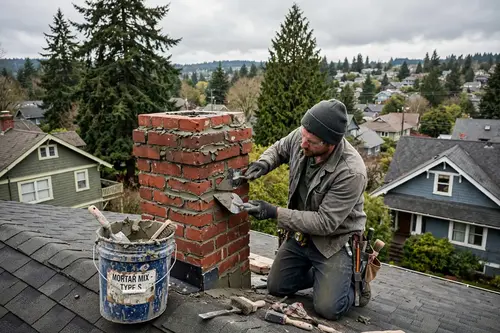
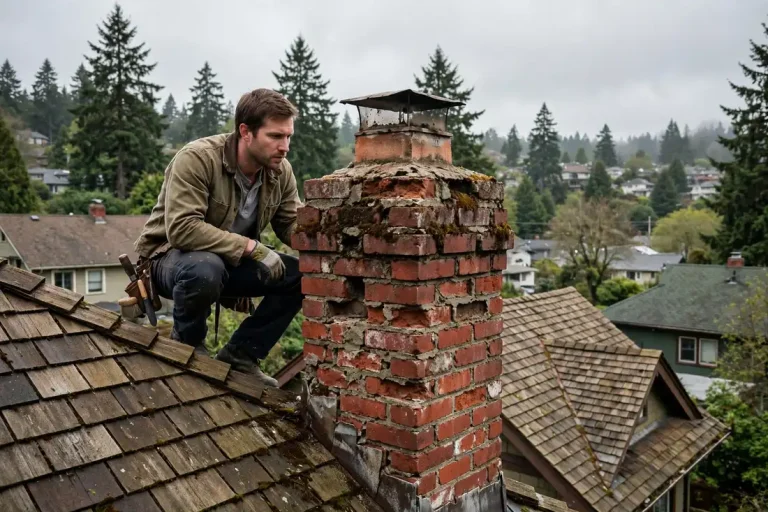
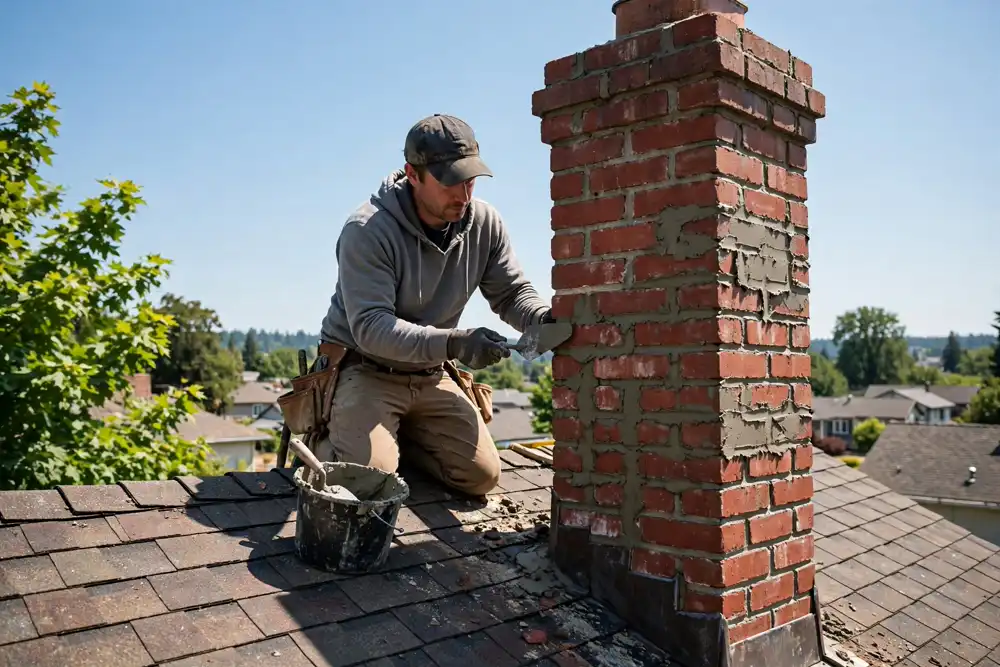
The best time of year for brick chimney repairs in Portland is late spring through early fall, and July through September is the sweet spot. Those months bring the driest weather of the year, which gives fresh mortar the stable conditions it needs to cure properly. If your chimney is leaking, crumbling, or leaning right now, though, do not wait for summer. Temporary protection and emergency repairs can happen in any season.
Below, you will find a clear breakdown of each season, what work fits each window, and how to plan your Portland chimney repair so your chimney is ready before the first fire of the year.
Why Timing Matters for Brick Chimneys
A brick chimney is a masonry system made of bricks, mortar joints, a concrete crown, metal flashing, and a flue liner. Every one of those parts reacts differently to moisture and temperature.
Mortar is the key piece. Fresh mortar needs time to cure slowly. If it gets soaked by rain before it sets, or if temperatures swing too much, the joints can turn weak, chalky, or crack early. That means you pay for the same repair twice.
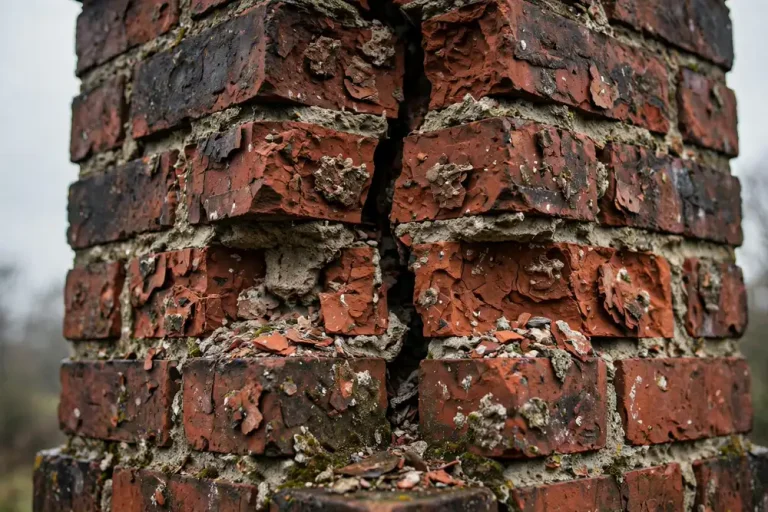
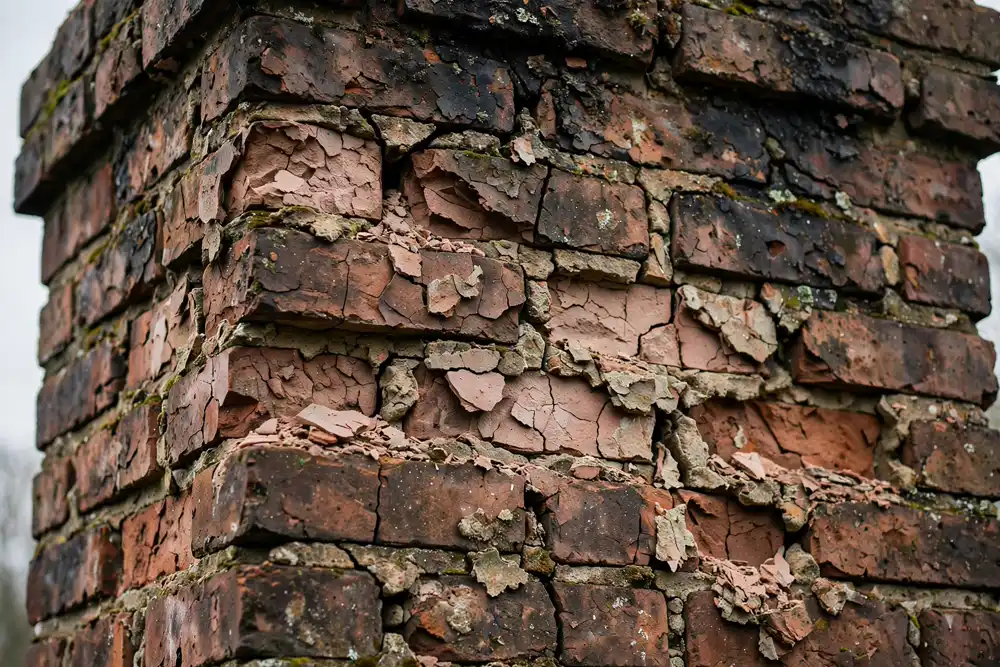
Brick itself is porous. It absorbs water like a sponge, and when that water freezes and thaws, the surface can flake off. Masons call this spalling. Catching it early is far cheaper than rebuilding a damaged section later, and regular brick chimney maintenance is the best way to catch it. For a full look at warning signs and typical pricing, read our guide to brick chimney repair signs, costs, and fixes.
How Portland’s Climate Changes the Schedule
Portland sits in the Willamette Valley, where long, wet stretches from fall through spring are normal. Atmospheric rivers can dump days of steady rain, and moss thrives on shaded masonry. Our winters are usually milder than the Midwest, so deep freezes are less common, but cold snaps do happen, and damp brick that freezes overnight can still crack. Our article on how freeze and thaw weather damages chimneys in Portland explains why even a mild winter can harm wet brick.
Our dry season is the real advantage. From roughly July to September, rainfall drops significantly, giving masons more reliable conditions for scheduling multiple day chimney repair projects. That is why local contractors book up quickly once the weather turns nice.
Summer: The Prime Window
Summer offers the most dependable conditions for brick chimney repairs in the Portland area. Here is what makes it work:
- Dry, steady weather. Tuckpointing, brick replacement, and crown rebuilds can cure without rain interruptions.
- Long daylight hours. Crews can finish larger projects faster, which means less time with scaffolding or tarps on your roof.
- Your fireplace is idle. Nobody needs the flue during a warm July, so there is no pressure to rush the job.
- Better scheduling. You can choose your date instead of taking whatever is left when everyone is calling in October.
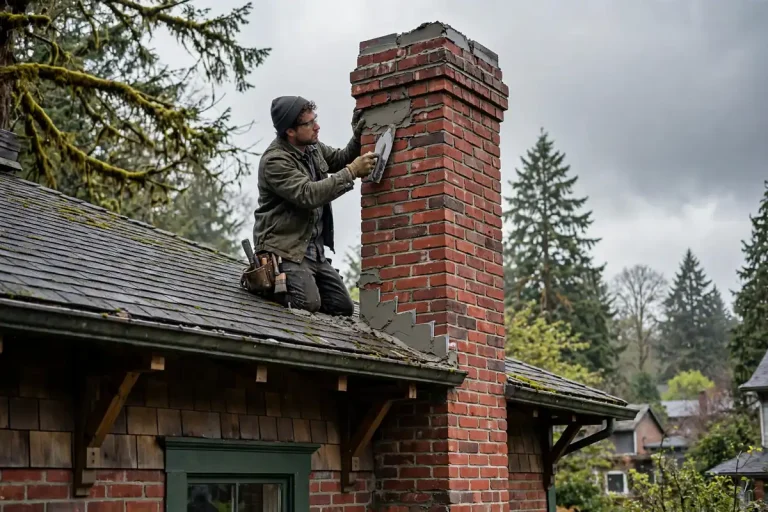
Summer is ideal for bigger projects such as repointing an entire stack, rebuilding a leaning chimney above the roofline, replacing a cracked crown, or installing a new stainless steel flue liner.
One caution: extreme afternoon heat can make mortar dry too fast. A good mason will mist the work, shade it, or time the day so mortar cures evenly.
Spring and Early Fall: Smart Backup Windows
Spring (April through June). Spring is the best time to inspect for winter damage. Look for new cracks, missing mortar, loose bricks, and water stains inside the house. Rain is still common early in the season, so spring suits smaller fixes like repairing flashing, sealing the crown, and adding a chimney cap. Larger projects are best scheduled for the first truly dry stretch.
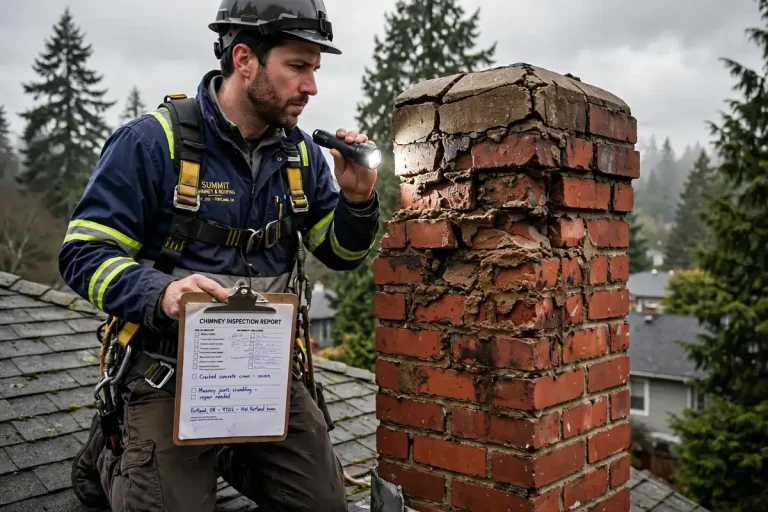
Early fall (September through mid October). Early fall is a good final chance before the rains return. The catch is demand. Homeowners suddenly remember their fireplaces, and chimney sweeps and masons get busy. Book in August if you want a September date. The Chimney Safety Institute of America (CSIA) recommends annual chimney inspections, while NFPA 211 provides standards for chimney inspection and maintenance, so many homeowners combine a yearly chimney inspection with a pre fall repair visit.
Winter: Emergency Repairs Only
Cold, wet months are the hardest time to repair brick. Mortar struggles to cure in low temperatures, wet roofs are dangerous, and scaffolding becomes risky in wind and rain.
That said, some work is possible in winter:
- Installing or replacing a chimney cap
- Temporary tarping or sealing of a leaking crown
- Stainless steel liner installation, when weather and roof access conditions allow
- Emergency stabilization of loose or falling bricks
If a repair is not urgent, a professional will usually tell you to protect the chimney for now and finish the permanent masonry in the dry season. That honest advice saves money.
Signs You Should Not Wait for the Perfect Season
Seasonal planning is useful, but some problems cannot wait. Call a chimney professional soon if you notice:
- Bricks flaking, popping off, or crumbling. This is chimney brick spalling, and it spreads once water gets in.
- White powder on the bricks. Called efflorescence, it signals moisture moving through the masonry.
- Gaps or missing mortar between bricks. Open joints let rain straight into the structure and call for chimney tuckpointing.
- A cracked or crumbling chimney crown. The crown is the concrete cap on top that shields the whole stack from rain, so chimney crown repair should not be delayed.
- Rust, gaps, or lifted metal flashing. Chimney flashing repair matters because flashing seals the joint where the chimney meets the roof, and failure here causes leaks in ceilings and walls.
- A leaning chimney or visible separation from the house. This is a structural safety issue.
- Smoke smell, soot stains, or damp walls near the fireplace. These can point to flue or liner problems, which also raise carbon monoxide concerns.
Ignoring these signs usually turns a modest repair into a partial rebuild.
A Simple Year Round Planning Calendar
Use this schedule to plan around the Best Time of Year for Brick Chimney Repairs at your own home:
- January to March: Watch for leaks and note any stains. Schedule a spring inspection.
- April to May: Get a professional inspection and request written estimates.
- June to August: Complete major masonry work during the driest weeks.
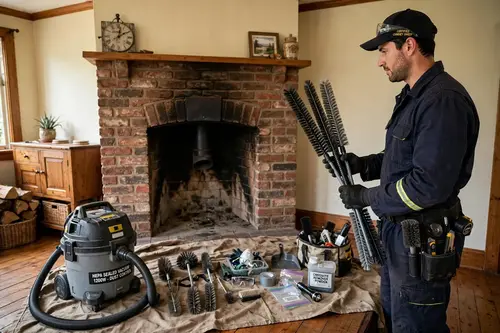
- September: Finish any leftover repairs and book a sweep before burning season.
- October to December: Use the fireplace safely and treat only urgent issues.
How to Choose the Right Contractor
Timing means little if the work is done poorly. Before you hire anyone, check the following:
- License verification. Confirm the contractor’s Oregon Construction Contractors Board (CCB) license on the state’s lookup tool.
- Training and experience. Ask about the technician’s training and previous chimney masonry work.
- Insurance. Ask for proof of liability insurance.
- Written estimates. Get the scope, materials, and timeline in writing.
- Matching materials. Ask how they select mortar for your brick’s age and type, since the wrong mortar strength can damage older, softer brick.
- Experience. Ask to see previous chimney masonry projects similar to yours.
Final Thoughts
Plan around Portland’s dry season, watch for early warning signs, and do not let small cracks sit through another wet winter. Choosing the Best Time of Year for Brick Chimney Repairs gives you stronger mortar, safer working conditions, and better scheduling, and it protects both your home and your family. If you are seeing damage now, book an inspection so you can plan the repair for the first dry window.