When Should You Repair vs Replace a Chimney?
Repair your chimney when the damage is limited to one area and the structure is still straight, solid, and safe to use. Replace or rebuild it when the stack leans, the masonry is breaking down across most of its surface, or the flue can no longer be made safe. The right decision depends on how widespread the damage is, whether the structure remains stable, and whether the flue can operate safely. Damage rarely fixes itself — see what happens if you ignore chimney damage and how small problems grow into big ones.
This guide walks you through the signs, the trade offs, and the questions to ask a professional before you spend money.
Think of Your Chimney as Three Separate Systems
A chimney is not one single part. It is a group of components, and each can fail on its own schedule.
The top: the crown, the chimney cap, and the roof flashing.
The masonry stack: brick or stone, plus the mortar joints holding it together.
The interior: the flue liner, smoke chamber, and firebox.
If only one system has a problem, repair usually makes sense. If all three are deteriorating at the same time, a rebuild often costs less over the years than a long list of patches.
Signs Your Chimney Can Be Repaired
These problems are usually good candidates for chimney masonry repair or smaller fixes:
- Hairline cracks in the crown. The crown is the concrete slab that sheds water off the top of the stack. Small cracks can be sealed, or the crown can be resurfaced.
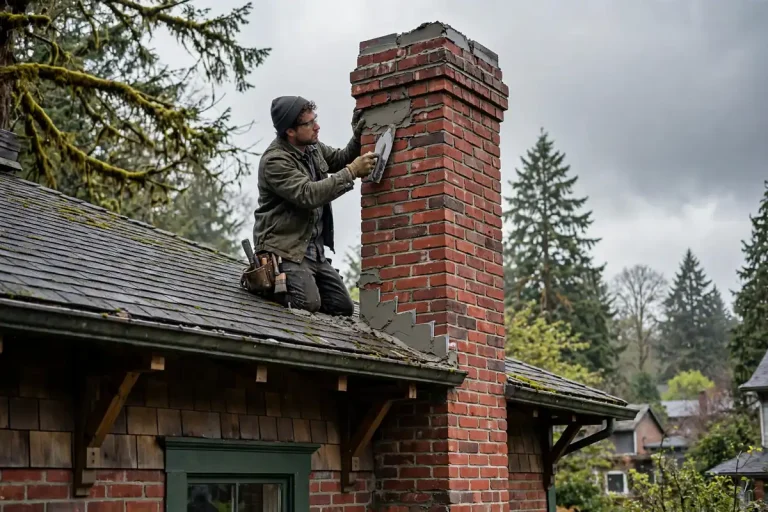
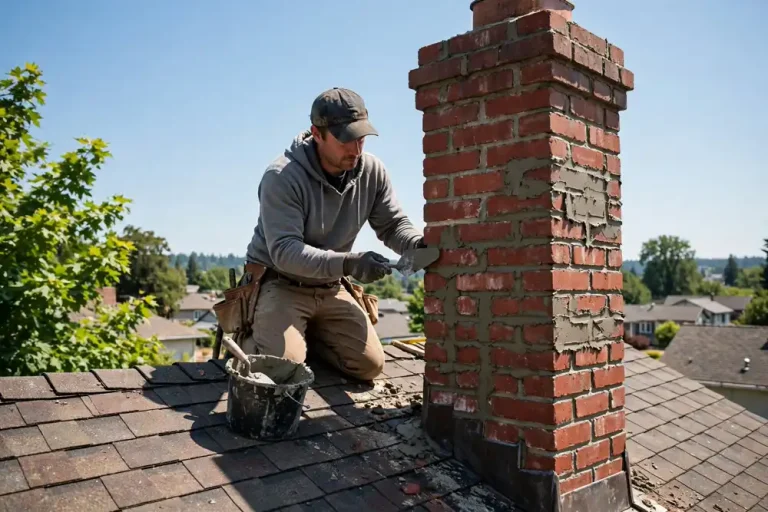
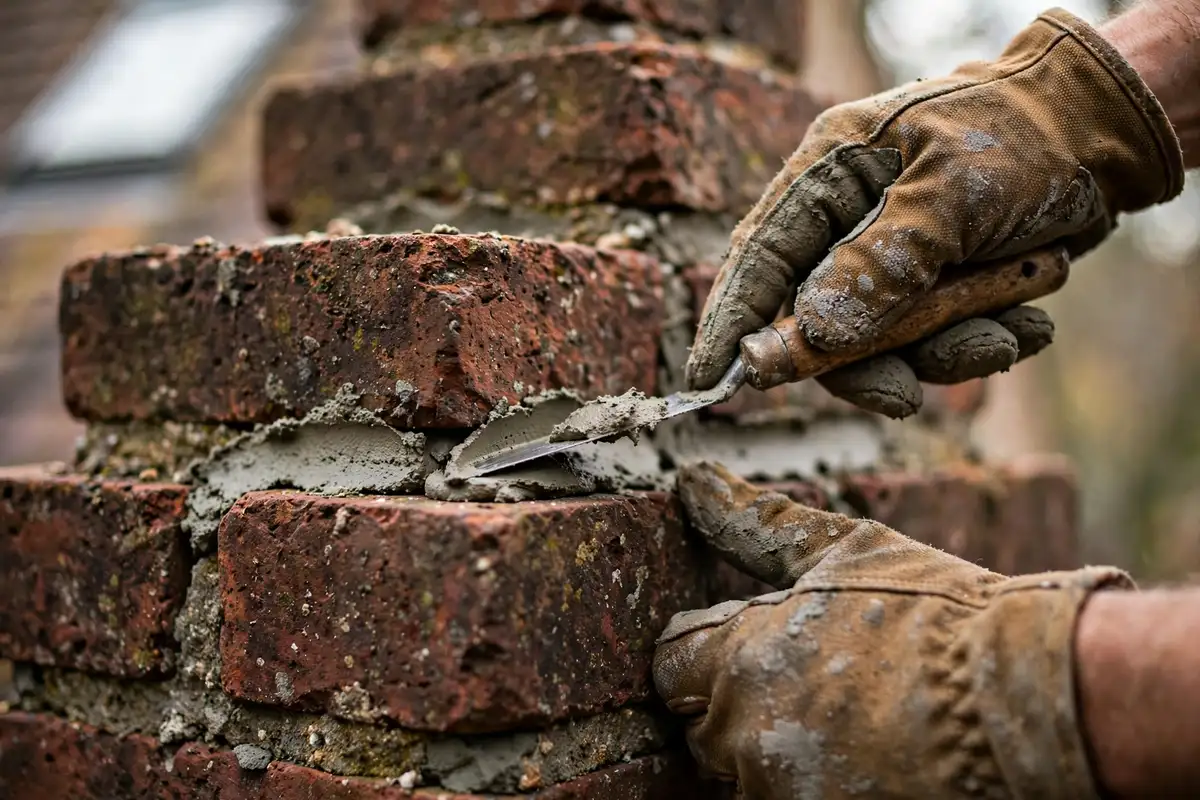
- Worn mortar joints. Soft or crumbling mortar can be restored through tuckpointing, which means removing the old mortar and packing in fresh material.
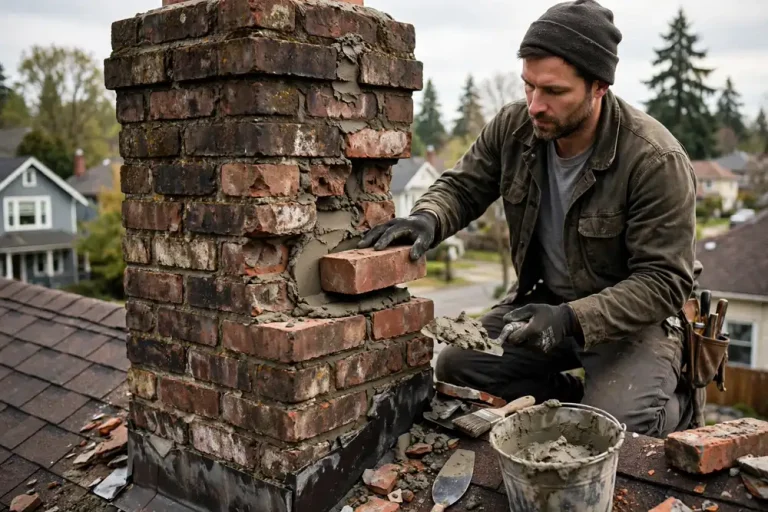
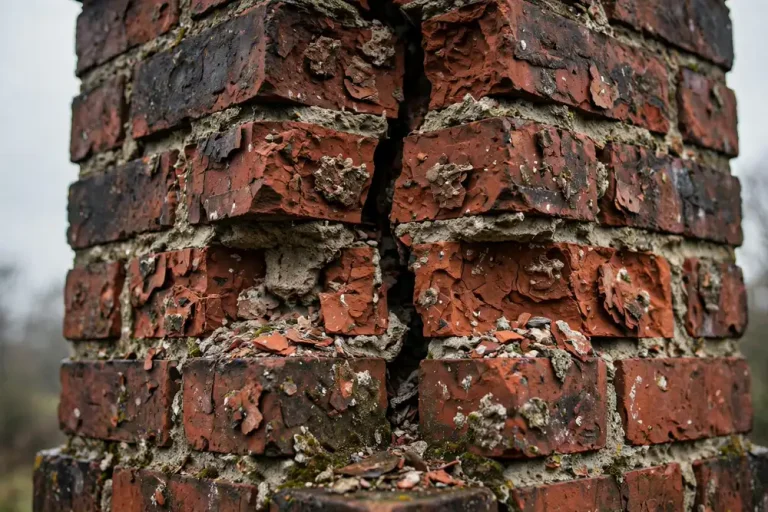
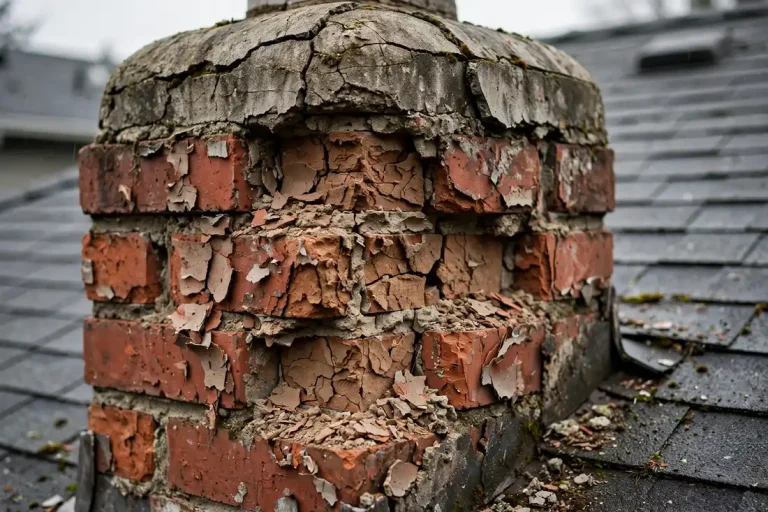
- A few damaged bricks. When the face of a brick flakes off from moisture, a condition called spalling, individual bricks can often be cut out and replaced.
- Leaking flashing. The metal seal between the chimney and the roof is a common leak point. New flashing and counter flashing often solve the problem.
- A missing or rusted cap. A new cap is a small cost compared with the water damage it prevents.
- Minor flue liner damage. Depending on the liner type and the extent of the damage, a professional may recommend a repair system or a stainless steel liner insert.
7 Warning Signs a Chimney May Need Rebuilding
Some damage is too extensive for patching. Call a masonry professional promptly if you notice any of these:
- A leaning or shifting stack. If the chimney is pulling away from the house, that is a structural safety concern.
- Widespread spalling or crumbling brick. When most of the surface is failing, patching one area only moves the problem.
- A severely cracked or collapsed flue liner. A damaged flue liner can allow heat and combustion gases to reach areas they should not enter, increasing the risk of fire or carbon monoxide exposure. Stop using the appliance until a qualified professional assesses it.
- The same repair keeps coming back. Repeated leaks or cracks in one spot often point to a deeper structural problem.
- Water stains inside the house. Damp ceilings, stained walls, or rot near the chimney suggest moisture has been getting in for a while.
- Damage after a chimney fire or an earthquake. Heat and shaking can crack liners and loosen masonry in ways that are hard to see from the ground.
- Large gaps between bricks or separation from the structure. Wide cracks that run through several courses of brick suggest the stack has lost its stability.
How to Decide Between Chimney Repair and Rebuilding
Contractors often use rough guidelines, such as comparing the amount of damage with the size of the stack, but there is no universal formula. Every chimney differs in age, materials, and condition, so the decision should rest on a professional assessment and a written estimate. These questions help you think it through:
- Is it safe to use right now? If you suspect liner damage, smell smoke or fumes, or see a leaning stack, stop using the fireplace or stove until it has been checked.
- How far does the damage spread? One problem area points to repair. Problems in the crown, the masonry, and the liner at the same time point to a rebuild.
- How old is the chimney? A well maintained masonry chimney can last for decades, but older stacks with original mortar may be near the end of their service life.
- Are you changing appliances or fuel? Switching from an open wood fireplace to a gas insert or wood stove changes liner requirements. An old liner may not suit the new appliance.
- What does the long view look like? Ask for estimates for both options. A cheap repair that must be redone in a few years is not always the better deal.
Repair vs Replacement at a Glance
| Factor | Repair | Partial rebuild | Full replacement |
|---|---|---|---|
| Damage | Localized | One major section | Extensive or structural |
| Structure | Stable | Remaining structure must be assessed | Existing stack may be unsafe or beyond practical repair |
| Typical work | Crown, mortar, flashing | Damaged masonry section rebuilt | Extensive demolition and reconstruction |
| Cost | Depends on repair scope | Depends on access and section height | Usually greater scope and cost |
Costs vary with chimney height, brick type, roof pitch, and how easily crews can reach the work area, so ask for a written estimate that spells out what is included.
Why Portland’s Weather Matters
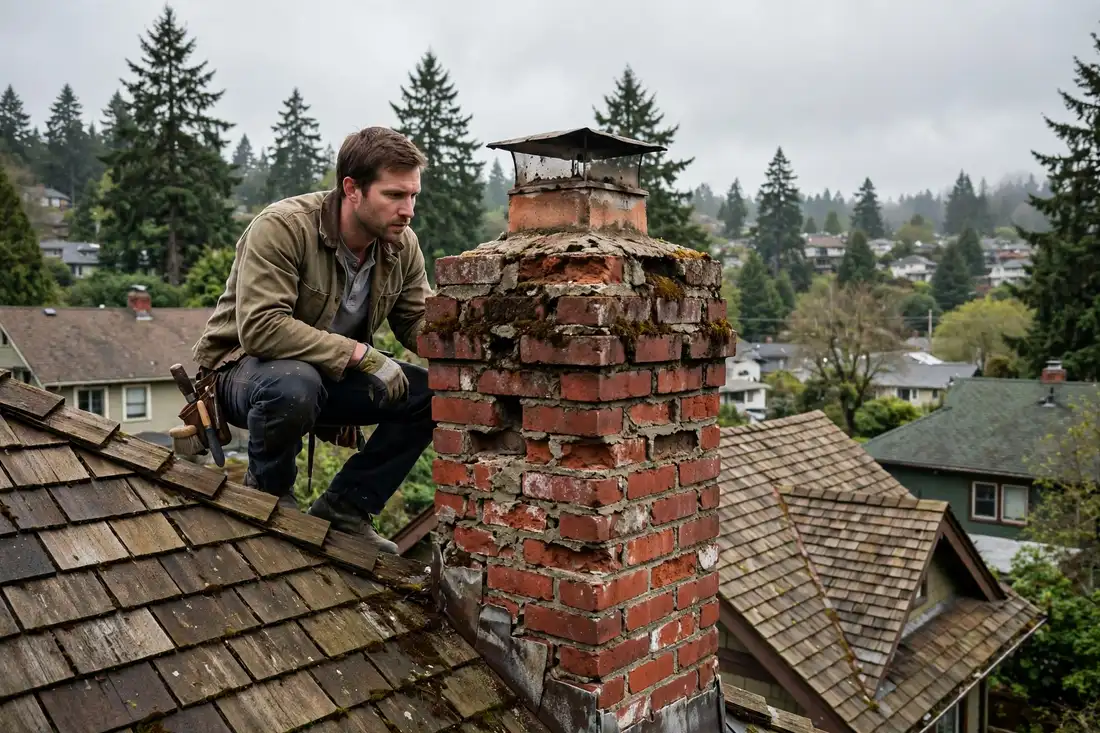
Portland’s long, wet season puts constant pressure on a chimney. Rain soaks into brick and mortar, and moisture that gets behind the flashing can reach the roof deck and attic. Water also works into small crown cracks, then widens them through repeated wetting and drying. Over time that moisture weakens mortar joints and speeds up spalling. Catching small cracks, loose flashing, and missing caps before the rainy months is one of the most effective ways to avoid a full rebuild. Many Portland homes also have older masonry, so an annual look at the stack is worth the effort.
When an Inspection Makes Sense
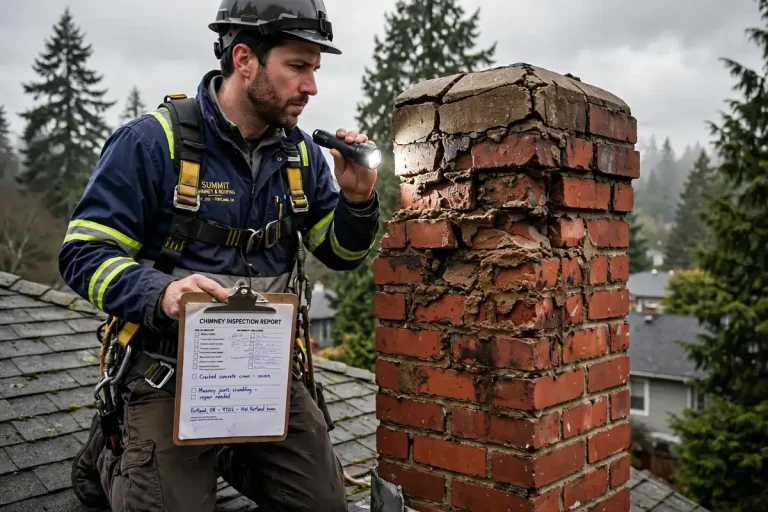
You cannot judge a flue liner from the ground. A professional chimney sweep can examine the stack and run a camera through the flue. Many homeowners look for a sweep credentialed through the Chimney Safety Institute of America (CSIA).
The National Fire Protection Association’s NFPA 211 standard describes three inspection levels. A Level 1 inspection covers the readily accessible parts of the system. A Level 2 inspection adds video scanning of the flue and is typically recommended when you buy a home, change fuel types, or replace an appliance. A Level 3 inspection involves opening up concealed areas when a serious hazard is suspected. Depending on the damage and your circumstances, a Level 2 inspection may be appropriate, and your inspector can advise which level fits your situation.
Ask for photos or video of every problem found. A reputable professional will gladly show you.
Habits That Help You Avoid a Rebuild
- Schedule a chimney sweep and inspection once a year before burning season.
- Install a properly fitted chimney cap with a spark screen.
- Fix loose mortar and small leaks as soon as you spot them.
- Burn seasoned hardwood to reduce creosote, the tar like residue that fuels chimney fires.
- Ask your mason about a breathable water repellent for brick, and avoid sealants that trap moisture inside.
Frequently Asked Questio
The Bottom Line
Fix what is small, rebuild what is failing, and never gamble on safety. A cracked crown or leaky flashing is a straightforward repair, while a leaning stack or a compromised flue calls for a bigger solution. If you are still unsure whether to repair or replace your chimney, the most reliable next step is a professional inspection so you can decide with facts instead of guesses.
If you are in the Portland area and want a clear, honest recommendation, contact Portland Chimney Care to request an inspection or an estimate.
While you decide, the fireplace should stay cold — here is why using a damaged chimney is not safe.