Brick Repair vs Complete Chimney Rebuild: How to Decide
Brick Repair vs Complete Chimney Rebuild comes down to one question: is the damage limited to mortar joints and a few bricks, or has it reached the structure itself? If most bricks are solid and the chimney stands straight, repair is usually enough. If bricks are crumbling in large numbers, the stack leans, or moisture has damaged the interior, a rebuild is often the safer choice.
Here is how to tell which side of that line your chimney sits on.
The Short Answer: Mortar Problem or Brick Problem?
Chimney masons usually sort damage into two groups.
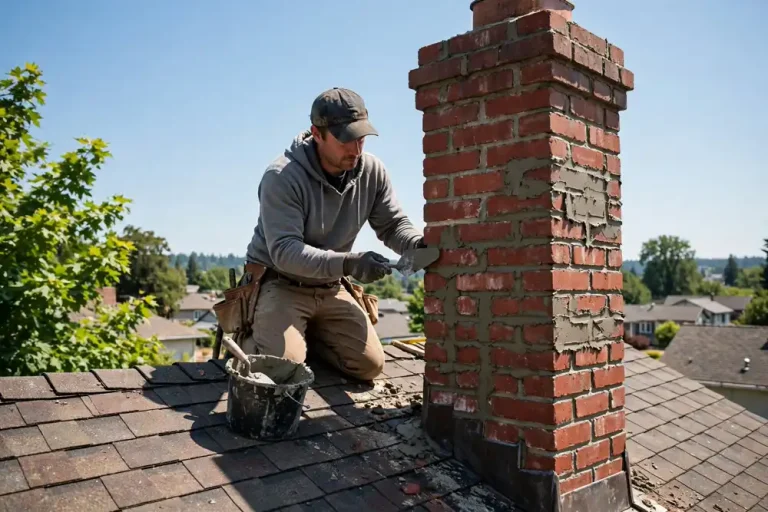
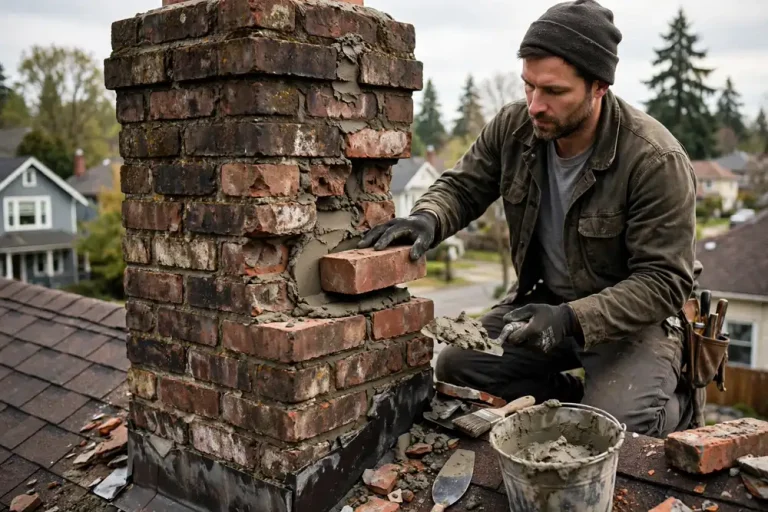
Mortar damage means the joints between bricks are cracked, sandy, or missing. This is the most common issue and it is very fixable. Chimney repointing, also called tuckpointing, removes failed mortar and packs in fresh material.
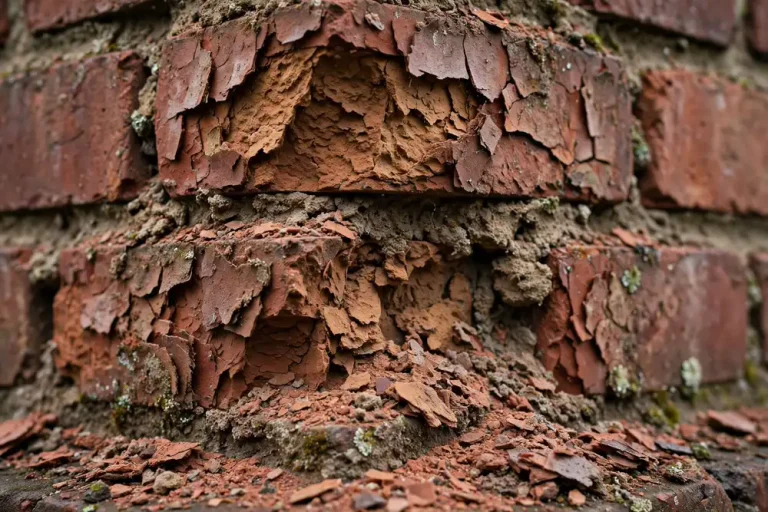
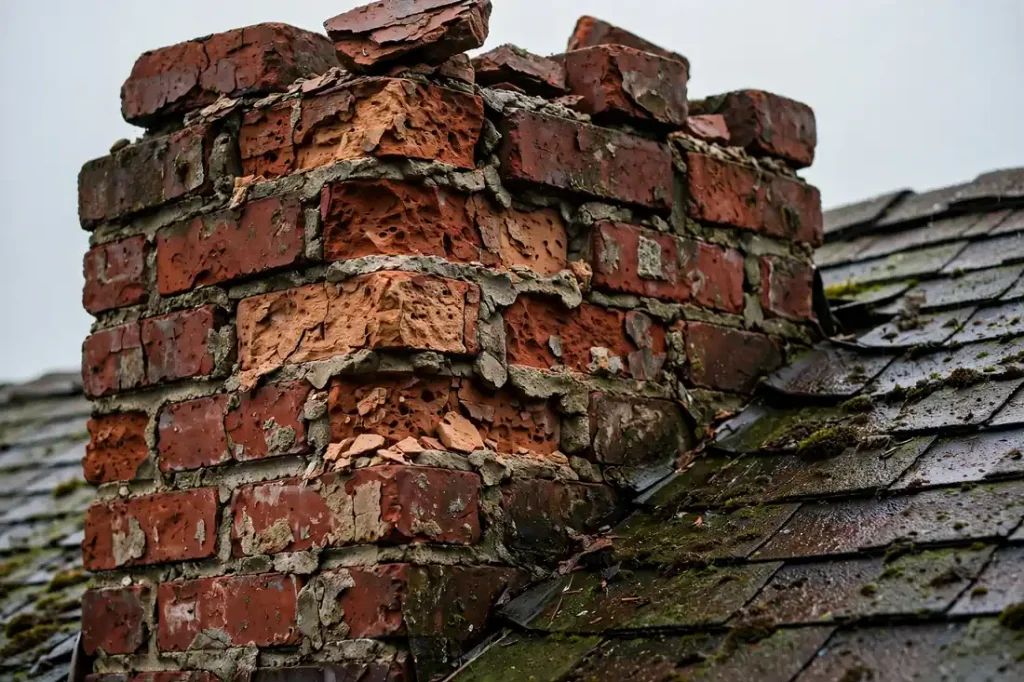
Brick damage means the bricks themselves are breaking down. The face of the brick flakes or peels away, which is called spalling. Once enough bricks fail, patching stops working because new mortar has nothing sound to grip. If you are seeing this, our guide on chimney brick spalling explains what causes it.
As a rule of thumb, mortar trouble points to repair, and widespread brick trouble points toward a rebuild.
When Brick Repair Is the Right Call
Repair works best when the chimney is structurally sound and the problem is caught early. You are likely a good candidate if you notice:
- Small cracks or gaps in mortar joints
- A few loose or chipped bricks in isolated spots
- A cracked chimney crown that can be resurfaced
- A rusted or missing chimney cap
- Minor flashing gaps where the chimney meets the roof
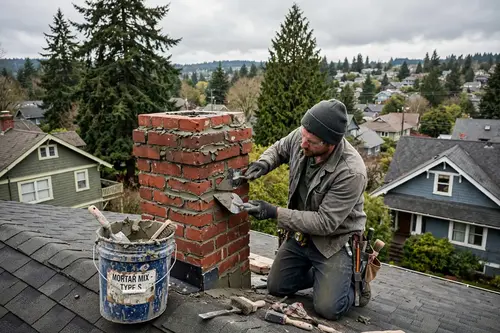
Typical fixes include repointing, replacing individual chimney bricks, sealing the crown, installing a new cap, and repairing flashing.
Avoid sealers that trap water inside the brick, because trapped moisture speeds up spalling.
When a Partial Rebuild Makes Sense
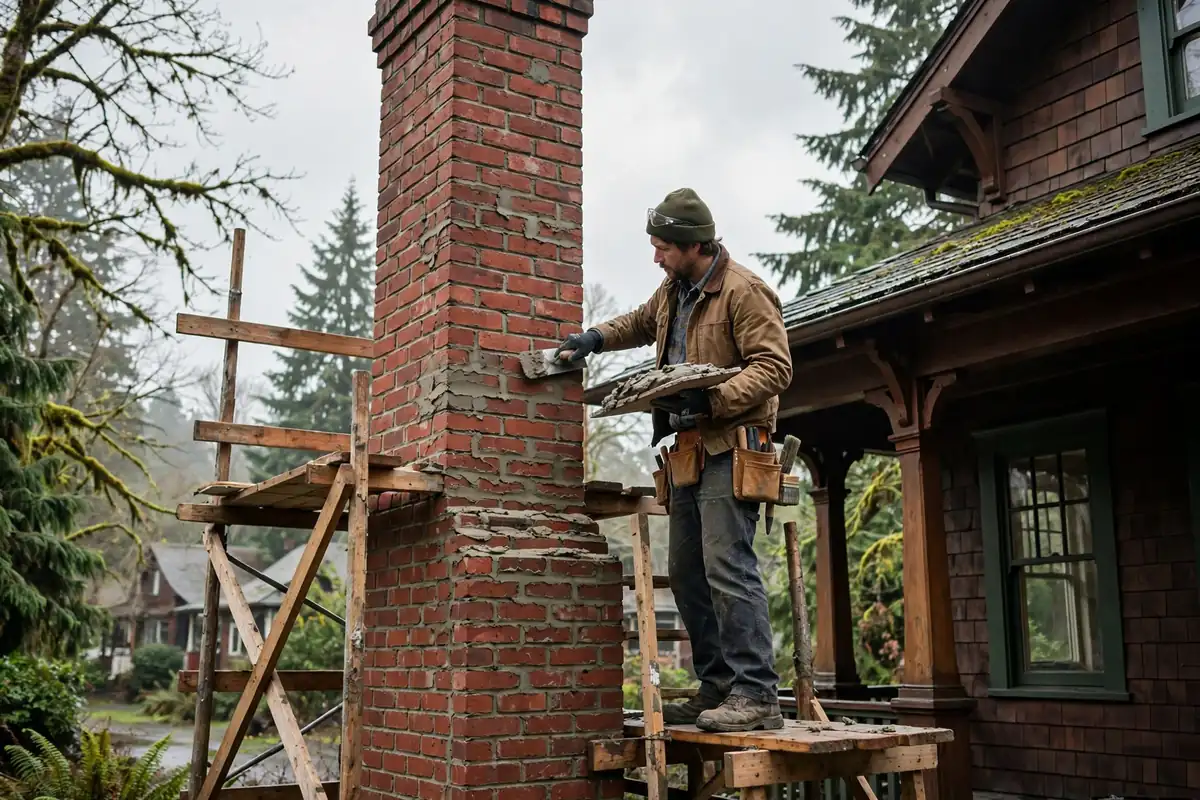
A partial rebuild removes and replaces only the upper section of the chimney, usually the part above the roofline that takes the most weather. It fits when the top courses of brick are deteriorating but the lower chimney, firebox, and framing are healthy. If a contractor recommends one, ask how far down they plan to dismantle and why.
Signs You May Need a Complete Rebuild
A complete chimney rebuild involves dismantling and reconstructing the damaged chimney section from a stable base. Depending on the extent of the damage, this may mean rebuilding the entire stack above the roofline or reconstructing a larger portion of the chimney. These are the warning signs of an unsafe chimney that point in that direction:
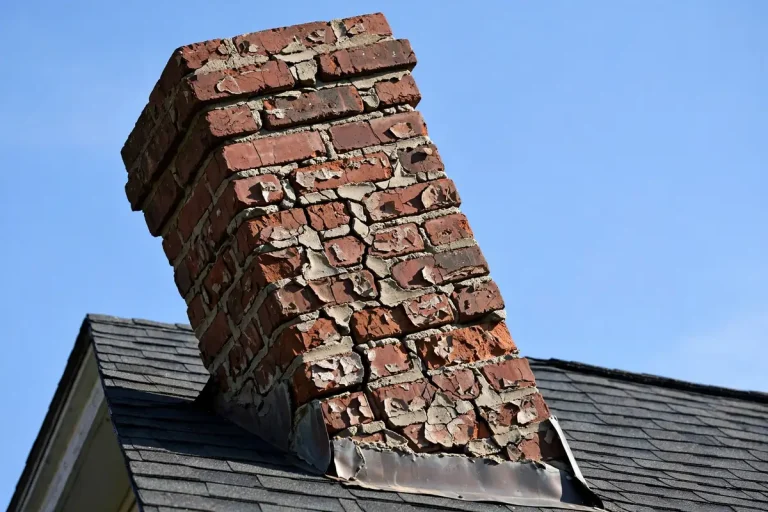
- The chimney leans or pulls away from the house. Leaning is a structural problem, and patching cannot straighten it.
- Bricks are spalling across large areas. Brick chips on the roof, ground, or in the gutters often mean the damage is widespread.
- Water damage shows up indoors. Stains or damp smells near the chimney can mean moisture has traveled well beyond the surface.
- The foundation or base has shifted or cracked. A chimney is heavy, and a failing base can undermine everything above it.
Two other symptoms need a closer look rather than an automatic rebuild decision.
Recurring white staining, known as efflorescence, can indicate ongoing moisture movement through the masonry. It does not automatically mean a rebuild is necessary, but the source of the moisture should be identified.
A cracked, deteriorating, or missing flue liner requires professional assessment. Depending on the damage, the solution may involve relining the chimney rather than rebuilding the entire masonry structure.
Repair or Rebuild at a Glance
| Damage condition | Recommended solution |
|---|---|
| Minor mortar cracks | Repointing |
| A few damaged bricks | Individual brick replacement |
| Upper chimney section deteriorating | Partial rebuild |
| Extensive structural damage | Complete rebuild |
| Damaged flue liner | Liner repair or replacement assessment |
What Affects Chimney Repair Cost
Price is a big part of any Brick Repair vs Complete Chimney Rebuild decision, but a single average number can mislead. Costs vary a lot depending on how much of the structure must be dismantled and rebuilt. Chimney height, brick selection, scaffolding, roof access, liner work, and structural repairs can all change the final price.
Also consider how long chimney repairs last. If a failing chimney gets patched again and again, you may pay for several rounds of repairs without solving the underlying problem. Request a detailed, itemized estimate before choosing between repair and rebuilding, and compare what each option is expected to deliver over the next several years.
What a Proper Inspection Looks Like
Do not decide from the ground. A thorough assessment should include:
- A roof level exam of the crown, cap, flashing, and upper brick.
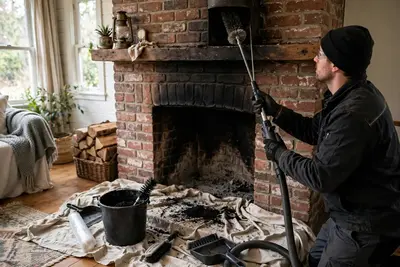
- An interior check of the firebox, smoke chamber, and damper.
- A video scan of the flue. A Level 2 chimney inspection includes a video scan of the flue interior to help identify hidden damage that may not be visible during a basic inspection. The Chimney Safety Institute of America (CSIA) and NFPA 211 guidance support this approach.
- A written estimate that lists the exact scope, materials, and warranty.
Ask your contractor to show you photos of the problem areas. A trustworthy professional shows you the damage rather than only describing it.
How Portland’s Climate Affects Your Chimney
Portland’s wet climate can expose brick chimneys to repeated moisture. When absorbed water freezes, it expands and can contribute to cracking, flaking, and spalling. Older masonry may be particularly vulnerable when the mortar has deteriorated or incompatible repair materials have been used.
That last point matters. Repair mortar should be selected to suit the existing brick and the original mortar’s strength and composition. A mortar that is too hard can damage softer historic brick over time. Timing matters too, so read our advice on the best time for chimney repairs in Portland before scheduling work.
Questions to Ask Before You Hire
- Is the damage mostly mortar or mostly brick?
- Will you inspect the flue liner as well as the exterior?
- Can you show me photos of what you found?
- How will you match the mortar to my existing brick?
- What warranty comes with the work?
Clear, specific answers are a good sign. Vague answers or pressure to sign right away are not.
Final Thoughts
Choosing between Brick Repair vs Complete Chimney Rebuild does not have to be guesswork. Sound bricks with failing mortar call for repair. Crumbling brick, leaning, deep water damage, or a failed base call for a rebuild. A damaged liner may need relining instead of either one. Catching problems early keeps more options open and protects your home from leaks and safety risks.
If you have noticed falling brick, stains, or gaps near the top of your chimney, schedule an inspection with a chimney professional and get the findings in writing.